





 Portuguese
  English
  Spanish
  4 min of reading
  4 comments


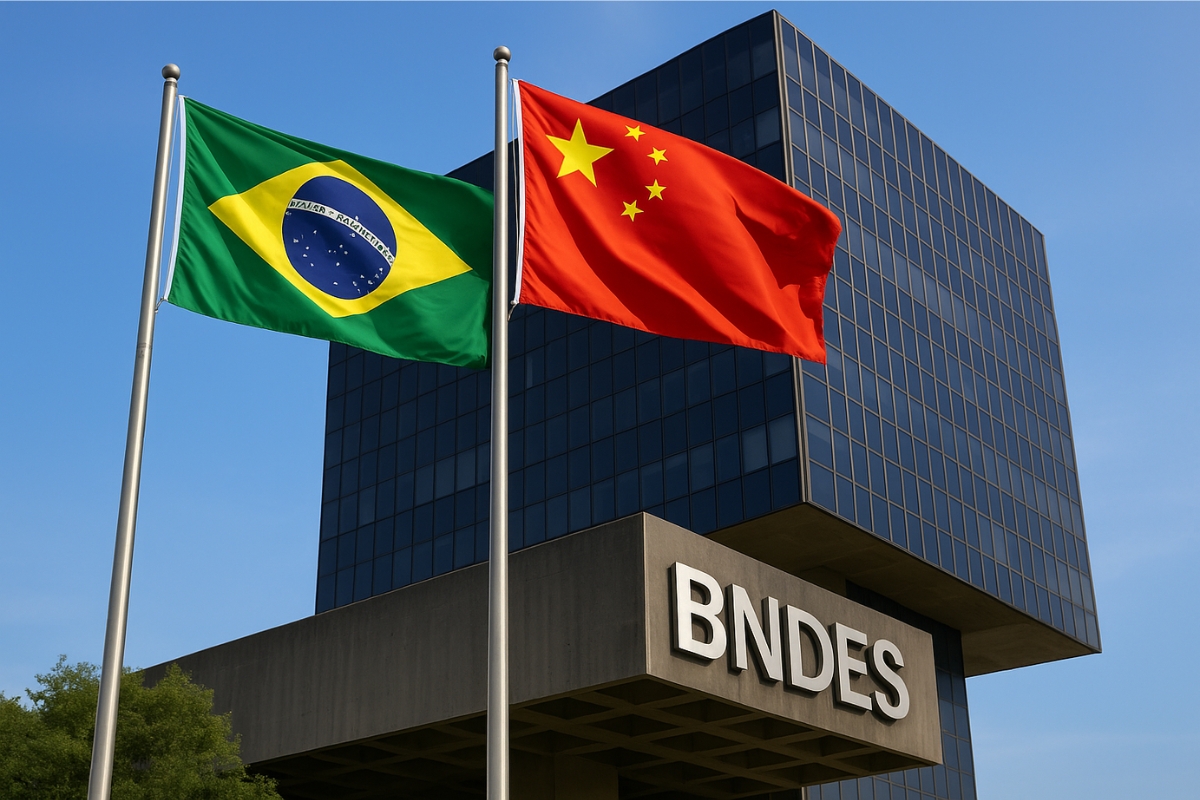


Brazil and China Create US$ 1 Billion Fund Led by BNDES and the Export-Import Bank of China to Finance Infrastructure, Clean Energy, and Artificial Intelligence Projects in the Country
Brazil has taken a strategic step on the global stage by agreeing with China to establish a US$ 1 billion investment fund aimed at infrastructure, energy, mining, agriculture, and artificial intelligence.
The operation will be coordinated by BNDES (National Bank for Economic and Social Development), which will participate with an initial contribution of US$ 400 million, while the Export-Import Bank of China (CEXIM) will contribute an additional US$ 600 million.
The agreement, signed in September, marks the first time a Brazilian development institution has structured a bilateral fund of this size with China, opening a new chapter in economic cooperation between the two countries.
-
While Havan earns R$ 50 million per day throughout the year, Cacau Show managed six times more in just 24 hours, totaling half a billion reais in two days of Easter.

-
Weak dollar or strong real? The American currency plummets for the third day, approaching R$ 5 and surprising the market with global inflation and tensions in the Middle East that continue to create global uncertainty.

-
China’s investments in Brazil in factories, energy, oil, electric cars, and new industrial projects double to $4.2 billion, making the country the 3rd largest global destination for Chinese capital.

-
Lula announced that 160,000 students in debt with FIES will be included in the federal government’s renegotiation package and compared the cost of an inmate to that of a student by saying that Brazil invests in criminals when it does not invest in education.

According to BNDES President Aloizio Mercadante, the initiative “represents a historic opportunity to finance development with sustainability and technological innovation.”
A Fund to Change the Face of Development
According to the commitment term signed between BNDES and CEXIM, the fund will consist of direct investments in Brazilian companies and projects, preferably in local currency, to reduce currency exposure. The goal is to foster strategic sectors such as transportation infrastructure, clean energy, digital transition, and precision agriculture.
Applications should be made through investment funds in the capital market, focusing on long-term assets and direct economic impact. The expectation is that the mechanism will begin operating as early as 2026, after the structuring and regulatory approval phase.
According to BNDES, the fund reinforces the bank’s strategy to act as an anchor in projects that combine sustainability, innovation, and job creation, in line with the global movement toward a green and digital economy.
The Central Role of BNDES
More than a financial partner, BNDES takes on the role of national protagonist in this project. Traditionally responsible for financing major infrastructure projects and industrial modernization in the country, the bank now positions itself as a bridge for international cooperation with the second-largest economy in the world.
BNDES has experience in financing hydropower plants, highways, railways, and renewable energy hubs, as well as technological innovation and digital inclusion programs. This expertise will be essential to assess the viability and social impact of the projects supported by the fund.
With an initial contribution of US$ 400 million, the Brazilian bank demonstrates a willingness to take risks and lead the strategic direction of investments, ensuring that the money is applied in areas that benefit the country in a lasting way.
Clean Energy, AI, and Digital Infrastructure Are Among the Priorities
Priority sectors include physical and digital infrastructure, clean energy, and artificial intelligence applied to agricultural and industrial production.
In practice, this means that the fund can finance railway, port, road, wind, and solar park projects, as well as digital solutions for smart cities and industrial automation.
AI projects focused on precision agriculture, use of big data for crop management, and modernization of electrical grids with smart sensors are also on the radar of fund managers.
These areas are considered essential for Brazil to increase its global competitiveness and reduce dependence on technological imports.
Direct Benefits and Expected Impacts in Brazil
The partnership promises to impact various sectors of the Brazilian economy. The expectation is that, with the fund’s resources, the country can:
- Modernize its logistical infrastructure, reducing transportation costs and improving integration between regions.
- Stimulate the national industry with greater access to long-term credit.
- Accelerate the energy transition, expanding renewable sources and creating green jobs.
- Increase investment in technology and innovation, boosting startups and research centers.
- Develop less industrialized regions, focusing on interior growth.
For economists, the impact could be similar to what Brazil experienced during the large infrastructure projects cycle in the 2000s, but with one crucial difference: this time, the focus is on sustainability, efficiency, and technological integration.
Challenges and Risks Ahead
Despite the optimism, experts warn of some important challenges. The main one is the need for transparency and governance in project selection, ensuring that resources are applied in truly transformative initiatives.
Another point of concern is the technological dependence on China in areas such as AI and industrial equipment, which requires clear knowledge transfer policies.
Additionally, political changes or external crises may affect the pace of fund execution, especially in a global context of trade tensions and geopolitical disputes.
Opportunities for the Future
Projects like this tend to open up opportunities for public-private partnerships, concessions for works, and joint investments between Brazilian and Chinese companies. Brazil, with its vast agricultural, energy, and logistical capacity, is seen by Beijing as a long-term strategic ally.
For the Brazilian government, cooperation with China goes beyond financing: it is a way to attract technology, accelerate decarbonization, and strengthen the country’s presence in global value chains.
The BNDES, in turn, reinforces its image as a modern institution capable of addressing the new challenges of the global economy, without giving up its social role.









enquanto de 3 trilhões de impostos, a maioria vai pro lixo. por alguns bilhões, viramos vagabundas da china.
Enquanto o governo tem os bilhões para a farra financeira, e desvios multibilionários, tenta convencer o povo pré-histórico que o melhor é ser pobre, e condena sem qualquer pudor, o rico e a riqueza do país.
Seremos colonizados pela China comunista???
Great article, thank you for sharing these insights! I’ve tested many methods for building backlinks, and what really worked for me was using AI-powered automation. With us, we can scale link building in a safe and efficient way. It’s amazing to see how much time this saves compared to manual outreach.