





 Portuguese
  English
  Spanish
  4 min of reading
  0 comments


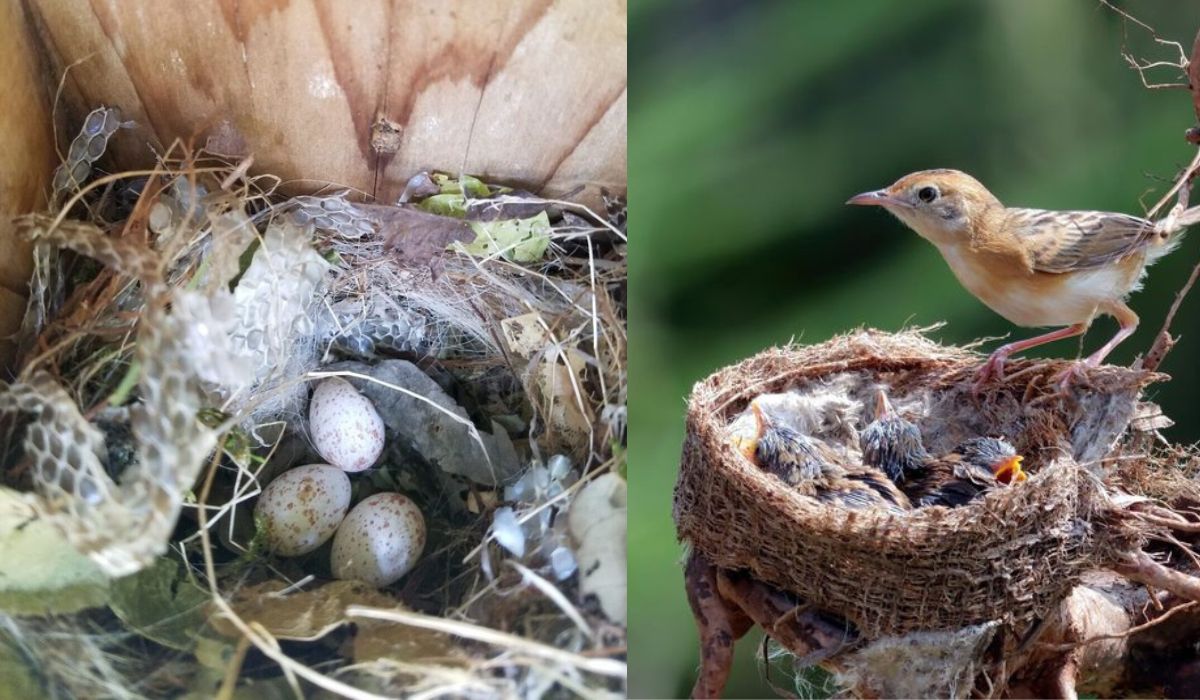
A behavior observed in birds that nest in cavities draws the attention of researchers by revealing how unusual materials can influence the interaction between prey and predators and directly affect the survival of eggs and chicks.
Birds that build nests in cavities, such as tree hollows and artificial nesting boxes, have been using pieces of snake skin as part of their nesting material.
According to a study published in The American Naturalist, the practice is associated with a lower rate of attacks by small mammals on eggs and chicks in this type of nest.
The work indicates that the snake skin has no structural or thermal function.
-
He started running at 66 years old, broke records at 82, and is now a subject of study for having a metabolic age comparable to that of a 20-year-old, in a case that is intriguing scientists and inspiring the world.

-
Oldest tree on the planet reappears after 130 years of searches: Wattieza, 385 million years old, was 10 meters tall and had no leaves or seeds; Gilboa fossils in New York solved the mystery in 2007.

-
A 48-square-meter house assembled in hours with 4,000 bricks made of recycled plastic that does not absorb moisture, has natural thermal insulation, and costs less than 90,000 reais in a complete kit.

-
Luciano Hang revealed that Havan’s air fleet has already accumulated more than 20,000 landings, 10,000 flight hours, and 6 million kilometers traveled, and he says that without the planes, the company would never have grown so quickly.

According to researchers, the material acts as a visual and olfactory signal that can alter the behavior of potential predators.
The interpretation presented in the study is that these animals tend to avoid places that indicate the recent presence of snakes, their natural predators.
Materials Used in Bird Nest Construction
In forming nests, birds often employ twigs, plant fibers, mud, cotton, and even fur from other animals.
In some species, however, there are consistent records of the use of snake skin, a resource that is less abundant in the environment and requires movement to be collected.
According to the study authors, the recurrence of this behavior suggests that the cost of finding and transporting the material may be offset by a reduction in predation risk.
This relationship, according to the research, appears more clearly in species that nest in cavities, environments frequently explored by small mammals in search of food.
Difference Between Open Nests and Cavity Nests
The study analyzed historical data from large scientific collections, including records from the Western Foundation of Vertebrate Zoology.
From this data, researchers observed that cavity nests had a significantly higher frequency of snake skin compared to open nests.
According to the analysis, the proportion of nests with this material was about 6.5 times higher among nests installed in cavities than among those built on branches and tree crowns.
For the authors, this difference indicates that the type of nest directly influences the effectiveness of using the skin as a protection strategy.
Meanwhile, in open nests, the presence of the material was not shown to be recurrent or associated with clear advantages.
The exposure of these nests to predators approaching from different directions may reduce the deterrent effect of the snake skin, as discussed in the article.
Experiment with Artificial Nests in a Forest Area
To evaluate the impact of using snake skin under controlled conditions, researchers conducted a field experiment in a natural area of Ithaca, in the state of New York, in the United States.
A total of 140 artificial nests were installed in monitored forest environments.
Of the total, 60 structures simulated cavity nests, while 80 reproduced open nests similar to those of the American robins, a common species in the region.
In each nest, scientists placed quail eggs to standardize the attractiveness to predators.
Half of the structures received pieces of snake skin, while the others remained without the material.
Cameras were used to record visits and potential attacks during the observation period.
Results of Nest Monitoring
The obtained data indicated that cavity nests containing snake skin had higher survival rates of the eggs compared to similar nests without the material.
The recorded images showed that small mammals avoided entering these structures when there were visual indications of the skin.
Among the animals identified during monitoring were flying squirrels, known for exploring cavities in search of food.

According to researchers, the presence of the skin seemed sufficient to alter the behavior of these predators in a significant part of the invasion attempts.
On the other hand, in open nests, the results did not show a statistically significant difference between structures with or without snake skin.
The study highlights that, in these cases, the risk of attack remained similar regardless of the material used.
Scientific Interpretation of Snake Skin Use
For the authors, the observed effect is related to the evolutionary history between predators and prey.
Small mammals that attack nests also figure as potential prey for snakes, which would explain the tendency to avoid signs associated with these reptiles.
Researcher Vanya Rohwer, the lead author of the study, stated: “Small predators, like flying squirrels, are afraid of snakes, which can alter their decision to invade a nest.”
According to him, this behavior helps explain why some birds invest effort in collecting the skin.
According to the article, historical records show that the use of snake skin in nests has been described by naturalists since the 19th century.
The current study, however, systematizes these observations and experimentally tests their possible effects.
Historical Records and Current Data Analysis
By combining data from scientific collections with field experiments, researchers sought to understand not only the occurrence of the behavior but also its function.
The analysis suggests that the use of skin is more associated with the reduction of predation than with other factors, such as parasite control or thermal insulation.
The authors emphasize that the results apply to the set of species and conditions analyzed.
According to the study, the effect of snake skin may vary depending on the environment and the group of predators present in each region.
Based on this evidence, the research expands the discussion on how seemingly simple choices in nest construction can influence the reproductive success of birds over time.








-

-

-

-

-

-

120 pessoas reagiram a isso.