





 Portuguese
  English
  Spanish
  8 min of reading
  1 comment


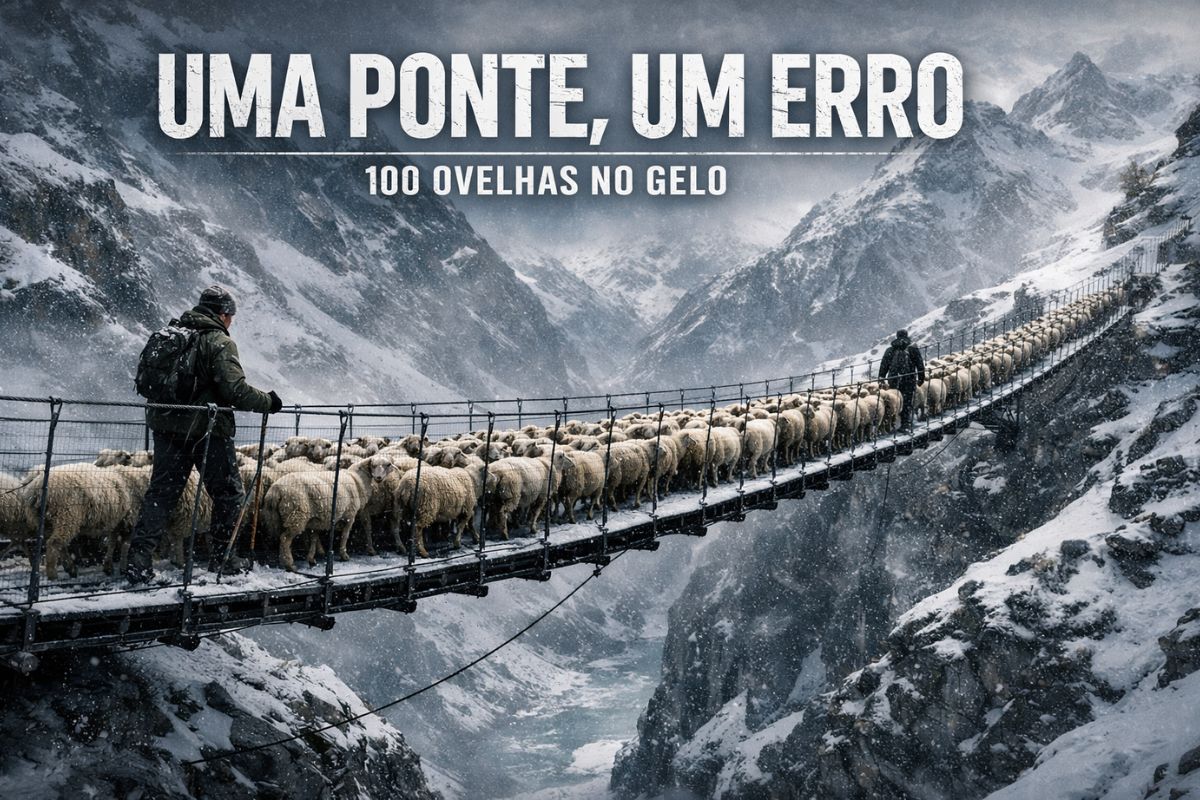


Between June and September, shepherds in South Tyrol guide one hundred animals over more than 3,000 meters of altitude, crossing turbulent rivers, a glacier, and the border between Italy and Austria, facing wolves, avalanches, suspension bridges, and a real risk of death to keep this ancient alpine tradition alive.
Since April 25, when the first sheep ascend to the high pastures of South Tyrol, until early June, when the flock finally faces the glacier at the border between Italy and Austria, shepherds repeat year after year a journey as beautiful as it is dangerous in the Alps. The route passes through icy rivers, loose stones, fresh snow, ice, and a suspension bridge at a dizzying height.
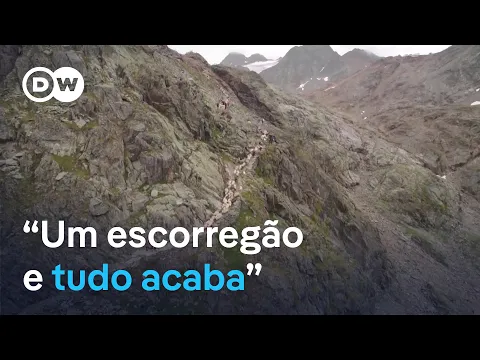
On a route that reaches about 3,000 meters of altitude, any slip can cost a life. In the late 1970s, a snowstorm knocked around 70 sheep off a cliff, forever marking the memory of the shepherds. Still, the transhumance of South Tyrolean shepherds continues firmly and today is recognized as a UNESCO World Heritage, a symbol of resilience in a rural world that reinvents itself to survive.
The Only Shepherd Crossing That Crosses a Glacier and a National Border

What happens every year between South Tyrol in Italy and the Austrian valley of Eartstal is more than just a change of pasture. It is the only transhumance in the world that crosses a glacier and a national border, connecting two countries through a trail of snow, ice, and rock.
-
Italian researchers have detected what appears to be a second Sphinx buried under the sands of Egypt, and satellite scans reveal a gigantic underground megastructure hidden beneath the Giza Plateau for over 3,000 years.

-
There are 4,223 drums and 1,343 metal boxes concreted with 50-centimeter walls that store the radioactive waste from Cesium-137 in the worst radiological accident in Brazil, just 23 kilometers from Goiânia, with environmental monitoring every three months.

-
Giant Roman treasure found at the bottom of Lake Neuchâtel in Switzerland reveals an advanced trade system, circulation of goods, and armed escort in the Roman Empire about two thousand years ago.

-
He buried 1,200 old tires in the walls to build his own self-sufficient house in the mountains with glass bottles, rainwater, and an integrated greenhouse.

The animals begin their journey still in the Italian valley, at around 800 meters of altitude, gathered by breeders like Thomas and his colleagues.
In just a few days, the flock must climb more than 2,000 meters of elevation, overcoming steep slopes, stretches of deep snow, and sections of trail so narrow that a distraction can mean a fatal fall. Lush alpine meadows await on the other side, but the path to get there is always a gamble against the weather and the terrain.
Glacier, Turbulent Rivers, and a Suspension Bridge Where a Mistake Is Not Allowed
Each season, the shepherds check the route with almost obsessive attention. In years like this, when June still starts with a lot of snow, the departure is delayed.
Up high, the weather changes three times a day: strong winds, sudden snow, fog, and freezing rain turn the ascent into a test of nerves.
Along the way, there are critical stages. One of them is the mountain stream that the flock must cross without spreading out.
The shepherds move ahead and behind the sheep, shouting commands, to ensure that no animal stops, hesitates, or panics in the current.
Another is the narrow suspension bridge, just near Rofenarra. There, the order is clear: a few animals at a time, always in motion. If a sheep falls into the water, it’s lost.
After hours of climbing, the flock reaches the summit cross in Tinurer, at 2,800 meters of altitude. For them, it’s “normal.” The pause is short.
The descent on the ice is often even more exhausting than the ascent. Every hidden snow step, every loose stone, is a reminder that the mountain “always demands something” and that not everyone makes it to the top.
Marcos: 25 Years, 100 Sheep, One Dog, and an Entire Summer Alone at 2,400 Meters

At the center of this tradition is Marcos, a 25-year-old from South Tyrol. He will be responsible for 100 sheep throughout the summer, in a cabin at 2,400 meters of altitude, accompanied only by his dog.
Like his grandfather did, he spends months almost isolated, watching over the flock, monitoring the weather, and walking daily through areas totaling around 1,000 hectares.
The cabin provides the bare minimum: a gas stove, running water, an extra bed for visitors, and electricity. Every morning, Marcos prepares coffee, observes the valley below, and heads out for the first round of the day.
He checks for sick animals, whether any lamb has strayed from the flock, and if the salt licks are still full. At the beginning of the season, a helicopter drops about 15 kilograms of salt, which the shepherd distributes in strategic locations.
For Marcos, the reward is not in money, but in what he sees with his own eyes. He watches the little lambs arrive in spring and, in autumn, sees stronger, heavier animals with grown wool and well-fed. Seeing this cycle repeat is, for him, the true payment.
High-Risk Work, Little Money, and an Economy That Doesn’t Add Up
Being a shepherd in the Alps is not a comfortable job. It is high-risk work, with the threat of landslides, falls on steep slopes, and lightning. Marcos is paid by 40 sheep breeders to take care of the animals in summer.
In winter, he needs to find another job. The same applies to Johan, his brother, who divides his year between the family farm and a job at the ski resort.
The shepherds themselves admit: today, alpine shepherding is almost “a hobby that doesn’t yield profit”. The price of wool is so low that it barely compensates for the effort.
Meat brings in a little more, but it generally only covers the costs of feed, transport, and care for the animals. To invest in the farm, it is necessary to add the salary from other jobs and the few subsidies they receive.
Even so, they persist. Without the sheep, the slopes would quickly be taken over by vegetation, which alters the balance of the alpine environment.
The flock helps keep alpine meadows open, reduces the risk of major fires, and keeps alive a landscape that is part of the region’s identity.
Entire Families Involved, from Children to 72-Year-Old Veterans
The annual crossing is not done only by young men with firm steps. It brings together children, veterans, and entire families.
Thomas, for example, is a plumber by trade, but he takes care of sheep out of tradition and for personal use. His son, Elias, 12 years old, misses a day of school to help with the drive. For the boy, this is “one of the best days of the year.”
On the other side of the age scale is Carlo, 72 years old, one of the oldest in the driving team. He climbs and descends the steep slopes with surprising lightness. The recipe, according to him, is simple: live healthily and stay active.
Marcos’ uncle, Hans, completes the team of veterans. For almost 60 years, he has been responsible for controlling the crossing on the suspension bridge, where one mistake can mean losing an animal in the river.
Meanwhile, life continues on the farm. Johan’s cows remain in the barn producing as much milk as possible before heading up to pasture.
Families alternate their schedules between fieldwork, school, urban jobs, and ski season, but when the time for transhumance comes, everyone returns to the same axis: the sheep on the alpine trail.
Wolves, Bears, and Official Compensations: New Threats to Shepherds
If snow, stones, and abysses have always been part of the landscape, predators are gaining recent prominence. Estimates indicate that around 80 wolves currently live in South Tyrol, attacking flocks frequently.
Just in 2023, the local government paid nearly 100,000 euros in compensations for damages caused. And now bears are also starting to appear in the region.
So far, Johan and his colleagues have not lost any animals to wolves, but the concern is real. Shepherds like Jan, who arrives with his flock of goats to share the route, recognize that the situation can change.
For him, if the predators increase to the point of doing “whatever they want” with the flocks, this ancient tradition may disappear.
It’s a dilemma that puts much more than numbers at stake. Behind each attack, there are years of work, investments in genetics, daily care of the animals, and the emotional bond of entire families with their flocks.
Amidst subsidies, fences, guard dogs, and official compensations, the significant challenge is to find a balance that allows wolves to survive without pushing shepherds out of the mountains.
The Return to the Valley, the Relief After the Storm, and the Promise to Return
After an entire summer spread across the mountain, in September, the sheep need to descend back to the valley in South Tyrol.
In the last days up high, Marcos and his helpers spend hours gathering animals that have scattered across different slopes. The smaller lambs, unable to face the complete trail, are taken down first.
The return journey is tense from the start. The exit from the enclosure is made in small groups, to avoid chaos on the suspension bridge.
The weather threatens to turn, the sky closes in with fog, rain, and cold wind. Even so, the sheep advance at a surprising pace.
In a particularly steep stretch, any fall can be fatal. The shepherds, soaked and tired, only think about reaching a dry spot, knowing that they still have another entire day of marching ahead.
In the valley, the scenery changes. The next day, the sun shines again and residents gather to welcome the flock.
After more than eight hours crossing the mountains, shepherds and animals finally arrive home without fractures or injuries.
In the final count, only two animals died throughout the season, a number considered excellent for such a risky crossing.
Marcos breathes a sigh of relief upon hearing the treasurer’s verdict: “everything went well.” And it’s already being talked about, almost naturally, to do it all again next year.
The Future of an Ancient Tradition Hanging on a Narrow Bridge
Between the simple cabin at 2,400 meters, the flock of 100 sheep, the 80 wolves lurking in the region, and a rural economy that barely breaks even, the future of this alpine transhumance is far from guaranteed. Yet, the shepherds repeat the same phrase: “this is how we live”.
They were born with their feet firmly on the ground, attached to the farm, the slopes, and the animals. They carry the idea that someone needs to continue, so that those who come after also have something.
And you, would you dare to spend months isolated at 2,400 meters of altitude, with a dog, one hundred sheep, the risk of avalanche, wolves lurking, and a suspension bridge between you and the valley just to keep an ancient tradition alive?










20