





 Portuguese
  English
  Spanish
  3 min of reading
  0 comments


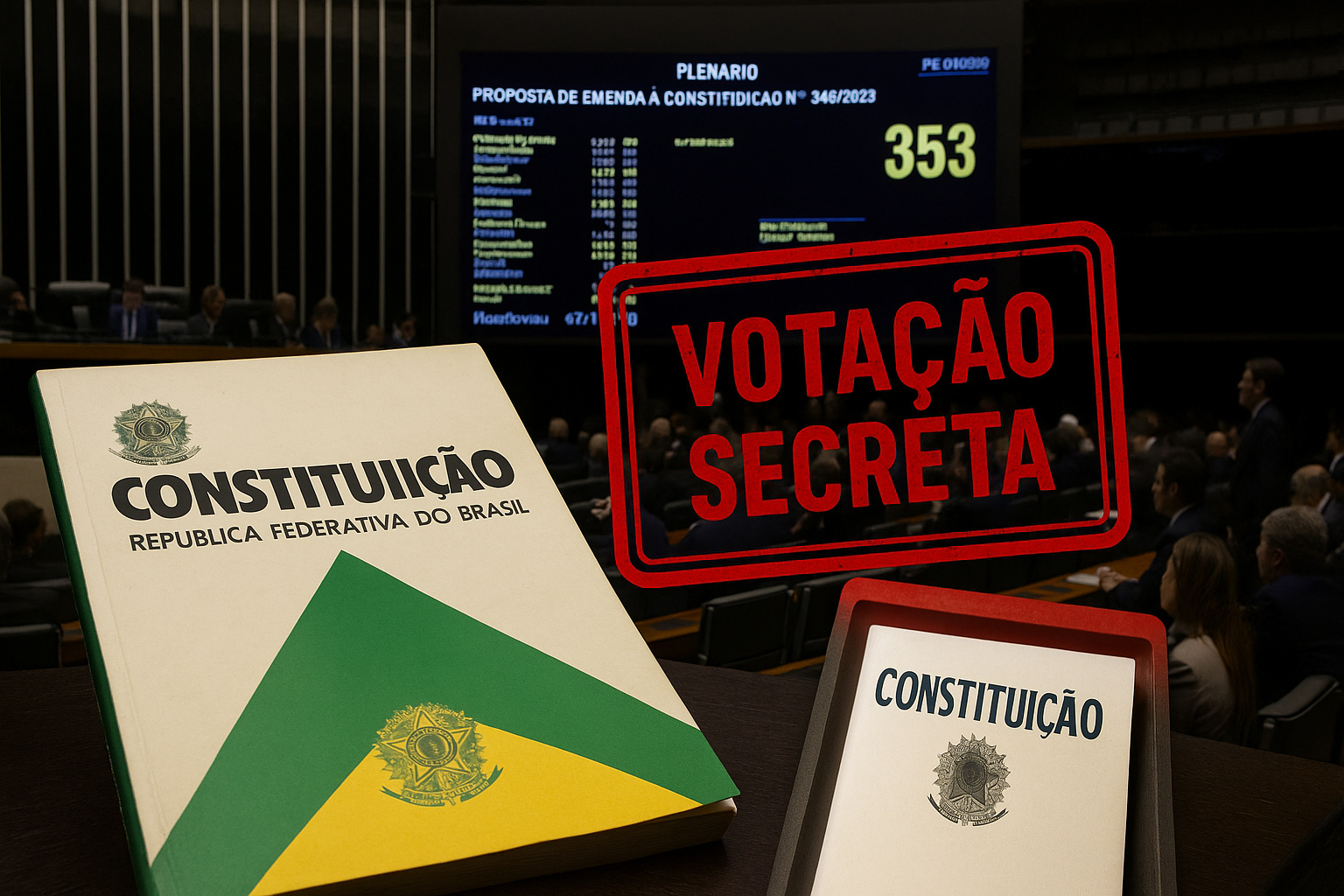
Proposed Amendment to the Constitution, Nicknamed PEC of Shielding, Requires Prior Approval from the Chamber or Senate for Criminal Actions Against Deputies and Senators in Secret Voting, Rekindling Debate on Impunity and Abuse of Power.
The Chamber of Deputies approved, in the first round, on Tuesday night (16), the so-called PEC of Shielding (PEC 3/2021), which makes it more difficult to initiate criminal actions against deputies and senators. The text received 353 favorable votes, 134 against, and one abstention, comfortably exceeding the 308 votes required. It now requires a second round of voting to move to the Senate.
The proposal alters the Constitution and determines that parliament members can only be criminally prosecuted with prior authorization from the respective Legislative House, approved in a secret vote by an absolute majority of its members. Additionally, it expands the privileged forum by extending the prerogative to also include party leaders with seats in Congress.
What Changes with the PEC of Shielding
According to the text reported by Deputy Claudio Cajado (PP-BA), deputies and senators cannot be arrested or prosecuted without authorization from their Houses, except in cases of flagrant offenses that are non-bailable. In these cases, the arrest must be assessed within 24 hours in a secret vote, and can be overturned by a simple majority.
-
The noise law will no longer be in effect at 10 PM starting in June with a new rule valid during the 2026 World Cup.

-
The Chamber opens a debate on driver’s licenses at 16 years old as part of a reform that includes around 270 proposals to change the Brazilian Traffic Code and may redesign rules for licensing, enforcement, and circulation in the country.

-
The new Civil Code could revolutionize marriages in Brazil with “express divorce” and changes that could exclude spouses from inheritance.

-
Banco do Brasil sues famous influencer for million-dollar debt and intensifies debate on delinquency, risks of seizure, and direct impact on Gkay’s credibility.




The PEC also ensures that party leaders can only be prosecuted in the Federal Supreme Court (STF), with a forum equivalent to that of parliament members. Supporters of the measure argue that it aims to “rescue original prerogatives” from the 1988 Constitution, which were altered in 2001.
Arguments in Favor: Protection Against Political Persecution
According to Rapporteur Claudio Cajado, the goal of the PEC is not to shield wrongdoing, but to protect parliamentary activity against judicial abuse. “This is not a license for abuse. It is a protective shield for the defense of parliament members, the sovereignty of the vote, and respect for the National Congress,” he stated.
Leaders of the PL party, in opposition, reinforce the argument that the measure corrects “excesses” from the STF and reestablishes rules that existed before Constitutional Amendment 35/2001, when prior authorization from the Houses was required to prosecute parliament members.
Criticism: Open Road to Impunity
For critics, the PEC represents a setback that increases the sense of impunity among deputies and senators. Deputy Érika Kokay (PT-DF) classified the measure as “absurd,” highlighting that parliament members would be deciding whether they themselves could be prosecuted.
The leader of the PT, Lindbergh Farias (RJ), also condemned the project: “I honestly do not see how this could be in the interest of the Brazilian people in a PEC that protects parliament members. Our agenda should focus on the lives of the people.”

Political Impact and Context
The voting takes place amid a tense environment between Congress and the STF, intensified after the house arrest of former President Jair Bolsonaro and of parliament members accused of involvement in coup acts.
The leader of the PL, Sóstenes Cavalcante (RJ), stated that the goal is to “reestablish the text of the 1988 Constitution,” ensuring that investigations can take place, but that proceedings only advance with parliamentary approval.
The measure, however, further expands the debate over the limits of the privileged forum, already considered excessive in Brazil. Currently, deputies and senators can only be tried by the STF, but can have actions suspended by their Houses.
The PEC still needs to be voted on in the second round in the Chamber and then go to the Senate. If approved, it will represent a significant change in the system of checks and balances between the branches, strengthening the autonomy of the Legislative, but raising questions about impunity for common crimes, such as corruption, violence, or fraud in parliamentary amendments.










-

Uma pessoa reagiu a isso.