





 Portuguese
  English
  Spanish
  8 min of reading
  2 comments


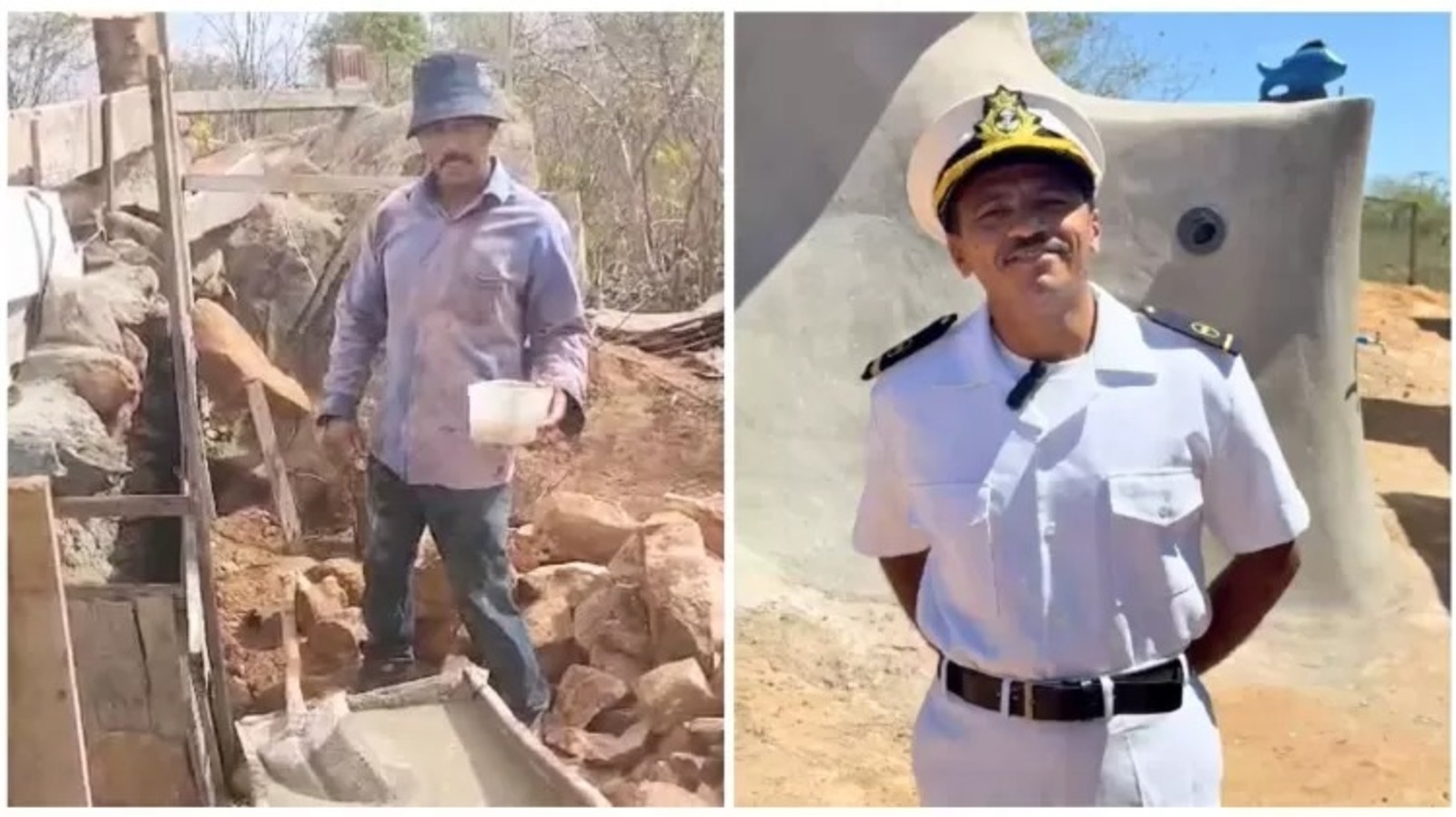


In The Potiguar Region, Watchman Builds Cement And Stone Titanic; Creative Work Already Attracts Tourists And Promises To Become A Cultural Attraction
Five years ago, a watchman decided to turn an unusual dream into reality. In the hinterlands of Rio Grande do Norte, 200 km from the sea, he is building a “replica” of the Titanic with his own resources and the help of his wife. The work draws attention due to the dedication and creativity in the northeastern interior.

The Construction Of The Dream
Jailson Gomes dos Santos, 52 years old, has been working as a watchman for two decades. He takes advantage of vacations and weekends to build the “ship” of stone, sand, and cement in Santa Cruz (RN), in the community of São Francisco de Assis.
The municipality has just over 40,000 inhabitants and has gained a new point of tourist curiosity with the work.
-
The Argentine government celebrates the lowest poverty rate in 7 years, but experts warn that the methodology has changed, real wages have fallen, unemployment has risen, and the number of people on the streets of Buenos Aires has increased by 57% since Milei took office.

-
7.8 magnitude earthquake in Indonesia frightens the population, triggers tsunami alert, and hits an island with over 200,000 inhabitants this Thursday.
-
Google will finally let you change that embarrassing Gmail address you created in your teenage years without losing any accounts, logins, or old emails: the feature is already available in the United States.

-
Heading to Brazil in a Bonanza F33 single-engine aircraft: a couple departs from Florida on a visual flight, makes technical stops in the Caribbean to refuel and organize paperwork, and begins the staged crossing until they reach the country.

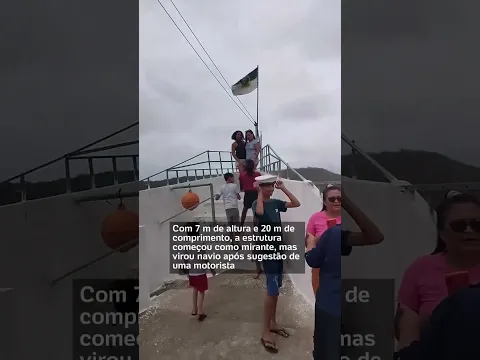
The 100-square-meter plot also houses a vacation home. The structure already reaches seven meters in height and 20 meters in length.
It all started as a simple viewing tower project, but took a new direction after a suggestion from a rideshare driver, who saw in the shape of the stones a similarity to a ship.
Personal Sacrifices
Without financial support, the watchman finances the construction with his own money. Many times, he forgoes buying basic products to invest in the project. “I even skip buying meat to spend on the Titanic,” he says. This effort shows Santos’ determination to complete the project.
In addition, the routine is intense. He works every night as a watchman and during the day dedicates himself to the ship. He defines himself as an “amateur mason” and spares no effort to see the work progress. “It’s my dream,” he sums up.
The work is not solitary. His wife, Maria de Lima Rocha, 62 years old, shares the task and is referred to by him as “excavator.” The couple has been together for 30 years and has no children.
Amid cement and stones, they build together not only the replica but also a story of partnership and companionship. “She supports the work and helps with everything,” jokes Santos.
A Ship That Welcomes Visitors
The “Hinterland Titanic” began attracting visitors even before it was completed. On weekends, families and couples visit the space for photos and videos.
Many imitate the famous scene of Jack and Rose, with arms outstretched at the bow, like in the film starring Leonardo DiCaprio and Kate Winslet.
This interaction brought life to the project. The space, initially just a construction, has now also become a scene of leisure and emotion. People from neighboring cities and even from other states have already passed by the site.
Captain Jailson
To receive visitors, Santos wears a captain’s uniform. The outfit was a gift from a friend and is now part of the experience.
“When I dress like this and see the children taking photos, I get emotional and cry a lot,” he shares. In the area, speakers play background music with the Titanic soundtrack and the sound of waves, creating a navigational atmosphere.
Thus, every detail seeks to make the experience even closer to that of a real ship. “I want people to feel like they are sailing,” explains the watchman.
Cost And Perseverance To Build The Titanic
Despite repurposing stones left from highway construction, Santos still needs to spend on sand, cement, and wood.
He has already used more than a truckload of cement and several truckloads of sand. Still, he maintains his determination. “I ask God for health and courage to finish. One day I will get there,” he states.
Visits are free, but he does not rule out charging a symbolic fee in the future. The idea is to invest in finishing and maintaining the space, should he receive support.
Official Recognition
The Santa Cruz City Hall is already observing the project with interest. Tourism Secretary Jozy Carvalho considers the work an expression of popular identity.
According to her, the municipality can offer publicity and guidance, in addition to seeking partnerships. “It’s living culture, proof that tourism also arises from the soul of the people,” she affirms.
Moreover, Carvalho highlighted that the work is a source of pride for the city. For her, the “Hinterland Titanic” complements the already established tourist route around the statue of Santa Rita de Cássia, considered the largest in the world dedicated to a saint.
“Every novelty that arises can enrich the experience of those who visit Santa Cruz,” she reinforces.
Dream Of National Projection
Santos’ desire is to see the project recognized nationally and even internationally. He believes that the ship can become a relevant tourist attraction.
“I want the world to know the work one day,” says the watchman, who has already been nicknamed “Captain Jailson” by visitors.
In the meantime, he continues building his country-style Titanic, stone by stone. Amid sacrifices, emotion, and perseverance, the work is taking shape and attracting more and more curious visitors.
What began as a pile of stones is now seen as a symbol of creativity and passion in the potiguar hinterland.
With information from UOL.
More Unusual Facts: 60% Of The Residents Of This City Live Underground And The Reason Is Surprising
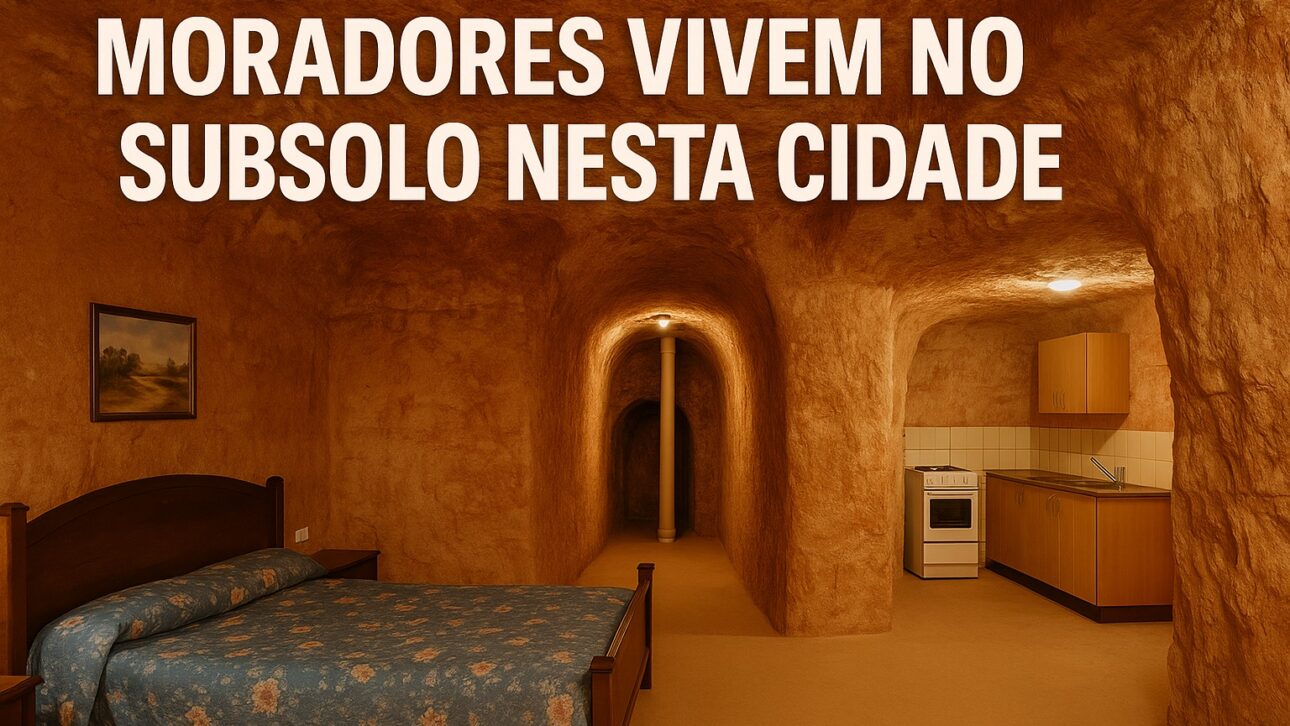
In the arid heart of Australia, Coober Pedy has become a symbol of resistance and creativity. Facing temperatures that can reach 52°C, the population found in the subsoil the best way to survive. Most live in houses carved into the rocks, a solution that ensures thermal comfort and savings.
This choice, which seems eccentric, could point to pathways for the future of cities in a warmer world.
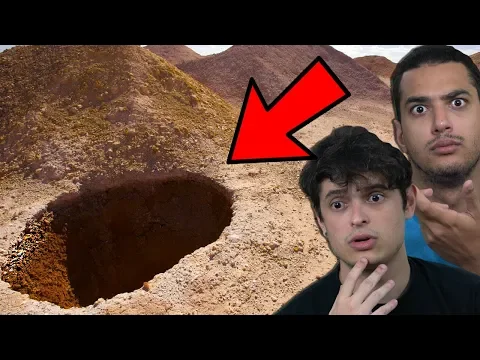
Located nearly 850 km from Adelaide, Coober Pedy impresses with its unique landscape. Sand pyramids mark the ground, resulting directly from opal mining.
These mounds also indicate the presence of subterranean homes. White ventilation pipes are the most visible signs of life underground.
About 60% of the 2,500 residents live in homes within the rocks, adapting to the hostile desert environment.
The Heat That Requires Innovation
In the summer, temperatures reach unbearable levels. Birds fall from the sky, and electronic equipment needs to be stored in refrigerators.
In winter, living underground may seem extravagant, but in the peak of the heat, this decision proves essential. The temperature stability of the subsoil ensures living conditions that would be unviable on the surface.
The practice of taking shelter underground is not new. Ancient peoples turned to this resource in different parts of the world.
Tools found in South Africa and traces of Neanderthals in France confirm this millenary strategy. Even chimpanzees in Senegal have been observed seeking caves on extremely hot days.
One of the most impressive examples is the underground city of Derinkuyu in Turkey, discovered in 1963.
Capable of housing 20,000 people, it had stables, churches, and ventilation wells. The constant temperature of 13°C in the subsoil made life more comfortable and safe.
The Advantages Of Living Underground
In Coober Pedy, the temperature of the underground houses remains stable around 23°C. While the heat on the surface can be suffocating, the interior of the residences remains pleasant year-round.
This condition reduces the need for electricity, making the lifestyle cheaper. Jason Wright, a local resident, explains that living above ground requires high costs for heating and cooling, something impractical for many.
Besides the economy, the value of subterranean properties is surprisingly affordable. Three-bedroom houses can cost 40,000 Australian dollars, far below the 700,000 charged in Adelaide.
Another unexpected benefit is the absence of insects, as flies tend to avoid dark and cold environments. The silence and lack of light pollution make underground living even more attractive.
Luxury Houses Underground
Although many homes are simple, some stand out for their luxury. There are houses with underground pools, game rooms, and large bathrooms.
One resident even built a “castle” with 50,000 exposed bricks and arched doors. Wright states that there are true surprises hidden beneath the city, visible only to invited guests.
Even the safety against minor tremors is cited as an advantage, as vibrations go unnoticed underground.
The Rock That Makes Everything Easier
One of Coober Pedy’s secrets lies in the type of rock. local sandstone and siltstone are soft and easy to dig, often even with a fingernail.
This characteristic has allowed residents to expand homes with simple tools or use abandoned mines as a base.
Today, modern machines speed up the process, removing cubic meters of rock per hour. The structure remains stable without the need for additional reinforcements, allowing for spacious and creative halls.
Interestingly, occasional mining still yields surprises. One resident found a large opal while making room for a shower.
A hotel discovered stones valued at 1.5 million dollars during a renovation. In Coober Pedy, digging means both living and having the chance to get rich.
Where This Model Does Not Work
Despite its benefits, underground living cannot be applied everywhere. Humid regions face serious challenges.
The London Underground, for instance, required multiple layers of waterproofing in the 19th century. Still, mold problems persist.
Caves in Israel, built in porous rock, suffer from doubled humidity, making the spaces inhospitable.
In Coober Pedy, the scenario is different. The town sits on dry sandstone, allowing for air circulation through ventilation shafts.
This ensures comfort and prevents deterioration caused by humidity. The arid climate makes the region a special case, difficult to replicate in wetter areas.
The Risks And The Future
Although there are reports of occasional collapses, such as the one that hit the former house of Barry Lewis, from the local tourist center, residents consider underground living safe.
Wright emphasizes that the experience outweighs any concern. For him, it is enough to feel the 50°C heat on the surface to appreciate the cool shelter of his home.
The example of Coober Pedy shows the human capacity to adapt to extreme conditions. With the advance of climate change, similar solutions may gain ground in other parts of the world.
The subsoil, often seen as a curious alternative, could become a practical response to an increasingly warmer planet.
Thus, if new heatwaves spread, other cities may follow the Australian model. Sand pyramids similar to those of the Australian desert may emerge in different regions, marking a future where living underground ceases to be an exception and becomes an essential survival strategy.
With information from Gazeta de São Paulo.







Quantas pessoas esse **** poderia ter ajudado ?
Acreditem quando alguem lhes dizer que a imbecilidade e **** do brasileiro sao gigantescas.