





 Portuguese
  English
  Spanish
  7 min of reading
  14 comments


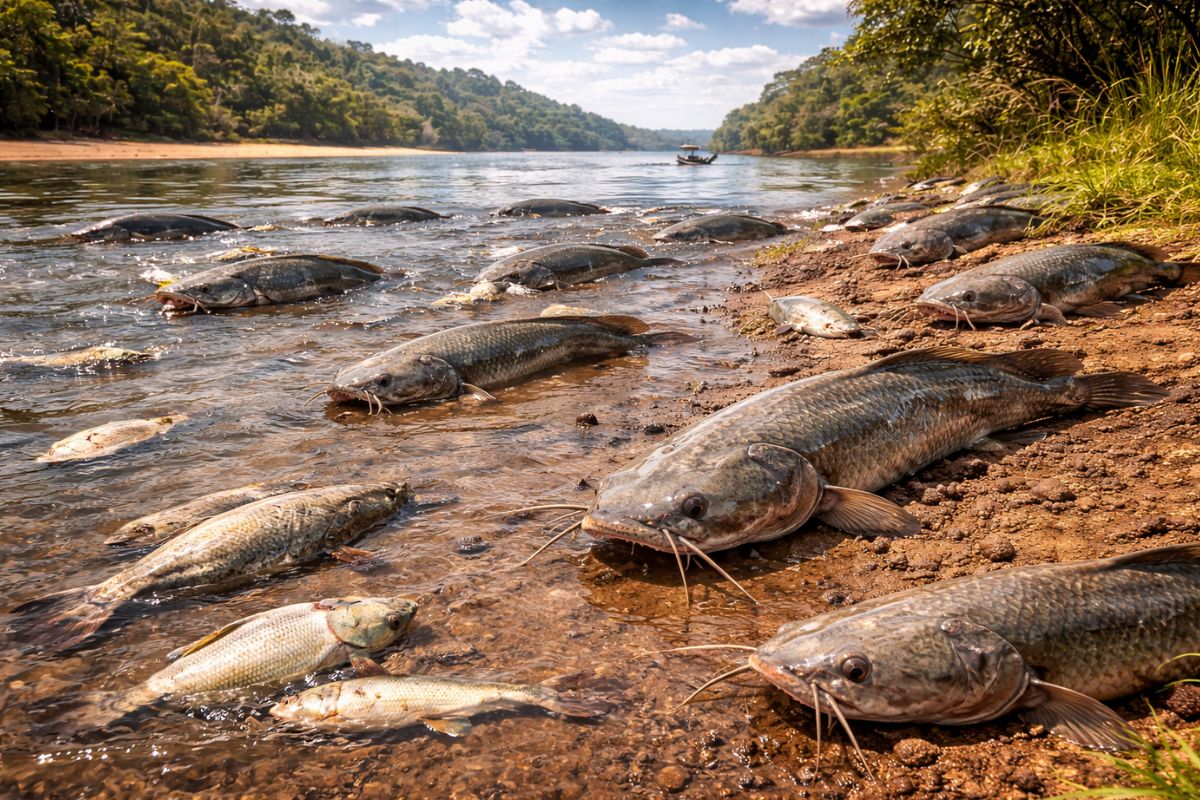


The Invasive African Catfish Is Spreading Through Rivers in Goiás, Reducing the Presence of Native Species, Resisting in Extreme Conditions, and Worrying Experts About the Risk of Amplifying Environmental Imbalance and Reaching the Araguaia River.
The invasive African catfish has become an increasingly prominent environmental issue in Goiás, especially in the Meia Ponte River, where fishermen and environmentalists already report accelerated advances of the species and a visible reduction of native fish. Carnivorous, resilient, and lacking an effective natural predator in the state, it has begun to aggressively occupy space and alter the dynamics of the aquatic environment.
The concern goes beyond the current presence in already affected stretches. The advance of the invasive fish raises fears about its arrival in other Goiás rivers, including the Araguaia, a scenario that could further amplify the impact on local fauna. What is at stake is not just the proliferation of an exotic species, but the risk of disorganization of entire food chains in the region’s rivers.
How the Invasive Fish Found a Favorable Environment in Goiás
The advance of the invasive fish gained momentum in a context already marked by environmental degradation. In the Meia Ponte River, dirty water, sewage, and waste have created conditions that favored the reproduction of the African catfish.
-
In a flooded well, archaeologists found a 1,700-year-old Roman egg that still contains clear and yolk intact inside the very thin shell.

-
Something is happening around the Earth: Inside the huge explosion of fireballs in 2026

-
A hot air bubble coming from Argentina expands over Brazil, causing thermometers to exceed 38 degrees with a thermal sensation of 40 degrees in late March, affecting 6 states at once.

-
The radish leaf that almost everyone throws away has more polyphenols, flavonoids, and fiber than the consumed root, and a 2025 study showed that the leaf contains compounds that protect the intestine, combat inflammation, and may inhibit the growth of cancer cells.


The species shows a great capacity for adaptation and thrives precisely in areas where other forms of life are already under pressure.
According to the reports presented, the stretch of the Meia Ponte near the old hydroelectric plant has begun to function as a sort of nursery for the African catfish.
The fish swim upstream to spawn but encounter a physical barrier and end up stranded in a pool where food is plentiful.
This accumulation of species in a restricted area further favors the expansion of the invasive fish, which finds both space for reproduction and ample prey.
African Catfish Described as Superpredator of Goiás Rivers
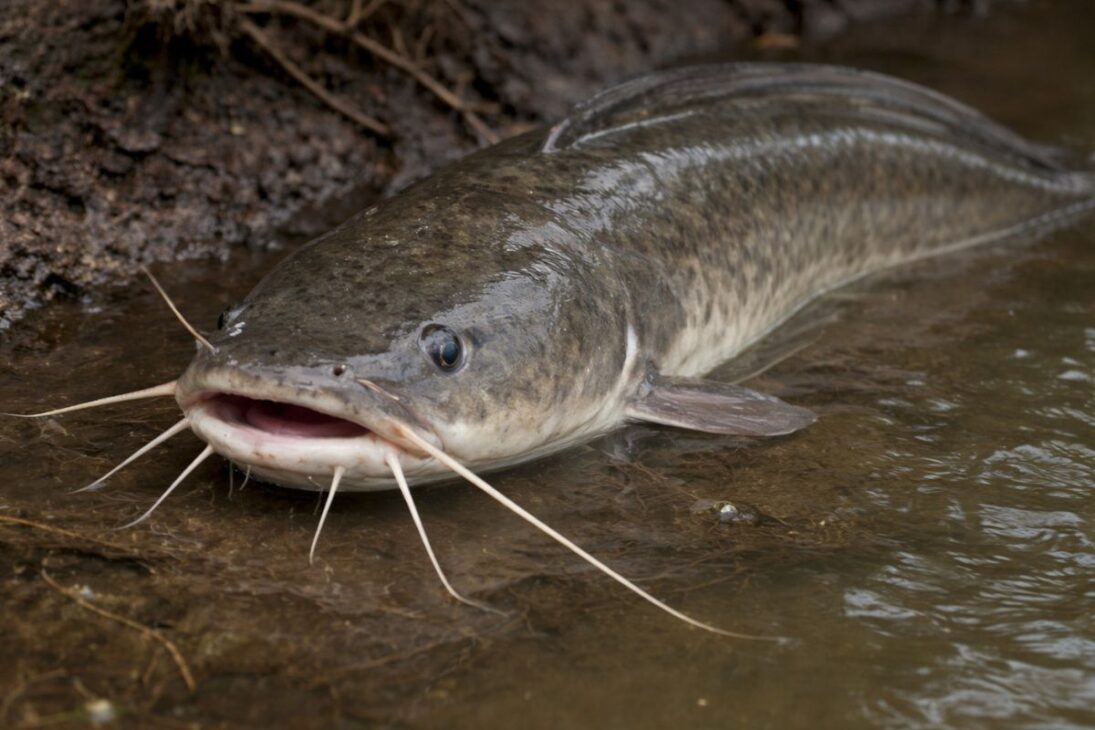
The African catfish is concerning because it has several characteristics that are difficult to contain. The invasive fish is carnivorous, has great physical strength, grows quickly, and can reach a significant size, approaching about 1.5 meters, according to reports from the article. Additionally, it shows high resilience and ease of adaptation to degraded environments.
The biologist quoted in the material defines the species as a superpredator. This is because it feeds on other fish, crustaceans, amphibians, aquatic birds, eggs, larvae, fingerlings, and even aquatic plants.
This is not an animal that merely competes for space with local fauna. It occupies the top of the food chain and consumes precisely the organisms that sustain the equilibrium of the ecosystem.
Fishermen Report Disappearance of Native Species
Reports from those who live riverside reaffirm the seriousness of the issue. Fishermen who have frequented the Meia Ponte for decades assert that the presence of the African catfish coincided with a decline in the catch of traditional species in the region. Fish such as piau, piranha, caranha, pintado, and papa terra have begun to appear in smaller quantities.
This testimony holds weight because it is not based solely on a point observation. It is a comparison made by those who have followed the river over the years and have noticed a clear change in the behavior of the fauna.
When an invasive fish spreads and native fish practically disappear from the fishing routine, environmental imbalance ceases to be a hypothesis and becomes a reality.
The Invasive Fish Impresses With Its Strength and Resilience
Another point of concern is the physical resilience of the African catfish. Fishermen describe the animal as strong, heavy, and difficult to pull from the water.
Even smaller specimens already offer significant resistance during capture, which helps explain why the species can establish itself in competitive environments.
Moreover, resilience is not limited to the fishing moment. The invasive fish withstands water with low oxygen levels, lives in contaminated areas, manages to remain in muddy environments, and also exhibits an unusual ability to survive outside of water.
The material cites studies speaking of survival for up to 24 hours, but also brings the account of an informal test where a specimen allegedly survived for six days before dying. This combination of strength, hardiness, and extreme adaptation makes the African catfish a very difficult adversary to control.
Ability to Breathe Outside Water Increases Dispersion Risk
One of the most concerning aspects of the African catfish is its accessory aerial respiration, described as a form of adaptation that allows it to survive in the absence of water for extended periods.
When it senses that the environment is drying up, the animal produces a thick mucus that protects its skin and helps in its survival.
This biological resource increases the risk of dispersion because the invasive fish can crawl on moist soil or over mud in search of another body of water. This means it does not solely depend on the natural course of the river to advance.
The ability to leave the water and seek another environment reinforces the species’ colonization potential and makes the issue even more delicate for environmental control.
Old Dam Helps Concentrate Reproduction in the Meia Ponte River
The structure of the old decommissioned hydroelectric plant is also an important piece to understand the species’ advance. According to the article, many fish swim up the Meia Ponte River to spawn, but they find a barrier in this stretch that interrupts their ascent.
The result is the concentration of different species in the same area, creating an ideal food base for the African catfish.
The invasive fish finds a favorable environment there to grow, reproduce, and feed easily. When a physical barrier combines with a polluted river and a highly resilient species, environmental imbalance tends to worsen more quickly.
Environmentalists Fear Advance of Invasive Fish to the Araguaia
The specialists’ concern is not limited to the Meia Ponte. The fear is that the African catfish will continue to advance and reach other important rivers in Goiás, especially the Araguaia.
This concern arises because the species has already been found at various points in the state, indicating that the expansion is not limited to a single watercourse.
If the invasive fish reaches the Araguaia, the impact could gain another scale. This is a river of enormous environmental, economic, and social importance, and the entry of a predatory exotic species could further pressure native fish and alter food chains in a much broader area. The alert, therefore, is not just local. It points to a significant regional risk.
Absence of Natural Predator Aggravates Environmental Imbalance
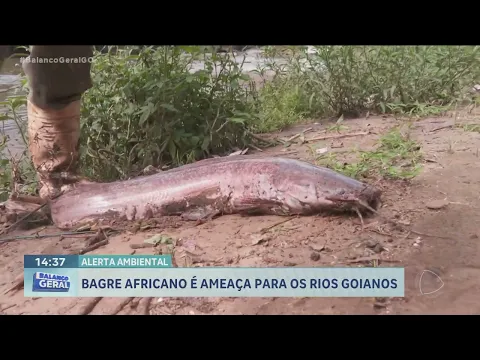

The situation becomes even more serious because, according to the quoted biologist, the African catfish practically has no natural predator in Goiás. The tucunaré is mentioned as a species capable of fulfilling this role, but it is also exotic to that basin.
In practice, this means that the invasive fish occupies the top of the food chain without an efficient ecological brake. It consumes other species and continues to reproduce at an accelerated rate.
The report mentions that each specimen can release over a thousand eggs, which helps explain the speed of the infestation. Without a predator and with high reproductive capacity, the species finds an open path to dominate the habitat.
What Specialists and Fishermen Advocate in the Face of Species Advance
In light of the proliferation, the biologist quoted in the report advocates for large-scale studies to measure the number of individuals present in Goiás rivers and assess the species’ reproductive level. The idea is to map the real size of the problem to guide more effective responses.
At the same time, the recommendation reiterated in the material is for fishermen not to return the African catfish to the rivers after capture.
According to the specialist, the animal should be quickly removed from the environment to avoid further proliferation.
The interviewed fisherman states that he adopted this practice precisely because he understands that the invasive fish already poses a direct threat to native species. Without monitoring, control, and local engagement, the trend is that the advance will continue.
Environmental Problem Has Already Transcended the Alert Stage and Entered the Urgency Stage
The case of the African catfish in Goiás shows how an exotic species can profoundly alter the environment when it finds favorable conditions to spread.
The invasive fish no longer appears merely as a biological curiosity or an isolated fishing problem. It has come to represent a concrete pressure on the fauna, on the reproduction of native species, and on the balance of the rivers.
The combination of factors is concerning: polluted water, absence of predators, high resilience, accelerated reproduction, and ability to survive outside water.
All this makes the African catfish one of the clearest examples of how a biological invasion can quickly become a serious environmental problem.
In your opinion, can the advance of this invasive fish in Goiás still be controlled, or has the problem reached a much more difficult point to reverse?





Espécie existente importada À DECADAS no Brasil . Quem importou ? O Ministério da Pesca existente na época não sabia disto ? Ou como sempre “Não sabia de nada !!!!!!”
Parece já bem mais complicado de resolver devido as características dele.Acho que o peixe já está bem a frente do homem em conter seu avanço para outros leitos d’água.Se há medidas a serem tomadas,devem ser para ontem.
Este peixe tem a capacidade de sobreviver sobre a lama por muito tempo e imerge no período chuvoso.