





 Portuguese
  English
  Spanish
  5 min of reading
  0 comments


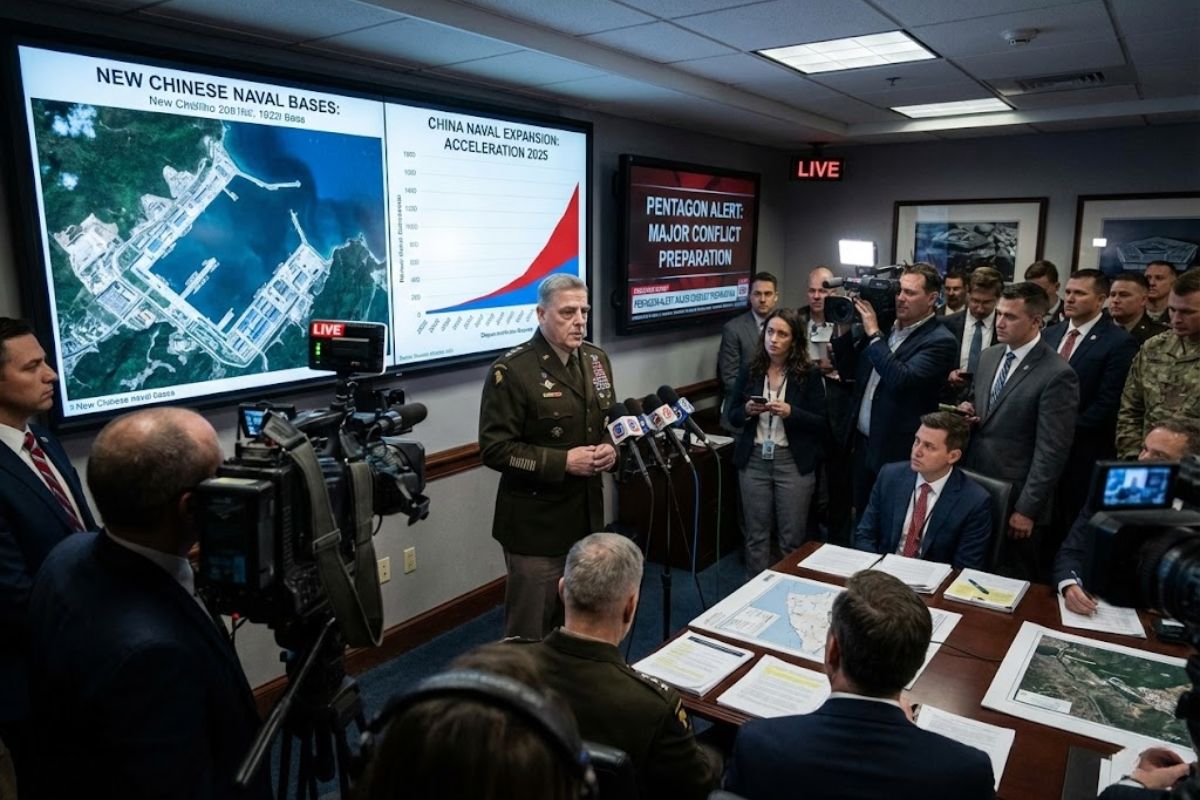
Pentagon Report Describes How China Accelerates Military Expansion for Four Decades, Triples Capabilities, Strengthens Chinese Navy, Aims at Taiwan by 2027, Expands Nuclear, Cyber, and Space Arsenal Capable of Directly Hitting American Territory, Pressuring Allies, and Redesigning the Balance in the Indo-Pacific and Military Force Correlation
In an annual security report sent to the United States Congress ahead of the anticipated summit between Washington and Beijing in the spring of 2026, the Pentagon states that China Accelerates Military Expansion for at least four decades, combines mobilization for total war, and expands the Chinese navy, nuclear arsenal, and cyber and space capabilities to the point of making American territory more vulnerable.
In the same analysis, officials warn that if the current trajectory is maintained, Beijing could have enough naval power by 2027 to test the United States around Taiwan, supported by an accelerated defense industry, a continuously expanding Chinese navy, and a long-range conventional and nuclear arsenal capable of directly hitting U.S. strategic targets.
Pentagon Report and the Reading That China Accelerates Military Expansion

The document presented to Congress describes a change of level.
-
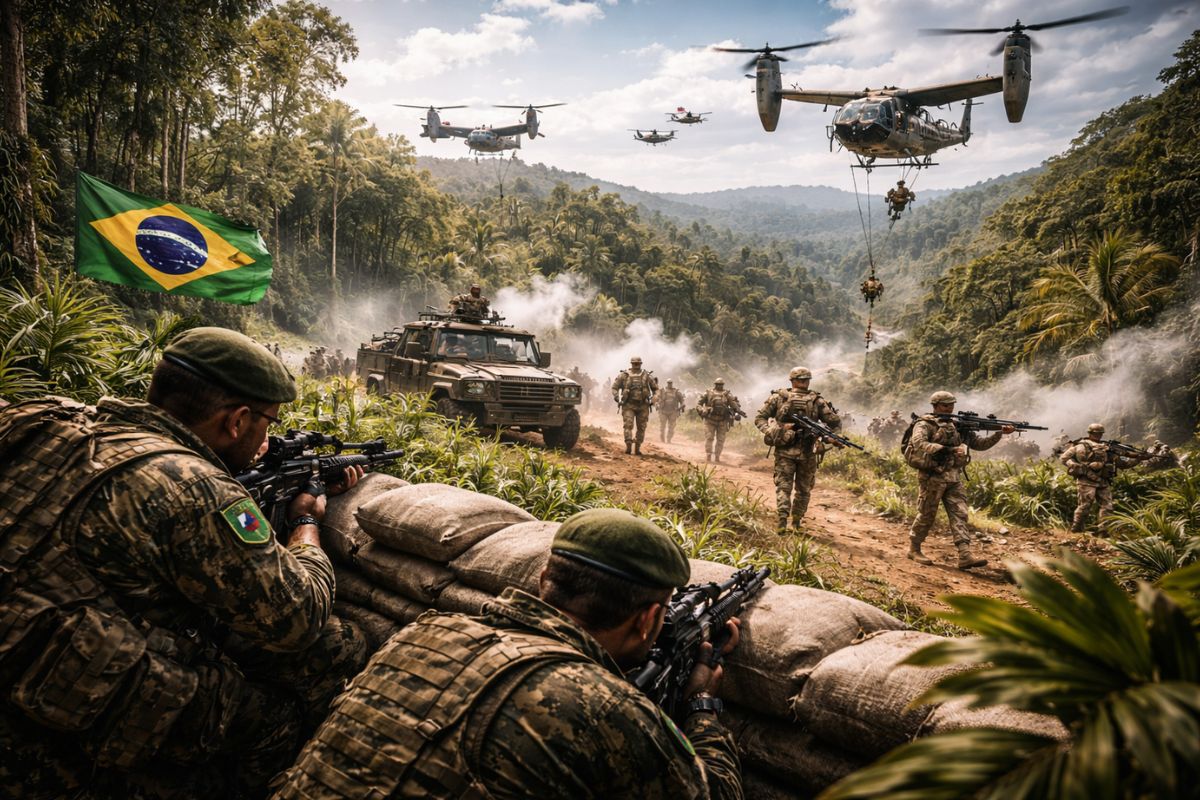
If the USA were to go to war with Brazil, Washington’s greatest fear would not be the attack itself, but facing a vast territory, prolonged resistance, and a costly, chaotic, and unpredictable occupation.
-
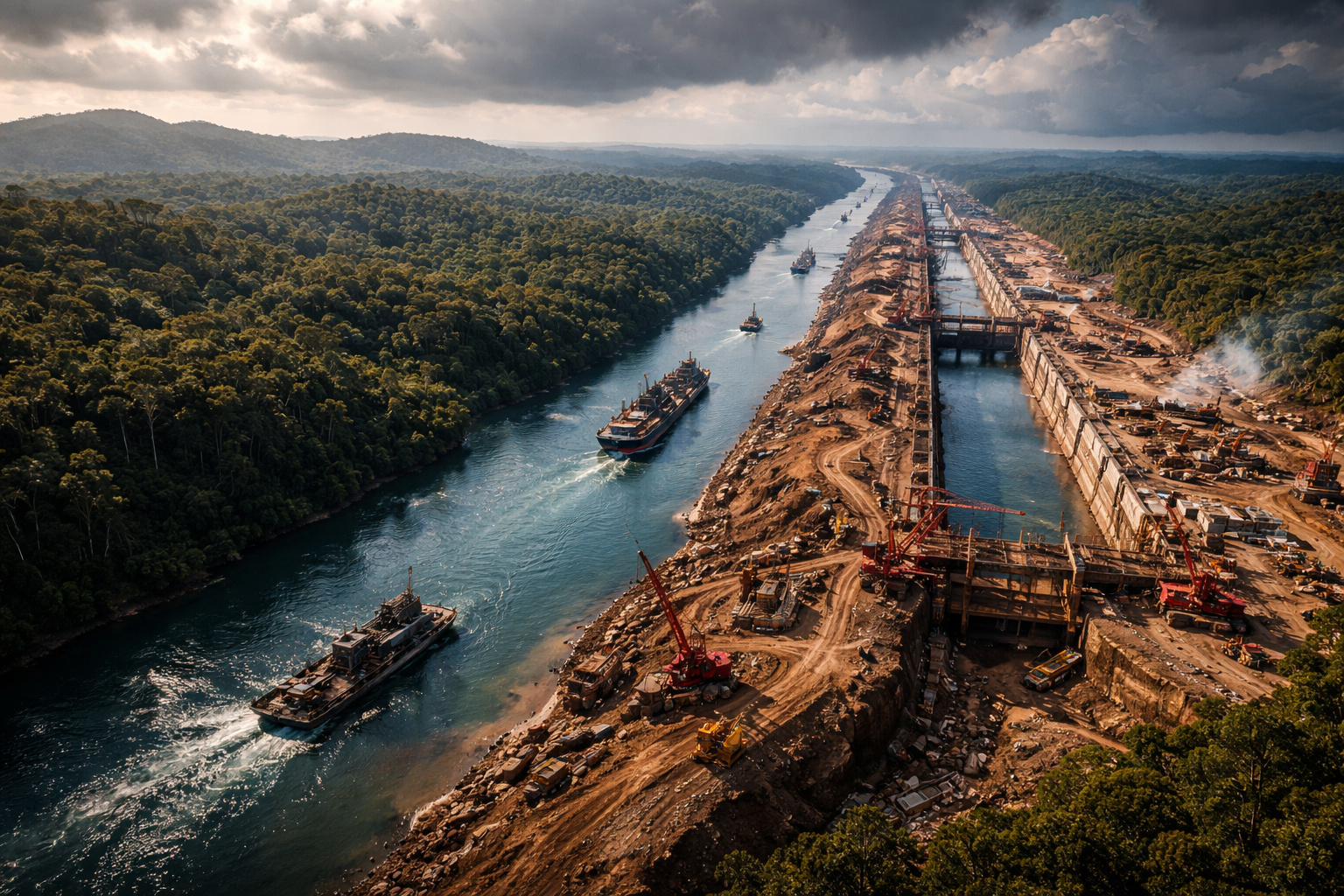
In 2013, Nicaragua sold the concession for a canal to rival Panama to a Chinese billionaire who lost 85% of his fortune, disappeared, and was declared bankrupt. Now the project resurfaces with a new route, a new Chinese partner, and a cost of $64.5 billion.
-
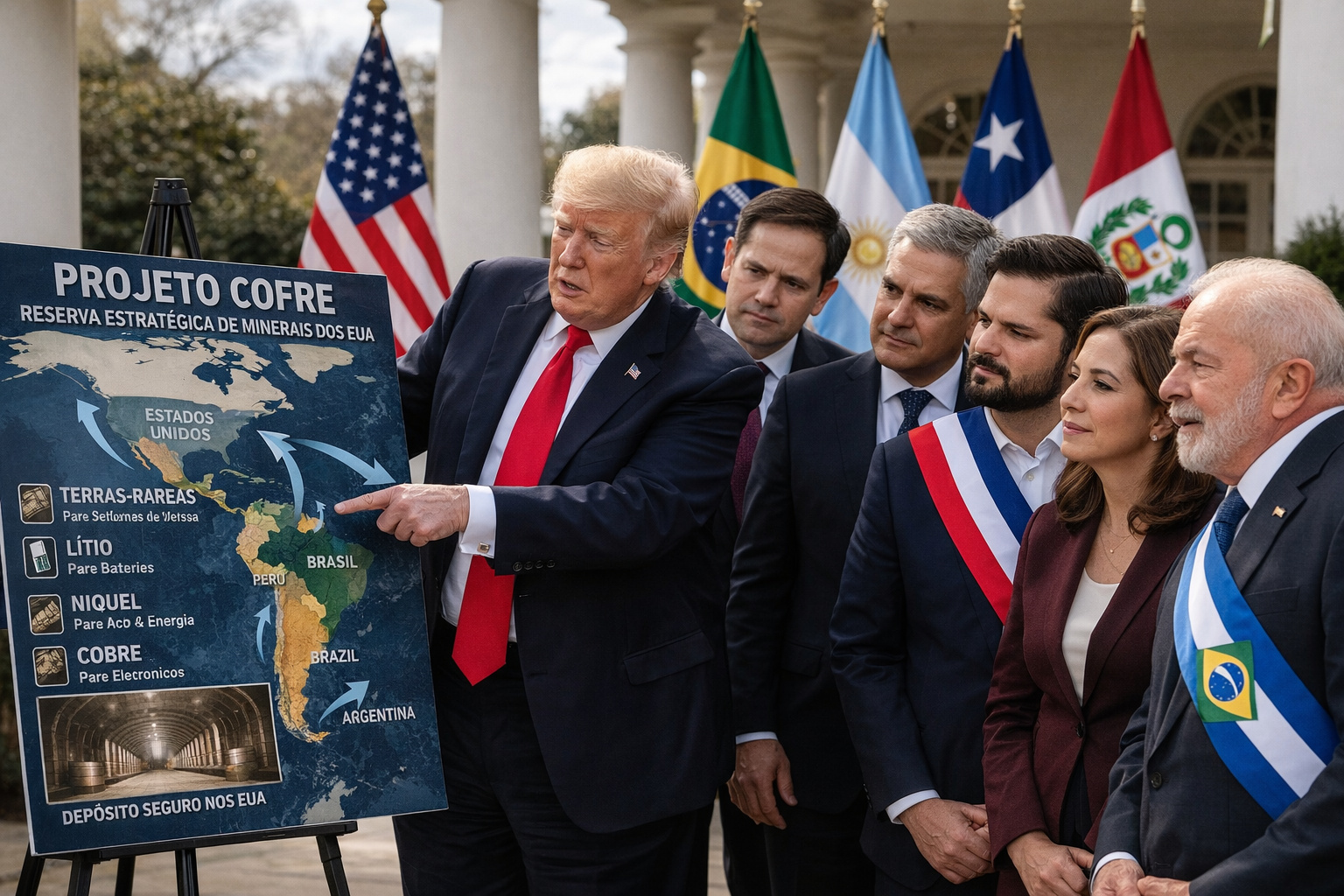
The USA announces a mysterious billion-dollar vault project to store critical minerals, but what intrigues experts is not just the plan itself, but why Latin America, including Brazil, has entered the center of this global dispute against China.
-
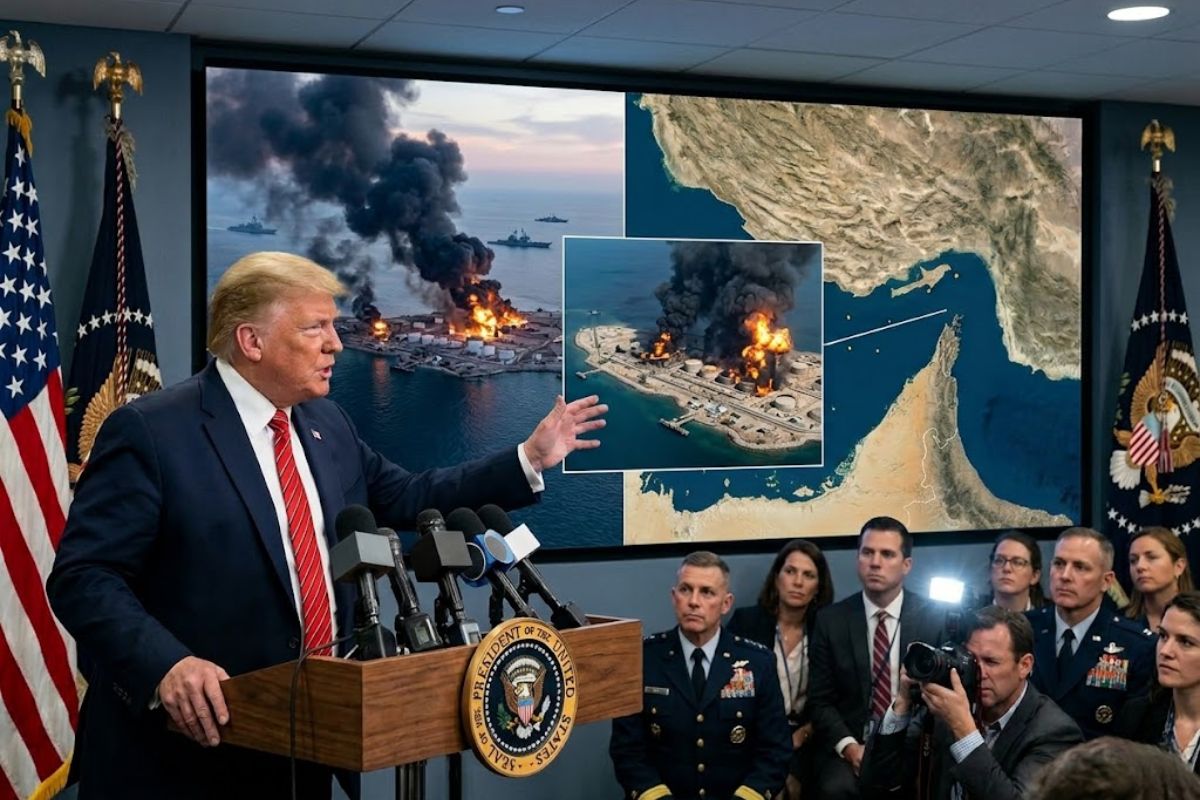
Trump Announces Bombing of U.S. Military Targets on Iranian Island Responsible for About 90% of Iran’s Oil Exports, Warns of Further Attacks if Navigation in Strategic Strait of Hormuz Is Threatened

According to the Department of Defense, Beijing’s central strategy is to surpass the United States’ force projection capabilities through a continuous national mobilization effort, focusing on Total War and integration between military, economic, and technological power.
The text emphasizes that China Accelerates Military Expansion while the United States has slowed the pace of modernization of its fleet and armed forces in recent decades.
For the Pentagon, the reinforcement of the defense budget, doctrinal modernization, and the use of emerging technologies place China in a position to compete for regional military primacy and, in some domains, to directly challenge American supremacy.
The maximum alert is not limited to the Indo-Pacific but indicates a nuclear, maritime, cyber, and space arsenal with global reach and a direct effect on U.S. internal security.
Chinese Navy, Shipbuilding Industry, and Crisis Scenario in Taiwan

The report emphasizes that China Accelerates Military Expansion mainly at sea.
Analysts consulted by the Pentagon highlight that the Chinese navy has been rapidly growing in numbers of warships and support vessels, combining an expanding military fleet with a powerful civilian fleet that can be mobilized in a conflict scenario.
The Chinese shipbuilding industry is now described as capable of producing ships in volumes far exceeding those of American shipyards.
In practice, this industrial advantage allows the Chinese Navy to renew surface assets and reinforce its presence in sensitive areas, from the South China Sea to the Taiwan Strait.
The Pentagon report itself mentions that an attack on Taiwan is now considered a concrete possibility by timelines such as 2027, which forces the U.S. Navy to revise the composition of its fleet and its operational methods in the Indo-Pacific.
The combination of a large Chinese navy, robust logistics, and the ability to mobilize civilian vessels as force multipliers is seen in Washington as one of the most concerning elements of the new phase in which China Accelerates Military Expansion in the region and pressures the area surrounding Taiwan.
Nuclear, Cyber, and Space Arsenal with Reach to American Territory

The report is not limited to the naval dimension.
The Pentagon states that China maintains a growing Nuclear Arsenal, complemented by long-range conventional vectors, as well as cyber and space capabilities capable of directly hitting critical infrastructure in the United States.
These assets include missiles capable of reaching American territory, operations in space targeting satellites, and cyber tools that can target military and civilian networks.
By combining Nuclear Arsenal, a large Chinese navy, and cyber and space instruments, Beijing has a set of tools that, according to the Pentagon, allows it to threaten not only American troops abroad but also U.S. domestic security.
The assessment is that China Accelerates Military Expansion with a focus on deterring American intervention in regional crises and increasing the cost of any reaction from Washington to Chinese moves in the Indo-Pacific.
Semiconductor Dispute and Preparation for Prolonged Conflict
The same set of analyses reveals that the dispute between China and the United States is not just military.
Washington accuses Beijing of unfair trade practices related to semiconductors, with the White House and the U.S. Trade Representative pointing to aggressive and non-mercantile industrial policies to achieve dominance in the global chip supply chain.
At the same time, tariffs on Chinese products have been postponed in strategic sectors, such as semiconductors, until dates such as June 2027, in an attempt to buy time for negotiations and to bolster the domestic industry.
In this scenario, the reading of strategists close to the American government is that China Accelerates Military Expansion while consolidating positions in critical supply chains, such as semiconductors and advanced technologies, creating conditions to sustain a potential prolonged conflict.
The chip dispute is directly connected to the ability to maintain a modern nuclear arsenal, operate offensive cyber systems, and command the Chinese navy with sophisticated weapon systems in a possible large-scale confrontation.
Global Projection, Latin America, and Alternate Canal to Panama
The Pentagon’s alert also takes into account how Beijing projects power beyond Asia.
Analysts mention Chinese interest in strategic infrastructures like the Panama Canal and in alternative logistical corridors, including railway projects that could cross South America, passing through countries like Brazil and Peru to bypass maritime bottlenecks.
Within this logic, China Accelerates Military Expansion while simultaneously expanding its economic, financial, and infrastructural presence in different regions, from Eurasia to Latin America.
For the Pentagon, the combination of a growing Chinese navy, a strengthening nuclear arsenal, and global logistical networks deepens Beijing’s capacity to sustain military operations far from its territory, including in scenarios that directly involve American interests.
What’s at Stake in the Alert That China Accelerates Military Expansion
In summarizing the situation, the Pentagon report concludes that China’s long-term strategy has shifted from being purely regional to aiming at the United States’ capacity to remain a dominant power.
The recurring reading is that while China Accelerates Military Expansion at a continuous pace of modernization and mobilization for total war, Washington needs to decide whether to accelerate defense investments or accept a lasting correction in the correlation of forces.
Beyond the internal American debate, the alert resonates among allies who depend on the U.S. security umbrella in the Indo-Pacific and other regions.
The rising Chinese navy, a more robust nuclear arsenal, and military proximity around Taiwan open a phase in which each decision in Beijing or Washington may have a direct impact on trade routes, technology chains, and global geopolitical stability.
In light of this scenario in which the Pentagon states that China Accelerates Military Expansion and targets Taiwan with the support of a Chinese navy and expanded nuclear arsenal, do you believe that the world is heading toward a new Cold War or an open confrontation within this decade?









Seja o primeiro a reagir!