





 Portuguese
  English
  Spanish
  3 min of reading
  0 comments


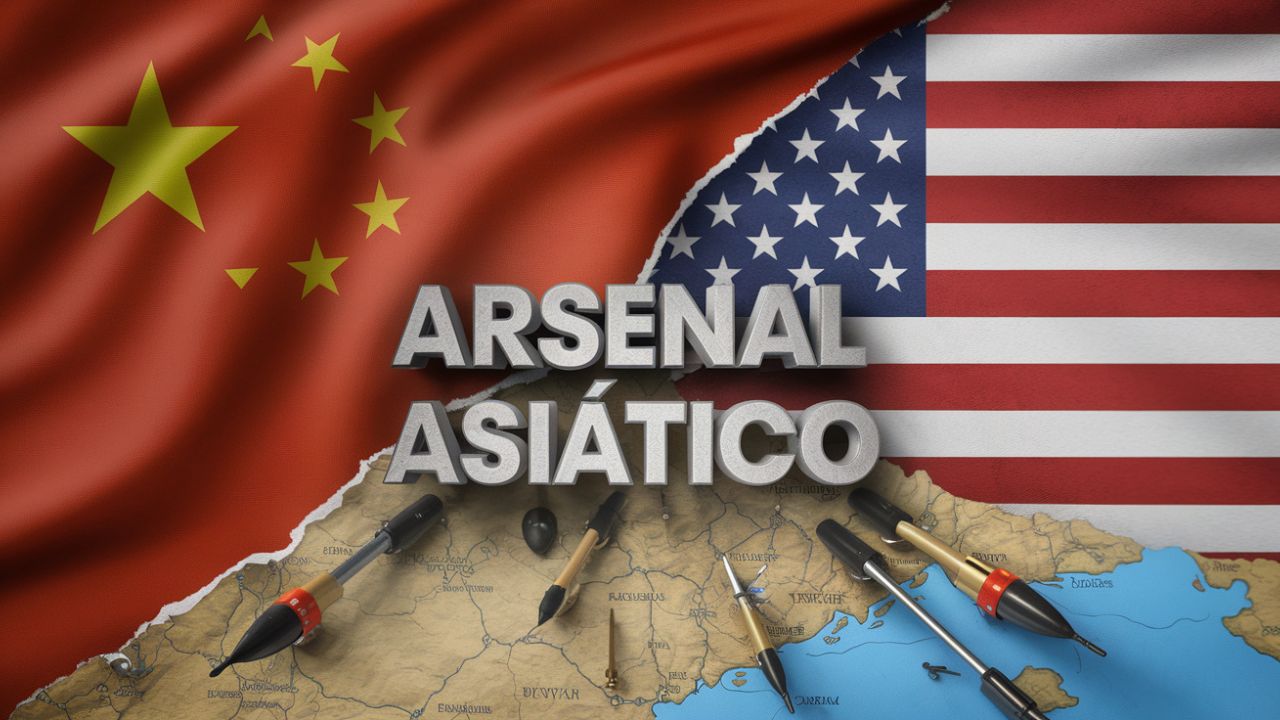
With Plans to Exceed 1,000 Warheads by 2030, China Has Built 320 Silos in the Northern Deserts and Is Developing Hypersonic Technologies That Challenge the U.S. The Nuclear Race Has a New Protagonist.
If the nuclear race seemed a memory of the Cold War, the current reality shows that it is more alive than ever. China, a player that previously operated in the background, is positioning itself as one of the main protagonists on the global stage. With 600 nuclear warheads and 350 silos in 2024, the country demonstrates its capacity for influence not just in its region, but worldwide. And what does this mean for global geopolitics?
The Expansion of Nuclear Warheads in China
The Pentagon revealed that China has significantly increased its nuclear arsenal, adding 100 warheads in one year. With a total of 600 warheads and 350 silos strategically located in the northern part of the country, this advance is a milestone. These silos, equipped with Dongfeng-5 missiles capable of carrying multiple warheads, highlight China’s ambition to strengthen its response and strike capability.
Projections indicate that China may surpass 1,000 warheads by 2030. This expansion reflects a shift in the country’s traditional defensive posture, solidifying its status as a nuclear heavyweight. The goal? To build a deterrent network capable of rivaling traditional superpowers.
-
Brazilian city bets on the business environment to generate jobs and attract investments in the energy sector — secretary reveals strategy at Macaé Energy 2026.

-
50 viaducts, 4 tunnels, 28 bridges, and 40 kilometers of bike paths: BR-262 in Espírito Santo will receive 8.6 billion reais for the largest engineering project in the state’s history, inspired by the Immigrant Highway in São Paulo.

-
Brazil produces too much clean energy and doesn’t know what to do with it: over 20% of solar and wind capacity was wasted in 2025 while investors flee and 509 renewable generation projects were abandoned in the last year.

-
Piauí will produce a new fuel that replaces diesel without needing to change anything in the truck’s engine and reduces pollutant gas emissions by half: truck drivers from all over the Northeast are already celebrating the news that will arrive later this decade.


Strategies for Chinese Military Modernization
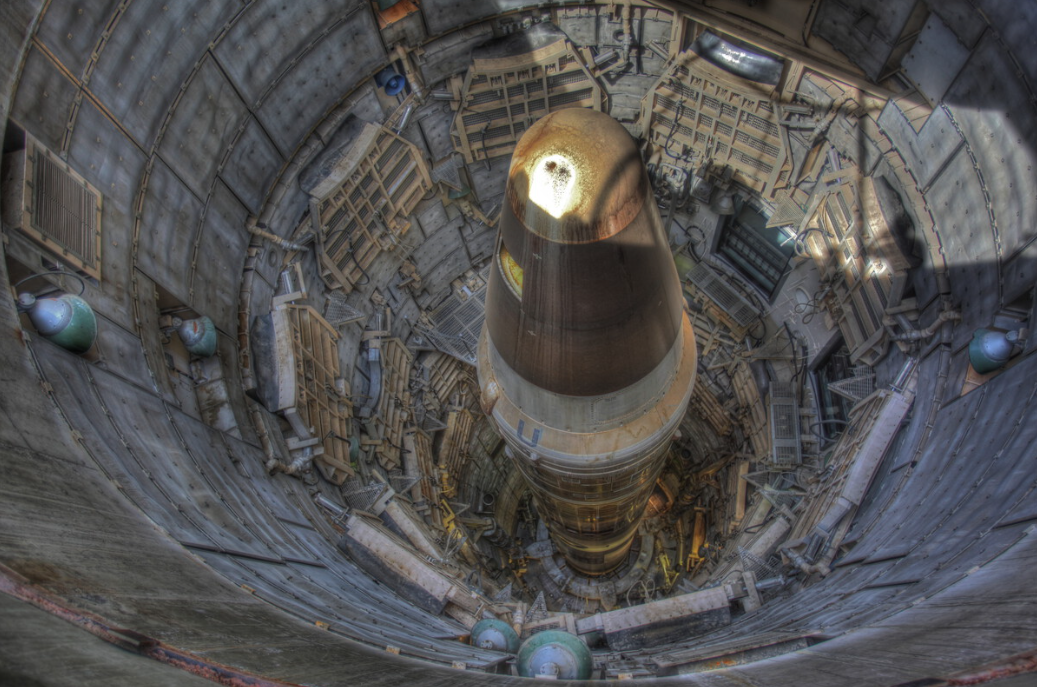
The diversification of the nuclear arsenal is one of the pillars of this modernization. Intercontinental ballistic missiles (ICBMs) and precision strike options are highlights. Beijing is working on systems with multiple escalation options, making its nuclear force more flexible and unpredictable.
China is heavily investing in innovation. Hypersonic systems and fractional orbital bombardment challenge American missile defenses. In 2021, the country conducted a test combining these technologies, reaffirming its position as a leader in military innovation.
The Geopolitical Influence of Chinese Military Modernization
The growing Chinese military capacity raises concerns in the United States. The Pentagon report highlights that Beijing’s modernization poses significant challenges to American forces, shifting the global balance of power.
The issue of Taiwan is a central point. China has intensified naval and aerial activities near the island, generating international alarms. However, China’s limitations in urban warfare and logistics still hinder an effective invasion.
U.S. Reaction and the Role of the Pentagon
The U.S. has strengthened alliances in the Asia-Pacific region and adopted force dispersion tactics to complicate Chinese attacks. The Pentagon prioritizes advanced technologies to maintain its strategic advantage.
Washington responds with Project 25, a modernization initiative for its nuclear capabilities. The pressure to invest more in defense is increasing, especially in light of China’s advances.
The Future of the Nuclear Arms Race
With China emerging as a third major nuclear power, the geopolitical balance is becoming more complex. The U.S. and Russia are no longer the only holders of significant nuclear forces, reshaping global dynamics.
This expansion brings enormous risks. Any escalation could lead to catastrophic consequences. Thus, an arms race requires a cautious and diplomatic approach.
The Chinese advance in the nuclear sector redefines the rules of the game. To handle this, countries must prioritize diplomatic efforts and arms control agreements. Investing in defense technologies is essential to avoid fatal imbalances.









-

Uma pessoa reagiu a isso.