





 Portuguese
  English
  Spanish
  7 min of reading
  0 comments


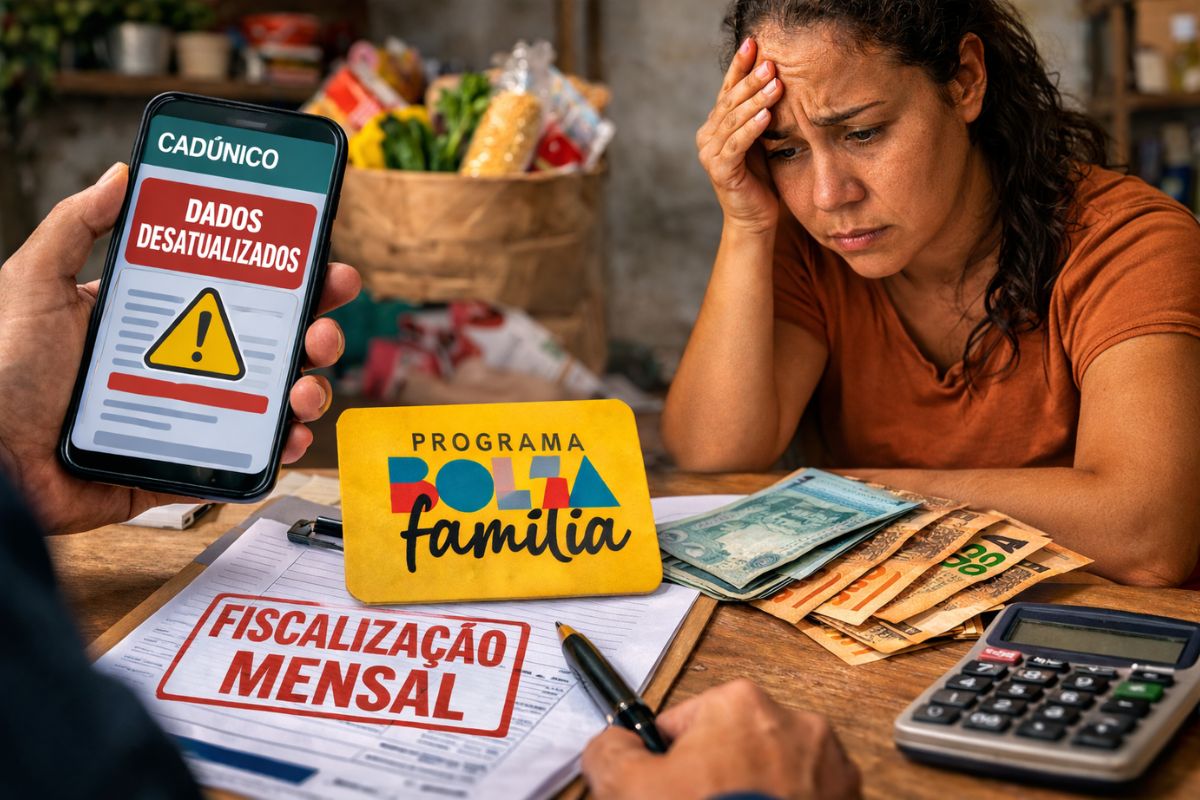
The Fine-Tooth Comb on Bolsa Família Began to Gain Weight in Santa Catarina with Monthly Inspections on CadÚnico, Increasing the Risk of Blockage, Suspension, or Cancellation for Families with Outdated Income, Address, or Composition, While Municipalities Track Invitation Lists and the Payment of March Enters the Radar of Many Families.
The Fine-Tooth Comb on Bolsa Família has ceased to be an occasional check and has come to function as a permanent filter on the data of those who depend on the program in Santa Catarina. According to the NDMAIS portal, with over 205,000 families benefiting in the state, the monthly review of the registration has raised concerns among those who fear their payments could be affected by old, divergent, or incomplete information.
The government’s move aims to update CadÚnico and increases pressure on situations that could previously go longer without correction. Changes in income, changes of address, alterations in family composition, and registrations that have been stagnant for over 24 months have begun to weigh more heavily in monitoring, especially since the inconsistencies can now lead to blockage, suspension, and even cancellation of benefits.
What Is Behind the Registration Review
The new stage of oversight is part of the 2025 Registration Qualification Action, which involves not only Bolsa Família families but also individuals linked to other social programs, such as the Continuous Cash Benefit and the Social Electricity Tariff. The rationale behind the measure is simple: the government wants to correct records that no longer reflect the family’s reality and prevent benefits from continuing to be paid based on outdated data.
-
Brazilian city bets on the business environment to generate jobs and attract investments in the energy sector — secretary reveals strategy at Macaé Energy 2026.

-
50 viaducts, 4 tunnels, 28 bridges, and 40 kilometers of bike paths: BR-262 in Espírito Santo will receive 8.6 billion reais for the largest engineering project in the state’s history, inspired by the Immigrant Highway in São Paulo.

-
Brazil produces too much clean energy and doesn’t know what to do with it: over 20% of solar and wind capacity was wasted in 2025 while investors flee and 509 renewable generation projects were abandoned in the last year.

-
Piauí will produce a new fuel that replaces diesel without needing to change anything in the truck’s engine and reduces pollutant gas emissions by half: truck drivers from all over the Northeast are already celebrating the news that will arrive later this decade.


Within this action, two processes focus on the review. AVE25, aimed at verifying registrations, reaches families with possible inconsistencies in the registered information. Meanwhile, REV25, intended for registration review, calls those who need to update basic data such as address, income, and family composition. In practice, the fine-tooth comb does not affect everyone in the same way at the same time, as municipalities receive lists and conduct monitoring according to the program management system.
This detail helps explain why not every family needs to rush for assistance immediately. The process is gradual, organized by invitations, and monitored by municipalities. Nevertheless, the monthly oversight changes the tone of the benefit’s management, as it reduces the margin for prolonged carelessness and increases the need to monitor notices and statements more closely.
Who Is at Greater Risk of Having the Benefit Affected
The most vulnerable group in this review comprises families that have not updated their registration for over 24 months or have undergone significant changes without informing the system. This includes increases or decreases in income, changes of residence, the entry or exit of individuals from the household, and any alterations that influence the social snapshot used to determine eligibility for benefits.
Situations in which CadÚnico data do not match information found in other government systems are also under scrutiny. When there is divergence, the registration raises an alert signal and may be included in verification processes. This is not just about forgetting to update a detail, but leaving the government with an inconsistent base to decide who continues to be eligible for social support.
In a state with over 205,000 benefiting families, this cross-referencing of information broadens the reach of control and makes the fine-tooth comb more sensitive to formal irregularities, even when the family still considers itself within the program’s criteria. Therefore, the risk is not limited to those who have completely lost the required profile but also extends to those who still have rights yet maintain outdated data in the system.
What Can Happen If the Re-Registration Is Not Done
When a family is summoned and fails to update CadÚnico within the deadline, the consequences may vary depending on the situation encountered. The first impact may be a temporary blockage, which halts payments until the issue is analyzed or resolved. In more severe scenarios, the benefit may be suspended for a longer period or even canceled.
The difference between these stages is important, as it shows that the problem does not necessarily originate as permanent but can worsen when there is no response to the summons. Ignoring the notification is what turns an administrative pending matter into a real risk of losing the benefit. The government interprets a lack of update as a sign that the data remains outdated or inconsistent, which precludes the continuation of payments.
This point is crucial because Bolsa Família relies on trust in the information provided by the family. If the system cannot confirm income, address, or family composition, the public policy loses the foundation used to validate the transfer. In other words, it is not enough to fill out the registration once and assume it will remain valid indefinitely, even after significant changes in the family’s life.
How the Summons Occur and Where the Family Should Go
Not all families need to seek assistance without receiving a notice. Summons will be made gradually, and the guidance is to observe the channels through which this communication may arrive. The message may appear in the CadÚnico app, in the notification icon, in benefit apps such as Caixa Tem, in the Bolsa Família payment statement, and even through the Caixa Econômica Federal’s phone center.
When the notice is issued, the family head should seek the CRAS in the municipality to update the information. This is where the re-registration is conducted, and the data can be corrected to restore the consistency of the record. The safest recommendation is not to wait for the problem to turn into a blockage before taking action, as the summons already serves as a warning that there is a pending matter to resolve.
In cases of families composed of only one individual, the interview can be conducted at the home itself. This detail shows that the update process also tries to adapt to specific profiles, but it does not eliminate the need for monitoring. Those who depend on the benefit must pay attention to the signals issued by official channels and respond within the deadline, without postponing the update.
Why CadÚnico Is So Important Beyond Bolsa Família
CadÚnico serves not only as an entry point for Bolsa Família. It is the base used by the government to identify low-income families and select beneficiaries for more than 40 social programs. This means that an outdated registration can have repercussions far beyond a single monthly payment, affecting various fronts of social support.
Programs such as the Gas Assistance, the Social Electricity Tariff, and housing initiatives also depend on this structure. Thus, keeping CadÚnico up to date is a broader protection of the family’s financial life, not merely a bureaucratic requirement linked to a specific benefit. When the registration loses adherence to reality, the family can face barriers in multiple public policies simultaneously.
This centrality explains why the government has reinforced the review within the 2025 Registration Qualification Action. The goal is not merely to cut payments but to purify the database to ensure that benefits continue to go to those who truly meet the criteria. Still, for those living at the budget limit, any interruption already represents an immediate impact and increases the feeling of insecurity in the face of monthly oversight.
What This Scenario Means for Families in Santa Catarina
In Santa Catarina, the fine-tooth comb gains relevance because the number of families served is high and because oversight has ceased to be something distant. The payment for March, scheduled for the 18th, enters this context of greater vigilance over records, which elevates the concern of those who fear a sudden interruption of their transfer.
The central point is that the risk lies not only in losing the right but in failing to demonstrate the correct situation at the moment the system requires an update. Those who keep the data aligned with reality reduce the chance of suffering blockages and unnecessary strains, whereas those who postpone regularization become more exposed to information cross-referencing and successive summons.
The monthly review also signals a change in posture in the administration of the program. Instead of relying solely on spaced-out reviews, the government begins to operate with continuous monitoring, requiring more attention from families and municipalities. This makes the routine of CadÚnico more strategic and transforms the registration update into an essential step to preserve social benefits.
In the end, the message is clear: Bolsa Família continues to depend on the coherence between what the family lives and what the registration informs. When this connection is lost, the fine-tooth comb advances.
Have you or someone in your family ever needed to update CadÚnico or received a notice for review? Share in the comments how this process happens in your municipality and whether the communication has been clear for those who depend on the benefit.









-

2 pessoas reagiram a isso.