





 Portuguese
  English
  Spanish
 5 min of reading
  13 comments





With little more than 4 thousand inhabitants, a Paulista municipality surprises by leading the ranking of highest average salary in the state, surpassing São Paulo and Campinas, with an economy divided between aeronautics industry and agriculture.
Gavião Peixoto, in the interior of São Paulo, records the highest average salary in the state and ranks among the highest in the country, according to the 2022 Census by IBGE.
The average monthly income of formal workers in the municipality is 5.2 minimum wages, above the capital, which records 4.4 minimum wages.
With 4,702 inhabitants, the city draws attention due to the contrast between size and economic performance.
-
Friends have been building a small “town” for 30 years to grow old together, with compact houses, a common area, nature surrounding it, and a collective life project designed for friendship, coexistence, and simplicity.

-
This small town in Germany created its own currency 24 years ago, today it circulates millions per year, is accepted in over 300 stores, and the German government allowed all of this to happen under one condition.

-
Curitiba is shrinking and is expected to lose 97,000 residents by 2050, while inland cities in Paraná such as Sarandi, Araucária, and Toledo are experiencing accelerated growth that is changing the entire state’s map.

-
Tourists were poisoned on Everest in a million-dollar fraud scheme involving helicopters that diverted over $19 million and shocked international authorities.

At the state level, the average is 3.4 minimum wages, which highlights the gap compared to the rest of São Paulo.
Nationally, the average income of workers remains below 3 minimum wages, according to recent series from IBGE for the country.
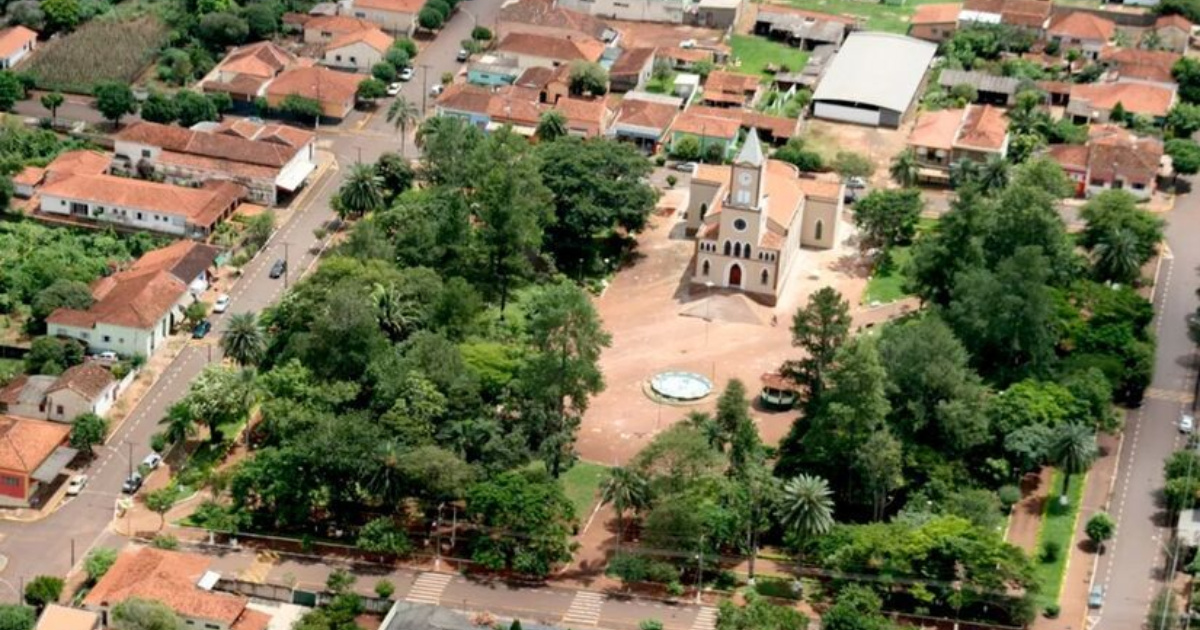
Local Economy Boosted by Embraer and Agriculture
More than one factor explains the result.
On one hand, the presence of Embraer sustains high-skilled jobs and influences the supply chain.
The unit located in Gavião Peixoto maintains more than 2,800 employees and operates a runway of 4,967 meters, one of the largest in the world, dedicated to tests and special operations.
On the other hand, agriculture plays a decisive role in the municipal GDP.
Local surveys indicate that oranges account for 53% of sector activities, followed by sugarcane, with 38%.
Companies like Cutrale and Fischer lead processing and logistics, consolidating a stable and scalable productive base.
Meanwhile, services and small industries complement the economic structure.
The combination of a high-value-added aerospace hub and permanent crops with a global market reduces employment seasonality and sustains wages above the regional average.
The reading of indicators suggests a hybrid ecosystem, less dependent on a single sector than most municipalities of similar size.
Quality of Life and Social Indicators
In addition to salaries, Gavião Peixoto has begun to appear prominently in well-being metrics.
In 2024, the municipality topped the national ranking of the Social Progress Index (IPS) among 5,570 Brazilian cities.
In 2025, reports again highlighted top performance, reinforcing the association between income, public services, and social cohesion.
Still, experts remind us that income advancements do not distribute automatically.
The sustainability of performance depends on local policies for qualification, mobility, and housing.
The reading of long-term data, therefore, is essential to assess how much of the result arises from structural factors and how much is due to specific cycles in industry and agriculture.
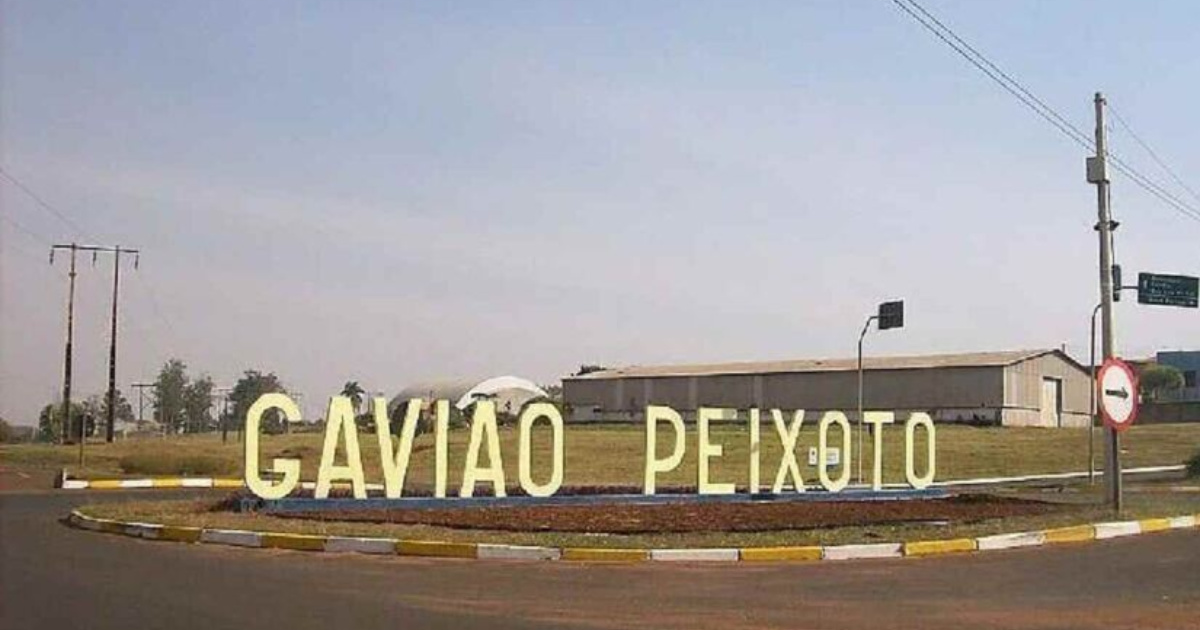
Strategic Location in the Paulista Interior
Located in the Araraquara sub-region, the city is close to road axes that connect the interior to the coast and the capital.
This logistical position favors both the exit of agro-industrial products and the movement of qualified professionals to the aerospace plant.
Moreover, the Embraer chain increases the demand for local services — from maintenance to food — fueling the economy with better-paid formal and informal occupations.
Trajectory and Origin of the Name
Although young as a municipality — its emancipation came on December 27, 1995, with installation on January 1, 1997 — the occupation of the land is centuries old, linked to the railway expansion and the colonization of the Paulista interior.
The name pays tribute to Bernardo José Pinto Gavião Peixoto, a military officer and politician who presided over the province of São Paulo in the 19th century, a historical reference for the region.
How to Get to Gavião Peixoto
For those leaving the capital, the most common route follows the Washington Luís Highway (SP-310) to the regions of São Carlos and Araraquara, and then via SP-331 (Deputado Vitor Maida).
The journey is approximately 318 km and usually takes about 3h30, under normal traffic conditions.
The network is well signposted, and therefore, driving tends to be the most practical option for reaching the municipality.
Comparison with São Paulo and the “Capital of the Interior”
The numbers help to gauge the leap.
The city of São Paulo records 4.4 minimum wages on average.
Campinas, often referred to as the “capital of the interior,” stands at 3.8 minimum wages.
At the state peak, Gavião Peixoto appears ahead of traditional industrial centers.
Paulínia occupies the second position, with 4.6 minimum wages.
Next come São Paulo (4.4), Pompeia and Cubatão (4.2), followed by Hortolândia and Barueri (4.1), Osasco (3.9), in addition to Louveira and Campinas (3.8).
On the other hand, the isolated reading of the average salary does not capture the entirety of the labor market.
It considers only formal ties and can be influenced by fewer occupations with very high salaries, such as those in the aerospace sector.
Still, it is a consistent thermometer for comparing productive profiles and economic attractiveness among municipalities in the same state.
Factors That Sustain the Performance
In addition to salaries practiced by the aerospace industry and qualified support chains, the exporter profile of citrus agriculture contributes to stabilizing local revenue.
In periods of favorable exchange rates, contracts for oranges and derivatives tend to sustain investments, maintenance of jobs, and productivity gains.
Not surprisingly, the city appears in reports as a rare case of a combination between a strong agrarian base and a high-tech industry, two fronts that, when combined, help explain the above-average income.
Finally, the management of infrastructure — from Embraer’s runway to road connections — creates positive externalities that extend beyond the factory perimeter.
Municipal programs aimed at qualification and the business environment can enhance this effect, maintaining the attraction of talent and retention of specialized services.
With this combination of factors, Gavião Peixoto maintains its leadership in wages within São Paulo and increases national visibility; which public policies and business strategies will be decisive to transform this advantage into lasting development?









4 mil habitantes? Não é uma cidade, no máximo um condomínio com autonomia que tem acomodação para os empregados domésticos e zeladores.
Kkk
Oh reportagem mentirosa dos infernos
Pura mentira que todos ganham bem.
Quem ganha razoavelmente são as pessoas com cursos melhores para determinados setores.
Essa reportagem faz com que, quem não tem qualificação pense que serviços gerais e uma outra função acima dessa ganha bem. E é tudo mentira.
Serviços gerais em são Paulo e outras funções um pouco mais acima dessas ganham mais em são Paulo e campinas. 👊🏻
Então, se vc não tem curso superior, ou ao menos uma meia dúzia de cursos médios, não se iluda.
Tudo isso é tem uma entrada de cidade **** dessa?