





 Portuguese
  English
  Spanish
  5 min of reading
  6 comments


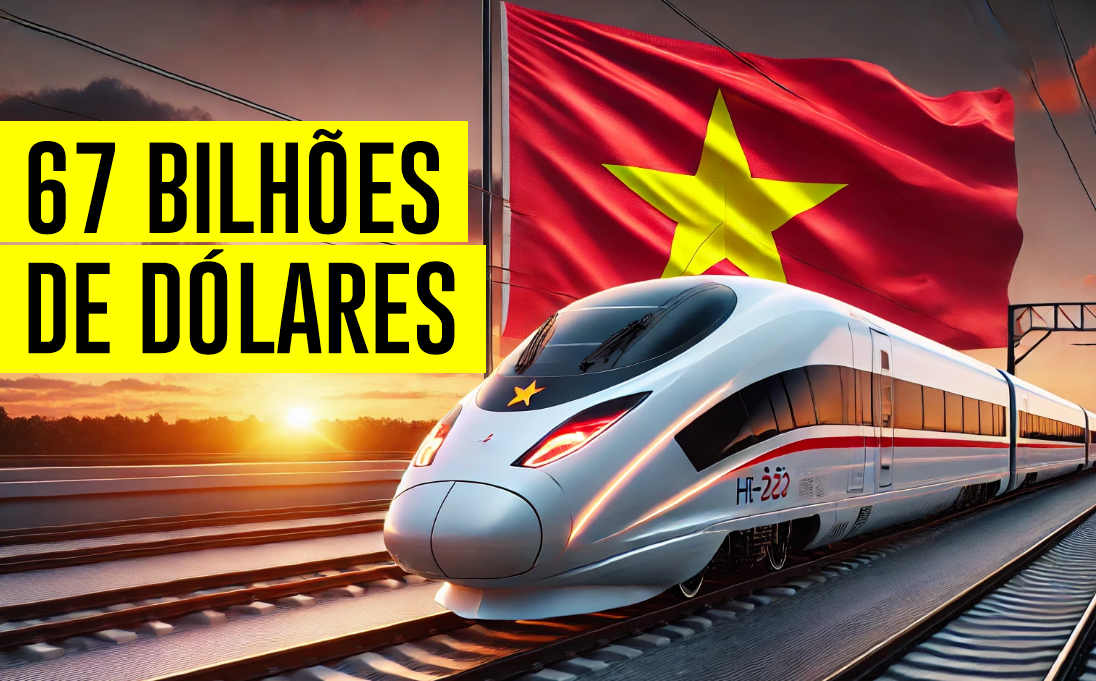


One Of The Most Expensive Projects Ever Approved Promises To Change International Transportation, While The Two Largest Asian Economies Fight For The Right To Lead The Construction.
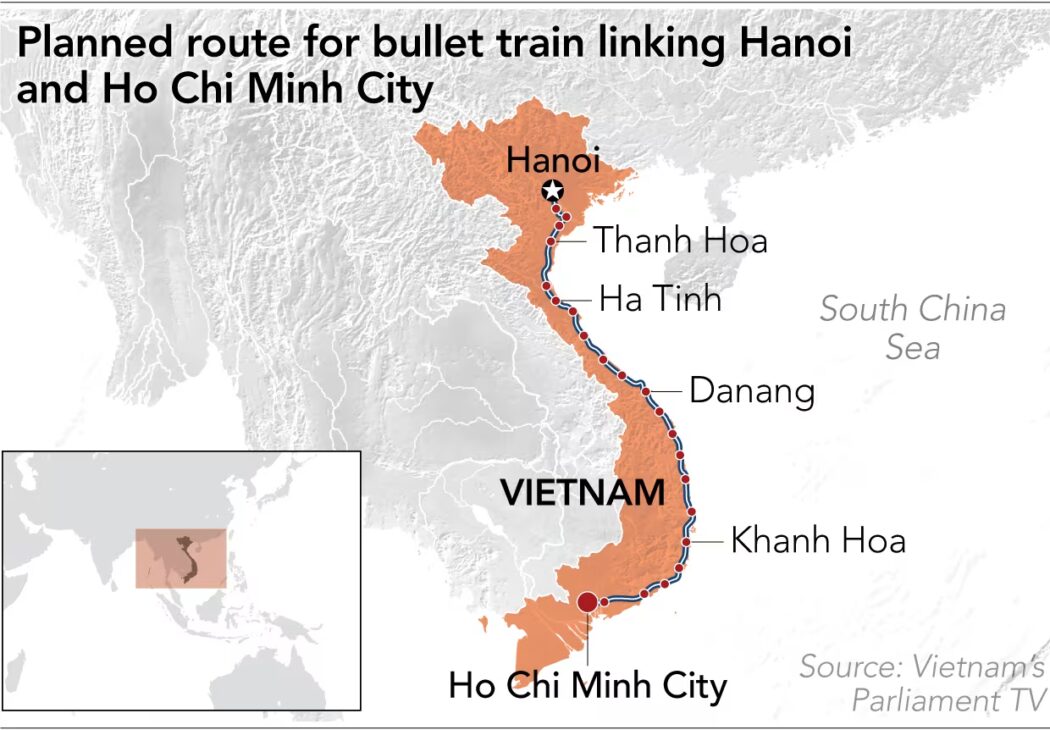
The National Assembly of Vietnam approved, on November 30, an ambitious infrastructure project: the construction of a high-speed railway connecting Hanoi in the north to Ho Chi Minh City in the south.
With an estimated cost of US$ 67 billion, the project promises to transform travel, trade, and transportation in the country along 1,541 kilometers of route.
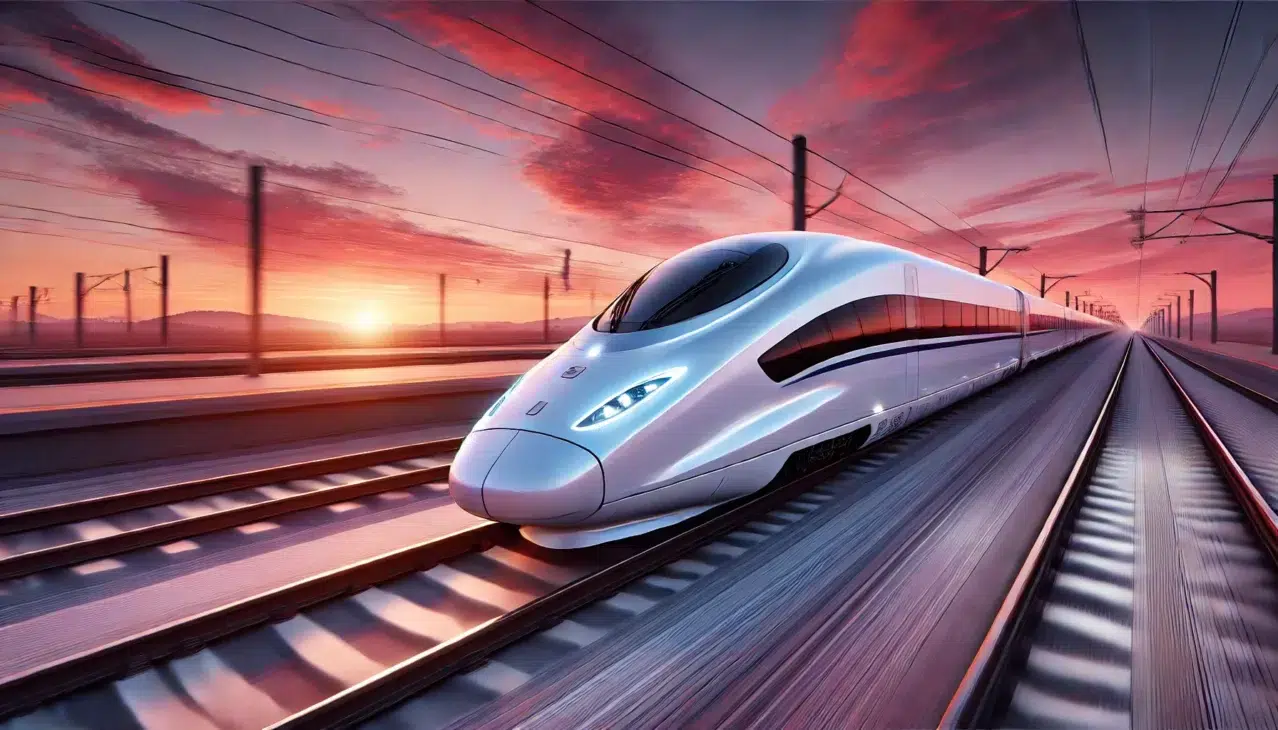
The new railway will be equipped for trains that will reach speeds of up to 350 km/h. This advancement will drastically reduce the travel time between the two largest Vietnamese cities from 30 hours to just five hours.
-
Abandoned house for 15 years disappears in the woods, shocks owner with unrecognizable scenery and is reborn in an intense transformation after almost 90 hours of work in just 10 days.
-
In just three hours, a natural stone floor transforms the entrance of the house with an organic effect, immediate drainage, and a sophisticated non-slip finish that doesn’t puddle water, dries quickly, and impresses with the final result.
-
‘Interlocking brick’ made of earth arrives in the construction industry with cost reductions of up to 40% on the project.
-
Espírito Santo will receive the largest engineering project in its history with the duplication of BR 262, which will have 50 viaducts, 28 bridges, and 2-kilometer tunnels cutting through the most challenging mountainous region of the entire state.
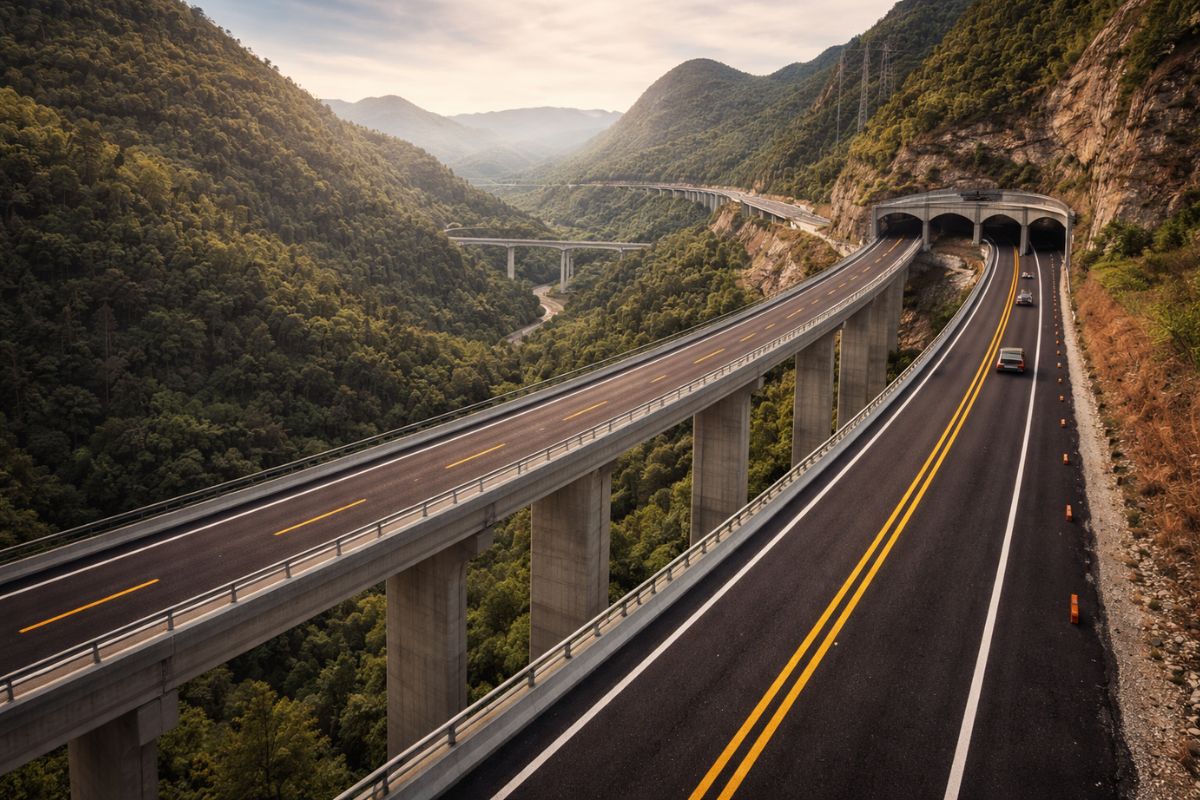

In addition to providing an efficient service for passengers, the system will also be designed for freight transport, directly impacting trade and national logistics.
Construction is scheduled to begin in 2027, and operations are expected to start in 2035. During this period, the project will traverse 20 provinces and cities, housing 23 passenger stations and five cargo stations.
Furthermore, the deputy minister of Transport, Nguyen Danh Huy, emphasized the project’s importance in meeting the growing transportation demands in the north-south corridor, the busiest in Vietnam.
According to Nguyen, the bullet train will be a milestone in restructuring the country’s transportation strategies. “This project is key to restructuring transportation and propelling Vietnam into a new era of growth,” stated the deputy minister.
The Economic And Social Impact Of The Construction
Experts believe that the new railway will be a game-changer for Vietnam’s development. Dan Martin, a consultant at Dezan Shira & Associates, highlighted the potential of the CONSTRUCTION to energize the Vietnamese economy.
“This project will boost the economy by facilitating critical components to reach manufacturing centers and speeding up the delivery of finished products. It reduces delivery times and solidifies Vietnam’s role in global supply chains,” he explained.
Currently, road transport dominates the movement of people and goods in the country. However, roads are often criticized for their low density and high operational costs. This deficient infrastructure has limited economic growth and restricted Vietnam as a destination for foreign investment.
Moreover, the railway will play a strategic role in military logistics and defense transport. With its ability to move troops and equipment quickly, the project adds additional value to national security.
A Past Of Challenges And Skepticism
Although Vietnam has dreamed of a bullet train for nearly two decades, the path to making the project viable has been fraught with financial and political obstacles. In 2010, the National Assembly rejected a similar proposal. At that time, the estimated cost was US$ 56 billion, but it was considered economically unsustainable.
Economist Pham Chi Lan, a critic of the project, argued that resources should be prioritized to meet the country’s more urgent needs, such as agriculture, education, and basic infrastructure. “This project is too risky and too luxurious for Vietnam, where we have many other things to do,” said Pham in an interview with the Associated Press at that time.
In addition to financial concerns, many questioned Vietnam’s technical and industrial capacity to implement a high-speed railway.
Unlike China, which has built thousands of kilometers of high-speed tracks since the early 2000s, Vietnam does not have the same level of technological expertise, industrial capacity, or financial surpluses to support a project of this magnitude.
However, the scenario has changed. Neighboring countries such as Laos and Indonesia have advanced their own railway projects, creating a “demonstration effect” that encourages Vietnam to follow in the same direction.
Funding And Environmental Challenges Of The Construction
Although the Vietnamese government plans to prioritize internal resources to fund the bullet train, it considers seeking international loans if conditions are favorable. Still, the project will face significant challenges.
One of the main obstacles will be relocating 120,000 people living along the planned route. The removal of entire families will require robust compensation and resettlement policies to minimize social impacts.
Moreover, the railway’s alignment will require the removal of portions of protected forests and rice fields, which may raise environmental concerns. This factor could further complicate the project’s execution, especially at a time when Vietnam seeks to balance economic growth and sustainability.
The Dispute Between China And Japan Over The Project
With the approval of the railway, competition between China and Japan for involvement in the project is expected to intensify. Both countries have extensive experience in high-speed railway construction and are the main rivals in the infrastructure sector in Southeast Asia.
China, known for its ability to deliver high-speed projects at lower costs, has already expressed interest in participating. Chinese companies have been monitoring the development of the Vietnamese bullet train for years and see the CONSTRUCTION as an opportunity to expand their presence in the region.
A source from the Chinese railway industry told Global Times that China’s involvement will depend on how Vietnam sets the technical standards and funding model. “Although there are still many uncertainties, we believe that Chinese companies have a good chance of participating as partial contractors, especially in areas such as telecommunications and railway signaling,” the source commented.
On the other hand, Japan also positions itself as a strong competitor. As the largest donor of Official Development Assistance (ODA) to Vietnam, Japan has a historical relationship with the country and has already shown interest in financing infrastructure projects.
In March 2024, Shunichi Suzuki, then Japan’s Minister of Finance, reaffirmed Japan’s commitment to supporting the Vietnamese railway. Again in June, during a meeting with the Ministry of Transport in Hanoi, Japanese ambassador Ito Naoki highlighted Tokyo’s strong interest in the project.
This rivalry between China and Japan reflects more than the quest for lucrative contracts. It symbolizes a geopolitical contest for influence in Southeast Asia, a region strategic for global trade and logistics.
Geopolitical Implications
Vietnam’s decision on which country will lead the project will have far-reaching implications for its infrastructure and geopolitical positioning. Although China is one of Vietnam’s main trading partners, relations between the two countries are marked by tensions, especially due to territorial disputes in the South China Sea.
At the same time, Vietnam has strengthened ties with Japan, the United States, and other nations seeking to balance Chinese influence in the region. This context makes the choice of a partner for the railway a delicate strategic move.
The Future Of Transportation In Vietnam
Regardless of the chosen partner, the approval of the bullet train marks a transformative moment for Vietnam. The railway not only promises to boost economic development and improve quality of life, but also positions the country as a relevant player in the global logistics landscape.
If successful, the project could serve as a model for other developing nations, demonstrating how strategic investments in infrastructure can yield long-term economic and social benefits.
The bullet train is not just a piece of engineering CONSTRUCTION: it is a symbol of Vietnam’s commitment to progress and its integration into an increasingly connected world.









O Brasil é defasado em ferrovias por conta da própria administração é um trem bala atrapalha mais ainda os que não querem progresso através de linhas ferroviárias…. Pq é mais lucrativo para os políticos e as fabricantes de caminhões que continuemos só com rodovias….. Isso é lastimável….!!!!!!
Aqui no Brasil, mesmo se fosse possível vencer a resistência política e empresarial que nos condena a gastar bilhões com estradas de asfalto que duram 3 anos, ainda teríamos o eco-xiitismo à toda, para vencer Ibamas, Fatmas, Ongs nac e internac, além de ataques de índios, quilombolas e sem-terras; iria demorar 100 anos e custar Trilhões de dólares! O Brasil é fadado à mediocridade eterna…
até o Vietnã vai ter um trem bala ?… É o Brasil esta ficando para trás ?…..
Que vergonha
Que tristezas !……
Brasil infringe-se em humildade e justiça comparando seu progresso, ou a falta dele….
Trem bala e deficitário no mundo todo. Só funciona a subsídio governamentais. Porque EUA não tem trem bala? É país capitalista, toda obra tem que ser lucrativa.
Pq política ****…não faz trem bala brasil.so política está querendo dinheiro.