





 Portuguese
  English
  Spanish
  5 min of reading
  0 comments


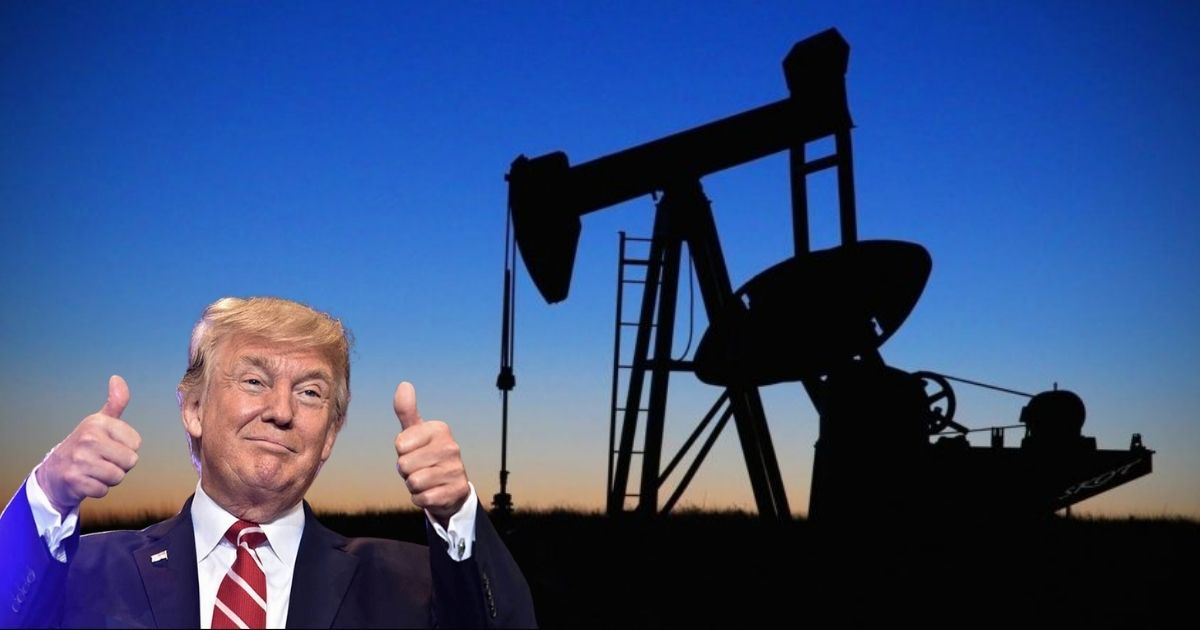
The Return of Donald Trump and His Promises of More Oil Shake the Global Climate Agenda and Could Impact Brazil Directly.
While the world tries to advance the use of renewable energy, Donald Trump, former U.S. president and current candidate, has made a controversial and, for many, dangerous promise: to drastically increase oil production to reduce energy costs in the United States.
This potential escalation in oil exploration not only reignites environmental concerns, but also brings direct impacts on the global energy strategy — particularly for Brazil.
This promise could transform the energy transition landscape in the country and require strategic decisions that affect both the economy and the environment. But how far could Trump’s new positioning affect Brazil?
-
Brazil produces too much clean energy and doesn’t know what to do with it: over 20% of solar and wind capacity was wasted in 2025 while investors flee and 509 renewable generation projects were abandoned in the last year.

-
Piauí will produce a new fuel that replaces diesel without needing to change anything in the truck’s engine and reduces pollutant gas emissions by half: truck drivers from all over the Northeast are already celebrating the news that will arrive later this decade.

-
A new Brazilian shopping center worth R$ 400 million will be built in an area equivalent to more than 4 football fields, featuring 90 stores, 5 cinemas, a supermarket, a college, and parking for 1,700 cars, potentially generating 3,000 jobs.

-
Larger than entire cities in Brazil: BYD is building a 4.6 km² complex in Bahia with a capacity for 600,000 vehicles per year, but the discovery of 163 workers in conditions analogous to slavery has shaken the entire project.


Trump’s Plan: Prioritize Fossil Fuels
Donald Trump wants to put the U.S. back in the lead for cheap energy.
He has promised to reduce energy costs at any cost, ignoring carbon emissions and advocating an openly pro-oil stance.
During the campaign, Trump made no shortage of promises: he declared that he would establish a national goal to ensure that the U.S. had the lowest energy costs among industrialized countries.
His phrase “drill, baby, drill” sums up his policy of encouraging drilling.
According to the newspaper O Globo, the United States ranks first in global oil production with about 12.9 million barrels per day, followed by Russia and Saudi Arabia.
Over the past fifteen years, fracking — a technique that uses water and chemicals to extract oil and gas from underground rocks — has become popular in the U.S., although it faces strong opposition from environmentalists who raise concerns about soil and water contamination risks.
Consequences for the Global Market and Impact on Brazil
Trump’s promise to expand oil production directly impacts international prices.
If the U.S. significantly increases its oil supply, the trend is that the price of crude will fall.
This not only affects the sector in the U.S., but also has repercussions for producing countries like Brazil, which ranks eighth in global production, with 3.4 million barrels per day, according to the Brazilian Institute of Oil (IBP).
For Brazil, this issue is critical. The Lula government has been focusing on energy transition, planning to host COP30 in 2025, in addition to studying exploration projects in the Equatorial Margin, a sensitive area on the northern coast.
This new approach by Trump, with incentives for fossil fuel use, could force Brazil to reevaluate its strategy and even delay investments in renewable energy.
Stimulation of Oil and the Threat to Renewable Sources
Trump’s stance worries not only environmental advocates, but also the renewable energy sector. Experts warn that the new administration may reduce incentives for clean energy, such as solar and wind, which will hinder the development of these technologies in Brazil and other countries. According to consultant Simon Flowers of Wood Mackenzie, “The short-term growth expectations for wind, solar, and electric vehicles depend on incentives that are likely to be removed or modified.” He believes that the outlook for these sectors will become more complicated with a potential new Trump administration.
Amid this perspective, Brazil has the advantage of having one of the cleanest energy matrices in the world, but this does not guarantee that the country will be immune to the effects of this policy.
According to the newspaper O Globo, Brazil will need to seek ways to finance its energy transition, avoiding reliance on decisions made by foreign governments.
Furthermore, a global reduction in incentives could make renewable projects less attractive to investors, posing a risk for the country.
Electricity Versus Fossil Fuels: The Impact on the Automotive Sector
The possible new Trump administration could also alter emission standards for vehicles, affecting the global automotive sector.
Edmar Almeida, a professor at PUC-RJ’s Energy Institute, believes that the pressure to adopt electric vehicles may decrease.
For him, the outlook for electric cars will be more challenging if Trump relaxes the emission targets set for 2027.
This strategy may encourage the consumption of oil derivatives in the U.S. and, consequently, hinder the expansion of electric models in emerging markets like Brazil.
For Brazil, this American stance implies additional challenges. Reductions in electrification subsidies may affect the prices of electric vehicles and thus inhibit the transition to a cleaner fleet in the country.
Dependence on fossil fuels in this scenario may increase, complicating the achievement of carbon emission reduction targets.
The Brazilian Dilemma: Expand Oil or Invest in Renewables?
Brazil faces a complex dilemma: expand oil and gas exploration or strengthen its renewable energy policy.
Roberto Ardenghy, president of the Brazilian Institute of Oil and Gas (IBP), recalls that Brazil still imports a significant share of energy, just like the U.S.
In an interview with O Globo, Ardenghy points out that an increase in U.S. oil production could represent an opportunity for Brazil to improve its energy security, but also a pressure to reduce its own operational costs.
Marcus D’Elia from Leggio Consultoria adds that despite global efforts to reduce emissions, the demand for oil is expected to remain high.
He advocates that Brazil use its reserves responsibly, ensuring that production is sustainable and brings benefits to the country.
The Future of Clean Energies and the Role of Brazil
In the current scenario, experts agree that if Trump wins the election, global climate policy will face new obstacles.
The boost to oil production in the U.S. could hinder the advancement of renewable energy, such as wind and solar, especially in countries that rely on international partnerships and subsidies.
Brazil, on the other hand, needs to decide its role in this context. The Equatorial Margin represents a possibility for oil production expansion, but the decision to explore it requires public debate about environmental risks and the country’s energy needs.
How to reconcile oil production with the transition to cleaner sources? For Marcus D’Elia, careful planning of Brazilian reserves can help the country balance energy security and environmental commitments.
And you, what do you think? Should Brazil invest more in oil or intensify the transition to clean energies?







Seja o primeiro a reagir!