





 Portuguese
  English
  Spanish
  6 min of reading
  0 comments


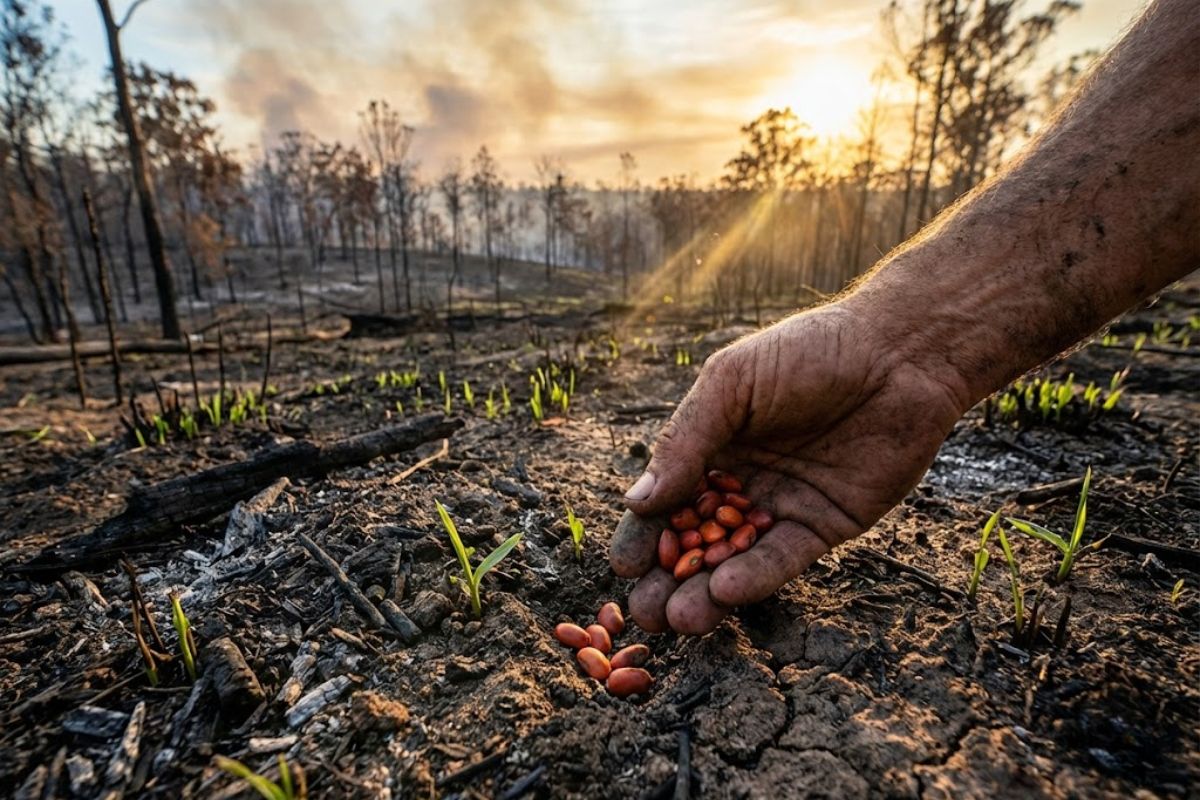
Giovana Cavenaghi Guimarães’ Project, PhD Student at Unesp in São José do Rio Preto, Tests Native Seeds with Physical Dormancy That Withstand High Temperatures, Crack the Shell, and Germinate After Fire, Pointing Direct Sowing as the Cheapest Way to Recover Burned Areas and Preserve Biodiversity in the Cerrado Quickly.
The idea of using native seeds from the Cerrado that withstand high temperatures has become a practical bet for restoring areas destroyed by fires without relying solely on seedling planting, which tends to be more expensive and slower. The project is led by biologist Giovana Cavenaghi Guimarães, a PhD student at Unesp in São José do Rio Preto, and aims at a crucial point: how some seeds survive the passage of fire and still manage to germinate after the burn.
The focus is on understanding a mechanism called physical dormancy, common in certain species, which functions as a natural “waiting mode.” Even when the fire passes and destroys what has already sprouted, these seeds can remain viable in the soil, resist heat and then initiate germination, paving the way for the return of vegetation and the recovery of degraded soil.
Why Fire-Resistant Seeds Are Getting So Much Attention Now

The Cerrado coexists with fire as part of its own ecological functioning, and many native plants have already developed strategies to cope with heat and prolonged droughts.
-
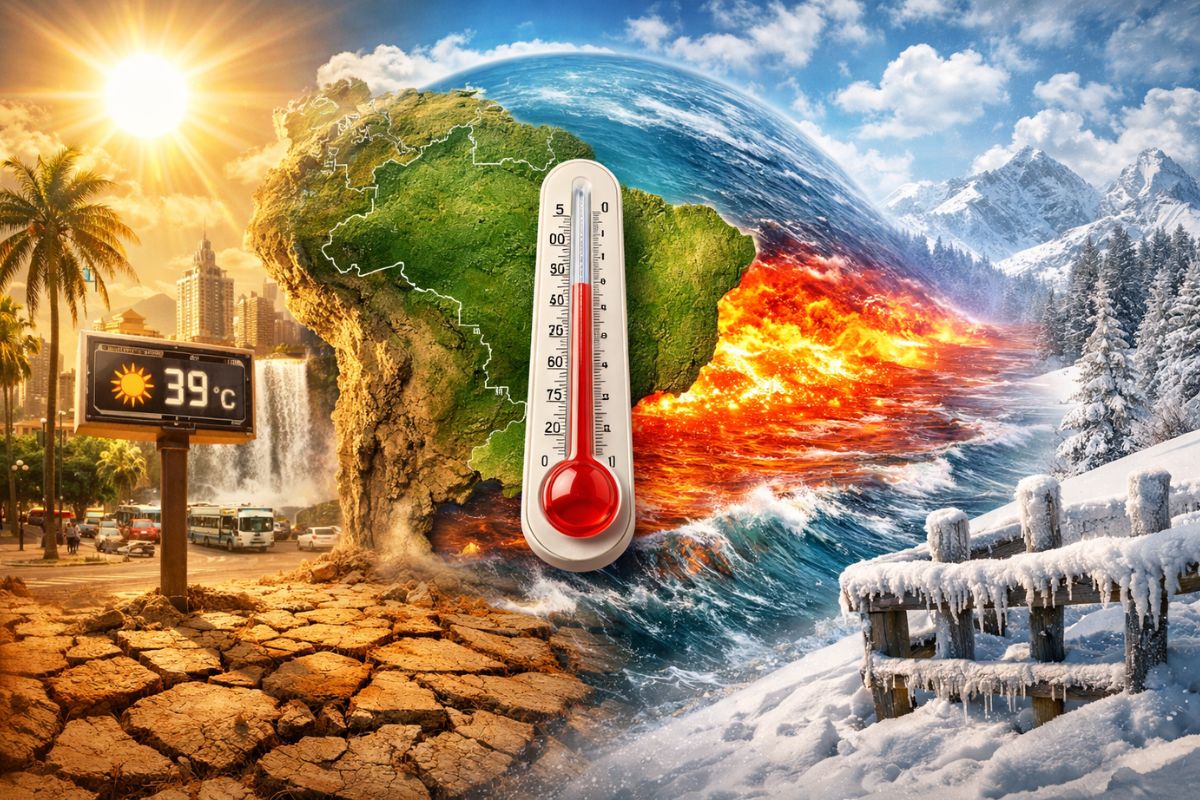
April begins with above-average heat and irregular rains in Brazil as El Niño warms the Pacific and exceeds 80% probability for the second half of 2026, with a risk of frost in the mountains and a winter that may repeat the extremes of 2023.
-
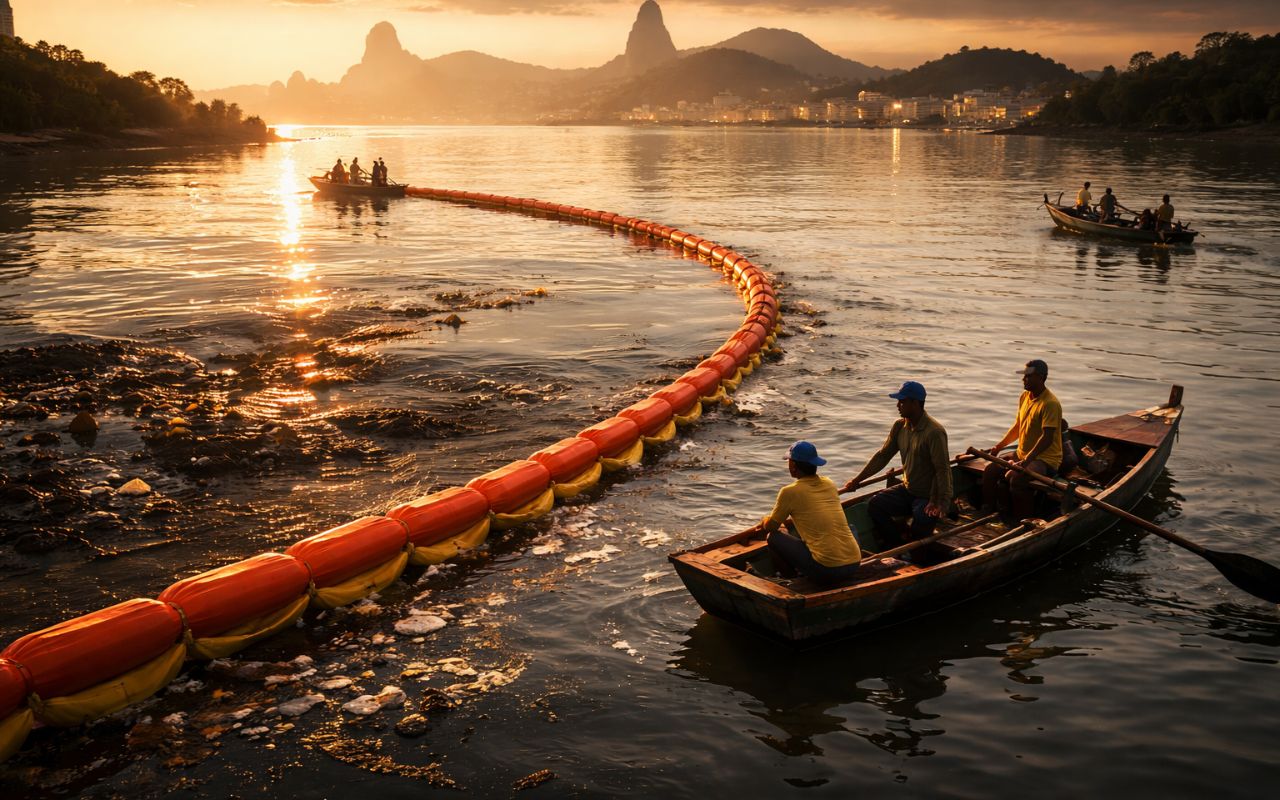
A barrier made with hair strands is used to clean the Guanabara Bay and employs simple technology to contain oil and waste.
-
The oceans are darkening all over the planet – what is happening?
-
An engineer designs a solar plane to fly on Mars at an altitude of 1,000 meters and a speed of 300 km/h, covering 16,000 kilometers in a Martian year, 900 times the distance traveled by the Ingenuity helicopter in three years on the planet before experiencing a rotor failure, and NASA is already funding the feasibility study.


However, the pressure has increased, especially with the intensification of burnings linked to agricultural activity.
In this scenario, the importance of solutions that can operate over large areas and at a lower cost is growing. Research indicates that, according to data from Inpe, 46.8% of the total number of fire hotspots recorded in the country in 2025 occurred in the Cerrado, nearly 50,000 between January and October. For regions that frequently burn, relying exclusively on seedlings can become a financial and operational bottleneck.
The Native Species Under Test and What Makes Them Special

The study begins with native species of the Cerrado known for enduring adverse conditions and having seed structures capable of surviving difficult periods.
Among those mentioned are:
Jatobá (Hymenaea courbaril)
Wild Peanut (Pterogyne nitens)
Mulungu (Erythrina mulungu)
Canafístula (Peltophorum dubium)
The proposal is to understand, in detail, how these seeds deal with the extreme heat typical of fires in the biome. A highlighted point is that these species exhibit a high germination capacity, and on average, it has been observed that 99% of the seeds develop into trees, reinforcing the potential for large-scale restoration when local conditions are favorable.
The “Trick” of Physical Dormancy That Allows Germination After the Burn
Physical dormancy is a survival mechanism: the seed does not germinate immediately because its external “shell,” the seed coat, acts as a barrier to water entry. Under normal conditions, this helps the plant to not sprout at the wrong time.
In the case of the observed species, exposure to high temperatures can break this dormancy. The heat tends to cause cracks in the seed coat, allowing water to enter and trigger germination.
In practice, this creates an advantage in burned areas: even if the surface has been scorched by fire, the seeds that were in the soil can survive and sprout later, contributing to the reestablishment of the vegetation.
Giovana summarizes the logic of the process: even when the fire destroys what has already germinated, seeds that remain in the ground can resist and germinate after the flames pass, precisely because of this physical dormancy.
The Microbiome Does Not Enter Here, But the Soil and Climate Decide a Lot
The method is not a one-size-fits-all recipe for any biome. Specialist evaluations emphasize that restoration needs to start with an assessment of the area because not every species has physical dormancy and not every environment offers the ideal conditions for this type of strategy.
Elisangela Ronconi Rodrigues, a doctor in Plant Biology, highlights that the approach may help, but makes more sense in locations where these seeds genuinely have a greater chance of germinating, such as the Cerrado or areas with hot climates and prolonged droughts.
In other words, the potential exists, but it depends on the combination between the chosen species, soil, fire history, and climatic conditions.
Direct Sowing: The Cheapest Way with Less Intervention in the Soil
One of the central points of the project is the planting method. The researcher points to direct sowing as the most economical alternative: seeds are placed directly into the soil, either manually or through machinery, depending on the size of the area.
The important detail is that, in this technique, the soil is not disturbed. A small hole is only made to place the seed.
The logic is to reduce costs and impact, allowing ecological restoration to happen more naturally, with species that already have adaptive advantages to fire.
The idea is simple and strong: if the burned area catches fire again, the resistant seeds can still withstand and germinate, maintaining a real chance for vegetation to return.
Why Planting Seedlings Is Usually More Expensive
Seedling planting is a common method in Brazil, but it costs more because it requires two expensive stages: producing the seedlings and then transporting them to the field with labor for planting.
Giovana reinforces that creating seedlings and transplanting them to devastated areas increases the costs, while direct sowing, already widely used in agriculture, can be applied to ecological restoration with good results at a lower cost, according to national research cited in the discussion.
This does not mean “abandoning” seedlings, but rather a change of strategy: to use the right seeds, in the right place, when scale and budget are tight.
Pioneer Plants: Who Arrives First Protects the Soil and Opens Space for Other Species
The seeds studied are from pioneer plants, those that usually arrive first in degraded environments.
They germinate, form an initial cover, and help protect the soil, creating conditions for other species to appear naturally or be introduced later.
This point directly connects with the vision of restoration advocated by specialists: diversity matters. Kenny Tanizaki Fonseca, a researcher at UFF, considers the strategy interesting and easy to implement when working with seeds with physical dormancy and lower chances of mortality in burned areas.
Rafael Bitante Fernandes, forest restoration manager at SOS Mata Atlântica, emphasizes that areas affected by fire can recover naturally, but when fires recur, helping nature with as much species variety as possible increases the chances of success and “better shields” the location.
The Restoration That Keeps Up With the Rhythm of Fire, Not the Bureaucracy of Costs
The heart of the proposal is to combine natural adaptation with realistic logistics. When the area is large, the budget is limited, and fires return frequently, betting on seeds that withstand heat and can still germinate after burning becomes a strategy with a direct impact on the speed and cost of recovery.
The project is still ongoing, with the thesis expected to be published in the coming months, but the path that is being outlined is clear: to use what the Cerrado has already learned from fire to rebuild what fire has destroyed.
And you, do you think that restoration with fire-resistant seeds should become a priority in areas of the Cerrado that burn every year?






Seja o primeiro a reagir!