





 English
  Francês
  Alemão
  Italiano
  Japonês
  Norueguês
  Portuguese
  Spanish
  3 min of reading


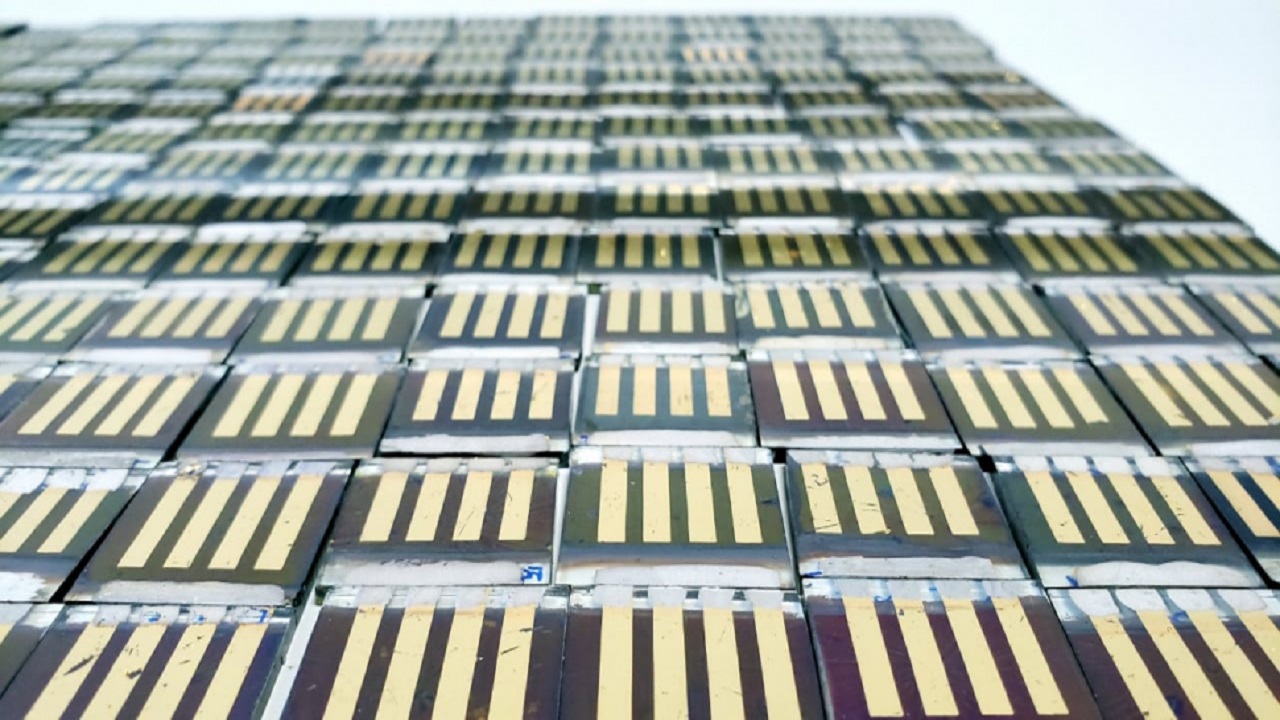
UNESP Researchers Are Advancing in a Global Race for Research on the Development of Perovskite Solar Panels. This is a Material That Offers Greater Efficiency, Potentially Boosting the Brazilian Solar Energy Sector.
The São Paulo State University (Unesp) in Bauru is in a global scientific race to produce solar panels using a material called perovskite, which could make large-scale manufacturing more economical and efficient compared to the models currently sold. The new technology in the solar energy sector is being studied in research centers across various countries and is expected to result in thinner, lighter, and more flexible panels than those currently available, with the potential to contribute to the expansion of non-polluting energy matrices worldwide.
Unesp Brings Together 15 Researchers to Advance the Development of Perovskite-Based Solar Panels
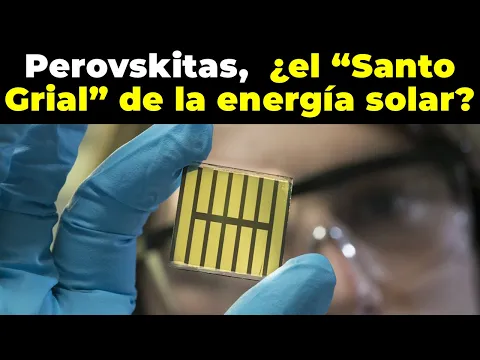

In this “competition,” about 15 researchers from the Laboratory of New Materials and Devices at Unesp in Bauru have combined their expertise with the knowledge of CSEM Brazil, which is a research institute linked to a company that generates organic and thin solar panels, better known as OPV.
The laboratory is coordinated by Professor Carlos Graeff from the Faculty of Sciences, one of the leading researchers at the Centre for the Development of Functional Materials (CDMF), which aims to create solutions for demands around the world, including for the solar energy sector.
-
With 160,000 m² of collectors, an area larger than 20 football fields, Silkeborg, in Denmark, hosts a solar thermal plant that heats 19,500 homes and could become the largest solar heating plant in the world.

-
A study reveals the expansion of renewable energy procurement in Brazil and shows how companies are taking advantage of opportunities to reduce expenses, ensure energy efficiency, and strengthen strategic environmental commitments.

-
Roraima bets on the sun to escape high tariffs: Amid the energy crisis and price hikes, solar energy is growing in Roraima and transforming consumption in the North region.
-
Mato Grosso do Sul excels in the sugar-energy sector: the state reaches a milestone of 22 operating mills and accelerates the production of clean energy in MS with a focus on sustainability.


According to a report published by the Unesp Newspaper, which served to publicize the study on perovskite, a large part of the solar panels used are made of silicon; however, the industry and researchers have never stopped looking for alternatives to replace the solar energy panels, as silicon is still heavy, weighing about 25 kg per square meter, and also requires high energy consumption.
According to Graeff, the efficiency of conventional solar energy panels, that is, the capacity to convert sunlight into electrical energy, hovers around 15%. In contrast, the models using perovskite have achieved over 25% efficiency in laboratory tests.
Perovskite Has Been a Major Competitor to Silicon Since 2012
According to the professor, what was observed with perovskite-based solar energy panels was a very rapid and unique technological development in the sector. Now, there is a technological race worldwide to test various techniques for energy production using the “new” material, with each group testing its own architecture.
Back in 2012, Graeff noted that the efficiency results achieved by perovskite made it the best “substitute” for silicon solar energy panels.
In 2014, Silvia Letícia Fernandes, who holds a PhD from Unesp on this new material, worked in Switzerland with a world reference in the development of new technologies for the sector, Michael Gratzel. Silvia stated that during this period, she learned to assemble perovskite solar panels and when she finished her internship, she returned to Brazil with this new knowledge.
Learn How the Perovskite Solar Panel Is Produced
In this architecture, each substance is printed in layer form and performs a cell function. Thus, a flexible and thin film is generated, capable of generating electricity through sunlight.
After defending her doctoral thesis, Fernandes continued studying the application of perovskite, attracting the interest of CSEM Brazil, which hired her and established a partnership with Unesp in Bauru. CSEM Brazil has been working for several years to also enhance the technology of organic solar cells (OPV).
The mastery of the technology and the potential efficiency of perovskite motivated CSEM to create a project for the development of a panel that utilizes both types of material. The research was funded by Petrobras for four years.









Seja o primeiro a reagir!