





 Portuguese
  English
  Spanish
  2 min of reading


Norwegian Researchers Have Developed A Technology Capable Of Powering Gas Turbines With Hydrogen
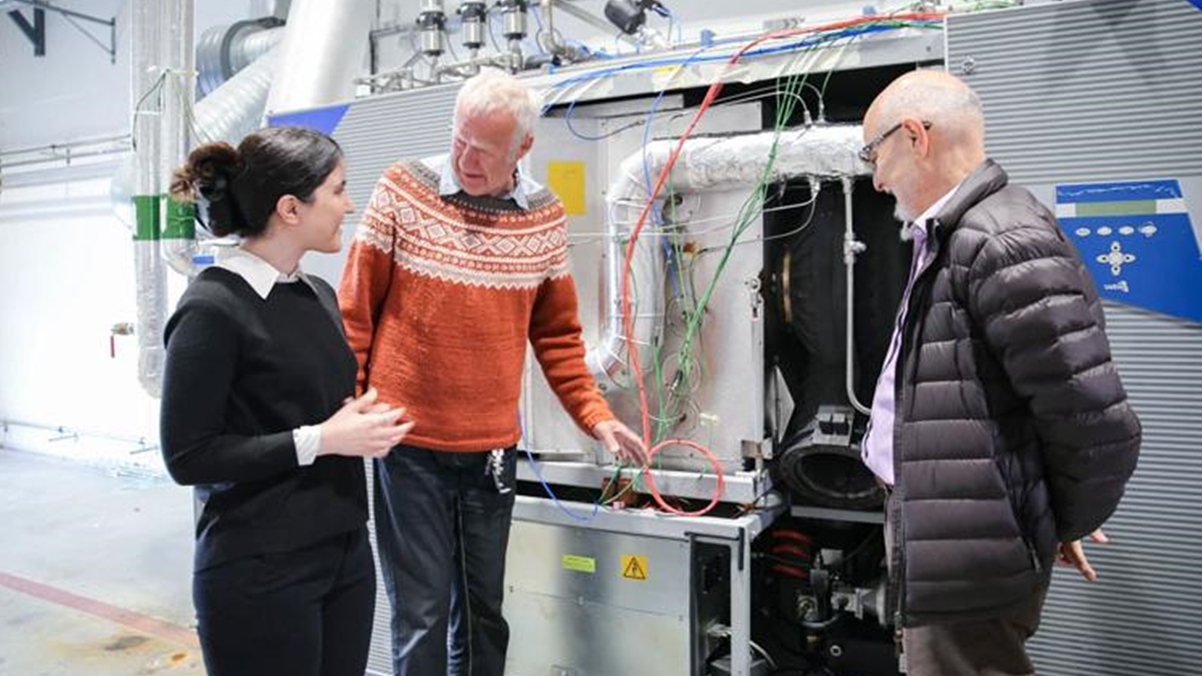
The University of Stavanger, in Norway, operates a mini gas plant that could revolutionize the sector. Researchers are working on a pure hydrogen gas turbine. The equipment can produce heat and electricity for the entire complex without emitting carbon dioxide (CO2).
In a recent statement, researchers from the university announced that they successfully developed a method that uses pure hydrogen as fuel for gas turbines.
What Is A Gas Turbine?
Like gasoline and diesel engines, a gas turbine is an internal combustion engine, operating with a cycle of intake, compression, combustion, expansion, and exhaust. The biggest difference is that a gas turbine operates circularly, while combustion engines operate with a back-and-forth motion.
-
Renewable energy advances over protected areas in Brazil, and a survey by the Energy Transition Observatory reveals silent impacts that challenge environmental conservation and pressure sensitive traditional territories.

-
Rio Grande do Sul accelerates energy transition: State invests in renewable technologies and consolidates decarbonization strategies and pathways to attract billions in new industrial investments.

-
With 160,000 m² of collectors, an area larger than 20 football fields, Silkeborg, in Denmark, hosts a solar thermal plant that heats 19,500 homes and could become the largest solar heating plant in the world.

-
A study reveals the expansion of renewable energy procurement in Brazil and shows how companies are taking advantage of opportunities to reduce expenses, ensure energy efficiency, and strengthen strategic environmental commitments.


After much study and testing, the research team achieved their goal in May of this year, when they managed to operate a gas turbine with 100% hydrogen. They reached the goal of producing energy while emitting 0 carbon dioxide (CO2) at the end of the process.
Professor Mohsen Assadi, who leads the research team, highlighted that the researchers’ achievement was unprecedented in the world: “We set a world record in hydrogen combustion in micro gas turbines. No one has been able to produce at this level before,” said the professor. Assadi also noted that the hydrogen-powered turbine will be less efficient.
“The efficiency of operating the gas turbine with hydrogen will be slightly lower. The great gain, however, is being able to utilize the existing infrastructure. Additionally, there are no CO2 emissions associated with this energy production,” the professor added.
Where Does Hydrogen Come From?
It is undeniable that hydrogen is one of the cleanest energy sources in the world. However, a large portion of the hydrogen that exists today is derived from or heavily dependent on fossil fuels. A report from the U.S. Department of Energy showed that 95% of all hydrogen produced in the country comes from natural gas plants. Because of this, hydrogen production generates a significant amount of greenhouse gases.
Green hydrogen is an investment from industry experts to accelerate the reduction of the carbon footprint of crucial economic activities, such as transportation. Green hydrogen is produced through the electrolysis of water, splitting the hydrogen atoms from oxygen.









Seja o primeiro a reagir!