





 Portuguese
  English
  Spanish
  4 min of reading
  0 comments


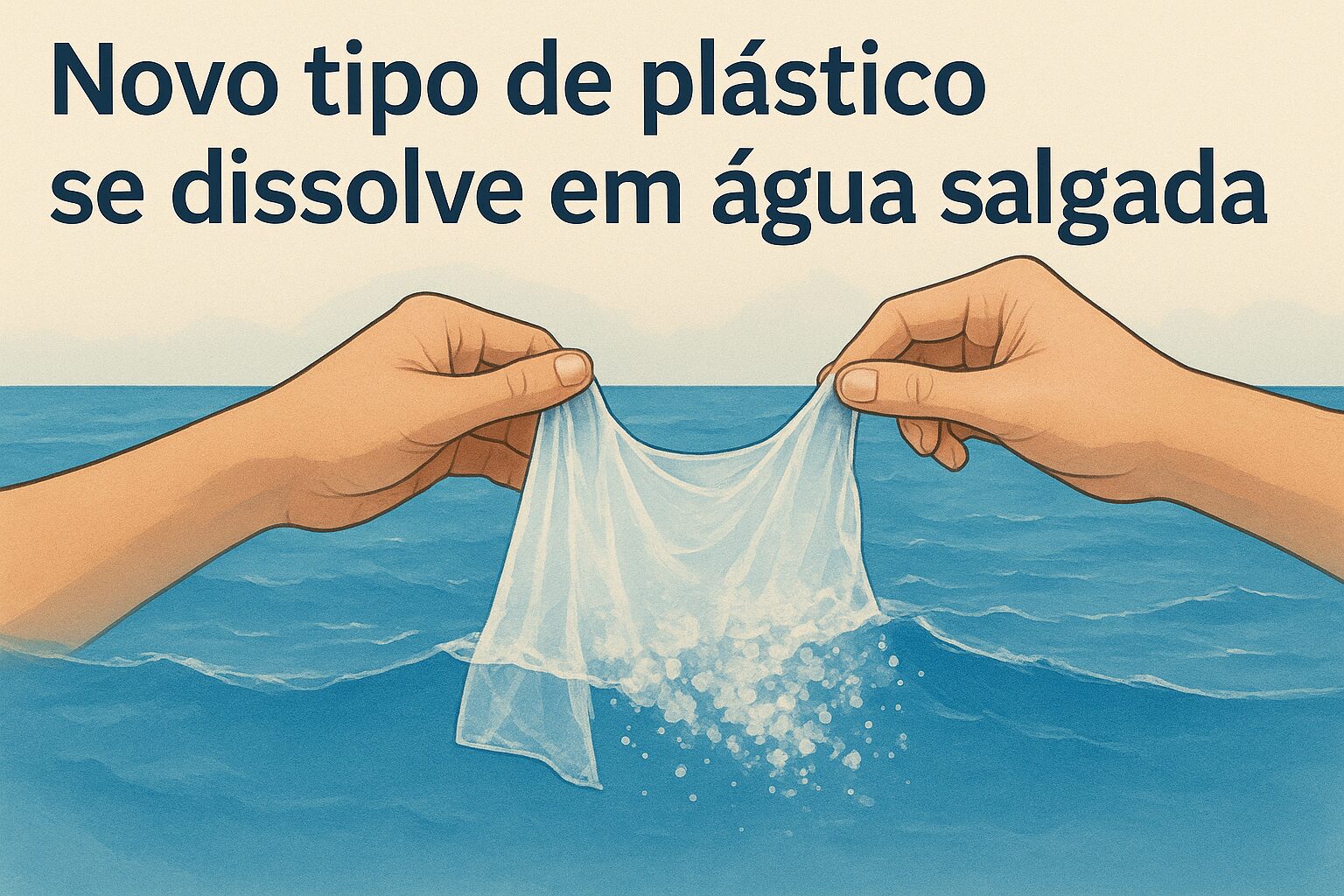
New Supramolecular Plastic Resists Daily Use and Decomposes in Seawater, Offering an Innovative Solution to Reduce Pollution and Protect Oceans
Plastic is a part of modern life. Present in packaging, products, and construction, it makes daily life easier, but it has also become a major environmental issue. In oceans, plastic suffocates animals, destroys habitats, and can last for centuries.
When it degrades, it often turns into microplastic, which enters the food chain and threatens marine and human life. Despite recycling campaigns and bans, the problem of microplastics persists.
Now, scientists may have found a solution: a new type of plastic that disappears in saltwater. Published in the journal Science, the study presents what are called “supramolecular plastics.”
-
While the world looks at oil, the war with Iran is already disrupting helium supply from Qatar, affecting car and iPhone chips, threatening AI expansion, and putting pressure on aluminum packaging at the highest value in four years.

-
Global warming will expose a treasure hidden under the ice of Antarctica and may spark an international dispute over gold and valuable minerals.

-
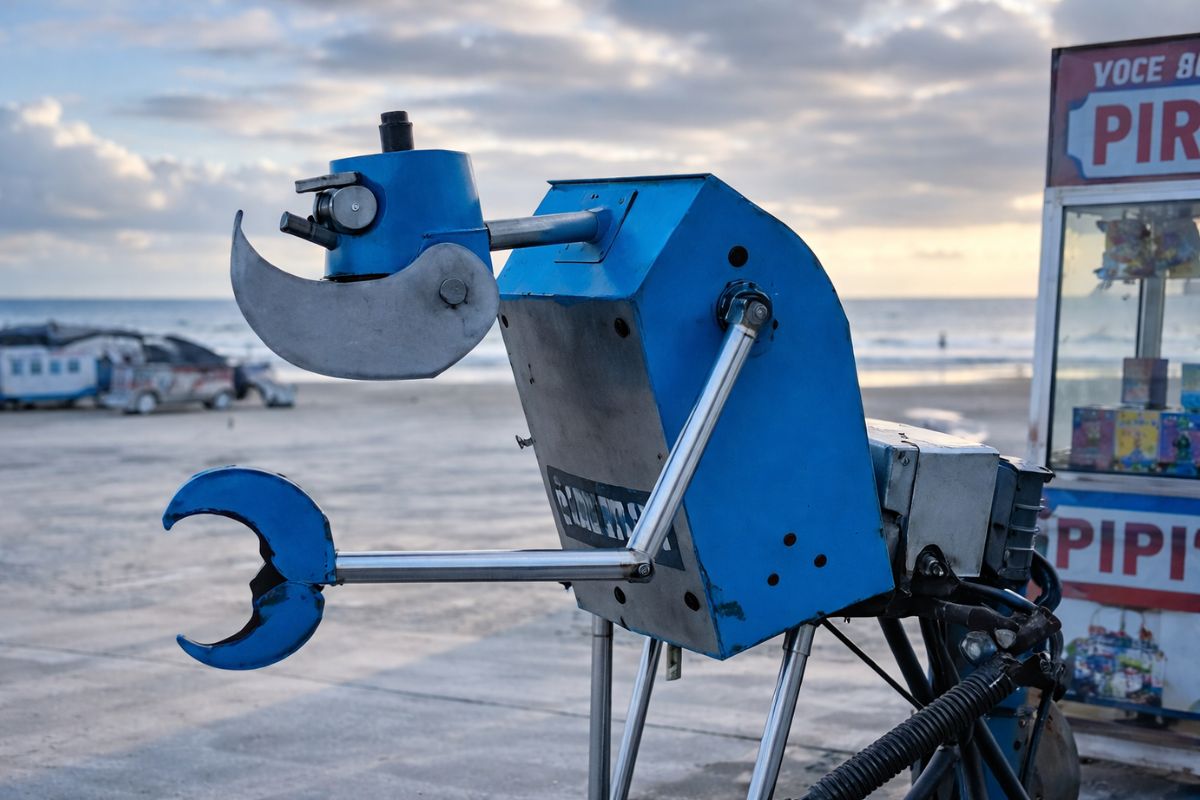
A street vendor from Praia Grande built a robot made of scrap from scooters and washing machines that pulls his popcorn cart on the beach, emits sounds, and interacts with customers, becoming an attraction on the coast of São Paulo.
-
The specifications of the Xiaomi 18 Pro Max have been leaked, and the highlight is a dual 200 MP camera with a new 22-nanometer technology that promises to consume less energy and capture details in shadows and bright areas using LOFIC HDR.


These materials are durable, versatile, and most importantly, dissolve in the ocean without leaving microplastics. The discovery could help combat one of today’s greatest environmental challenges.
How the New Plastic is Made
The secret lies in the simple yet effective composition. The plastic is made from two main ingredients: sodium hexametaphosphate and guanidine sulfate. The first is found in food and cleaning products. The second is a salt-based compound.
When these two compounds are dissolved in water, they create a dense molecular network, held together by forces called “salt bridges.”
After forming the network, it can be dried and molded into films, containers, and even 3D-printed objects. This allows for the manufacture of various plastic products from this structure.
The innovation lies in the reaction to saltwater. Upon contact with the ocean, the molecular bonds break.
The material disintegrates and reverts to simple substances, which marine bacteria can digest without problems. Thin plastic films can dissolve in just a few hours. Thicker pieces disappear in a few days.
Differences Compared to Conventional Plastics
An important advantage is that the new plastic does not require special conditions to decompose. Traditional biodegradable plastics generally need heat or industrial composting to break down their structures.
In contrast, the supramolecular plastic reacts naturally to the marine environment, where plastic waste tends to accumulate.
Even outside the ocean, it does not turn into a long-term problem. If buried in soil, for example, the material naturally decomposes into organic compounds. This prevents the accumulation of solid waste that would take hundreds of years to disappear.
Besides being eco-friendly, the new plastic is also safe. It is non-toxic, non-flammable, and does not produce CO₂ emissions. At temperatures above 120°C, it can be reshaped, just like conventional thermoplastics.
Proven Quality and Strength
Although designed to disappear, the material is surprisingly strong. According to Takuzo Aida from the RIKEN Center for Emergent Matter Science, the reversible structure of the plastic does not compromise its strength or stability.
Tests have shown that it withstands heat and pressure as well as many traditional plastics. Additionally, its ability to be dissolved and remade facilitates recycling.
The main components can be recovered and used to produce new plastics, creating a recycling cycle that further reduces environmental impact.
The potential is vast. From food packaging to shopping bags, many daily applications could adopt the material. The plastic is also promising for 3D printing, offering a sustainable alternative for the manufacturing of complex objects.
Upcoming Challenges for Adoption
Despite the promising results, the path to large-scale use is still long. Production lines need to be adapted to manufacture the new plastics. Industries accustomed to traditional plastics will have to be convinced of the environmental and commercial advantages.
Production costs, durability in extreme conditions, and the adaptation of recycling processes are points that require further study. Additional tests must be conducted to prove the material’s effectiveness in different scenarios.
Another important factor will be support from public policies. Government incentives can accelerate the acceptance of the new plastic in the market. Specific regulations could also be developed to encourage the use of materials that dissolve safely in the environment.
A New Concept of Plastic
The discovery of supramolecular plastics marks a shift in perspective. Instead of creating materials designed to last forever, scientists are now seeking to develop useful products for a limited time that then disappear without causing harm.
This new approach could redefine how society deals with plastic waste. By investing in solutions that respect natural cycles, science offers a new hope for a future with cleaner oceans and less pollution.
If the challenges of production and acceptance are overcome, plastic that dissolves in water could be a game changer in the fight against the global plastic crisis.









Seja o primeiro a reagir!