





 Portuguese
  English
  Spanish
  2 min of reading
  0 comments


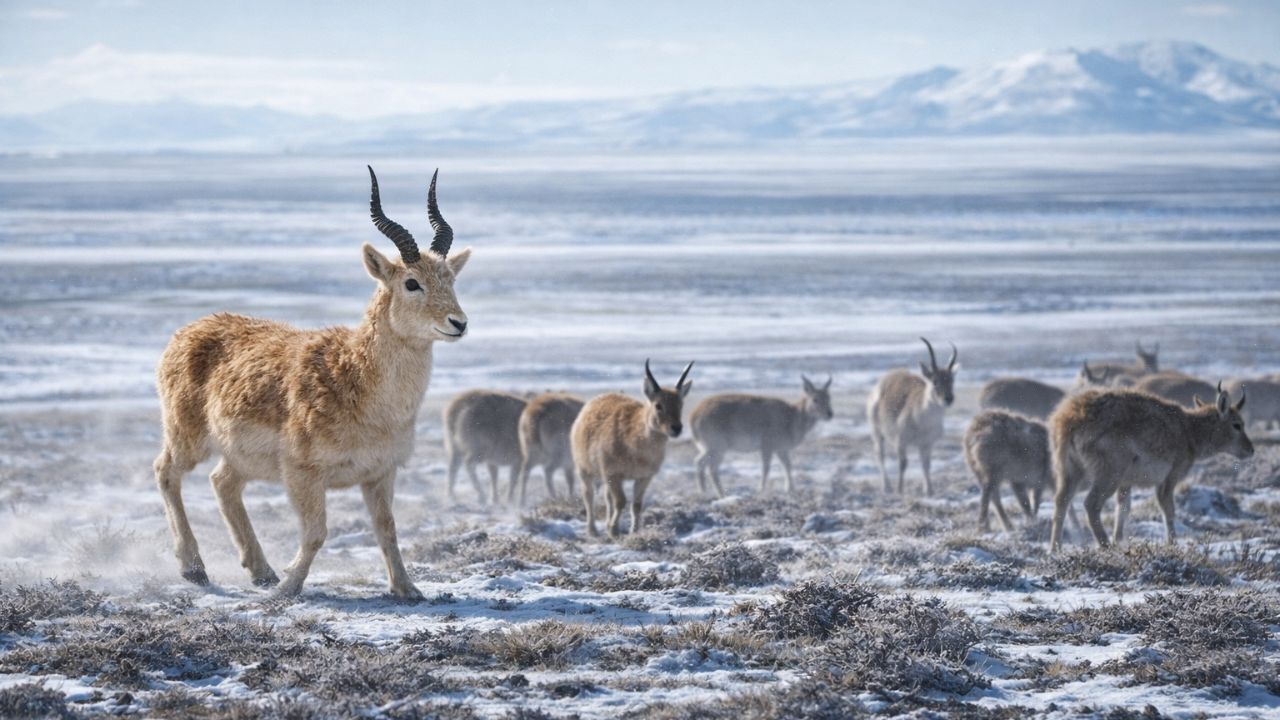
Researchers Developed An Antelope Robot To Monitor Wildlife In A Remote Reserve In China, Overcoming Environmental Challenges.
Researchers from China have begun using a robot resembling an antelope to monitor wildlife in a hard-to-access region in northwestern China. The initiative took place in the Hoh Xil National Nature Reserve, located in Qinghai Province.
The project was created to observe the local fauna continuously and discreetly, without direct human interference.
The solution arose because the intense cold, high altitude, and low oxygen concentration make traditional fieldwork difficult. Thus, technology began to be seen as a safer and more efficient alternative.
-
With a cost per shot close to zero, the DragonFire laser could change naval warfare in 2027 and provide British ships with nearly unlimited defense against drones.

-
A British startup creates tires that generate electricity in electric vehicles when passing over potholes, speed bumps, and cracks.

-
Scientists have created robots made with living cells that have their own nervous system, swim on their own, explore the environment, and self-organize without any genetic engineering, and now they want to do the same with human cells.

-
Students create a solar-powered ambulance that operates without a plug, without fuel, and still keeps medical equipment running in remote areas.


Development Of The Antelope Robot Involved Different Specialists
Before the arrival of the antelope robot, monitoring relied almost exclusively on human presence and fixed cameras. However, these tools had significant limitations.
While researchers faced physical risks by staying in the area, camera traps only captured sporadic images. Thus, many animal behaviors went unrecorded.
The robot used in the research was developed from an existing robotic platform designed for unstable terrains. The structure was adapted to withstand extreme cold and long periods of operation.
Furthermore, animal simulation specialists collaborated to give the equipment an appearance similar to a real antelope. The visual resemblance was essential for the animals to accept the robot’s presence without alarm.

Embedded Technology Expands Information Collection
Equipped with discreet cameras and intelligent sensors, the antelope robot can capture close-up images and videos. The systems utilize artificial intelligence, meaning programs that learn to identify patterns automatically.
These resources enable tracking migration routes, feeding habits, and the development of offspring. The information is transmitted in real-time to analysis centers, facilitating the work of researchers.
Robot Also Helps To Protect Antelopes From Accidents
In addition to scientific research, the robot plays a preventive role. By identifying large groups of antelopes moving towards roads, the system sends automatic alerts.
This allows local teams to temporarily control traffic. This action reduces the risk of accidents and contributes to the safety of both animals and people.
Monitored Region Is Essential For Ecological Balance
The Hoh Xil Reserve is known for its large concentration of Tibetan antelopes. Every year, thousands of females migrate to specific areas where they give birth.
Therefore, the use of the antelope robot represents an important advancement. The technology allows researchers to monitor wildlife more accurately, strengthening long-term conservation strategies.
With information from TecMundo







Seja o primeiro a reagir!