





 Português
  Inglês
  Espanhol
 4 min de leitura
  0 comentários


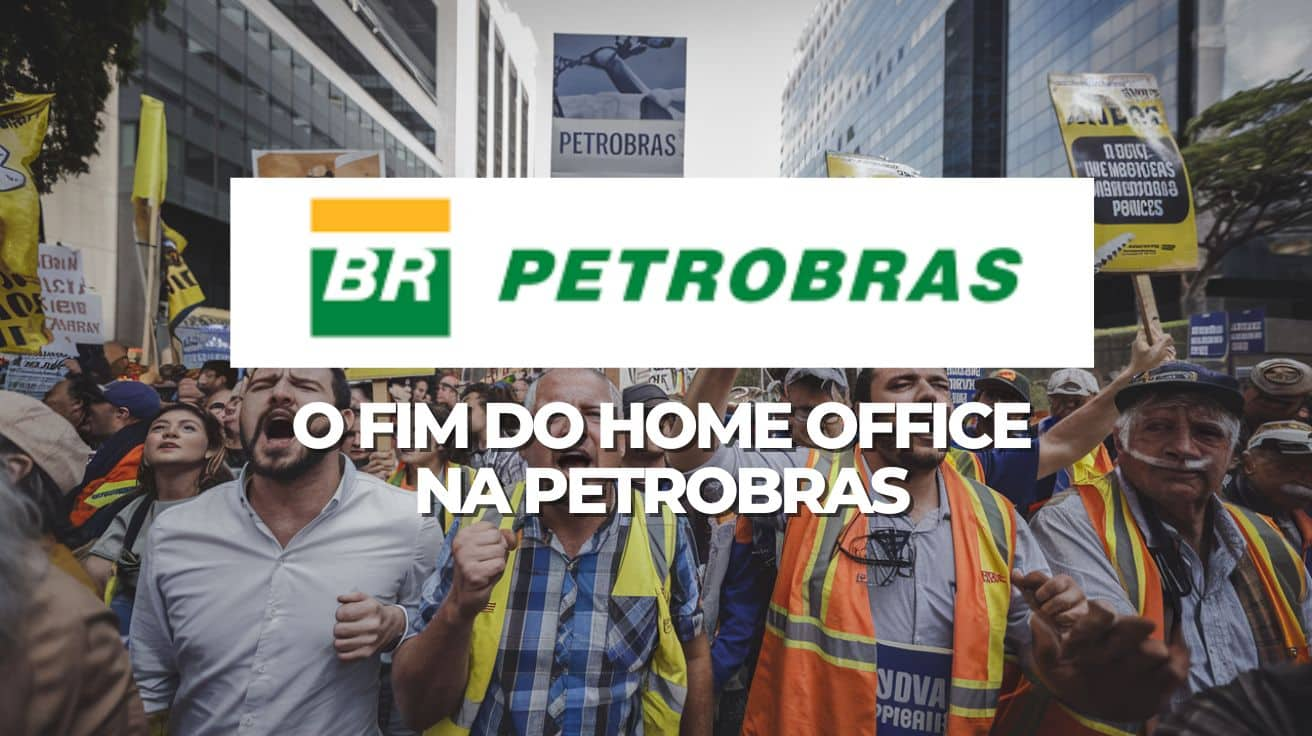
Petrobras Reduces Remote Work and Increases In-Person Days but Faces Strong Resistance from Employees. Unions Approve Strike Status While Memes and Songs Mock the Decision. Violence in Rio Is Used as an Argument.
The relationship between work and productivity has transformed radically in recent years.
The hybrid model, once seen as a temporary concession, has become a right fervently defended by many workers.
Now, a growing dispute between Petrobras and unions is gaining momentum and may define the future of remote work at the state-owned company.
-
Drought may be creating stronger superbugs in the soil and helping antibiotic resistance reach hospitals, warns a study highlighting a problem that could grow alongside extreme weather.

-
The biggest scam in history: Napoleon’s France deceived the United States by selling them a territory that was Spanish.

-
Why is the Danakil Desert so dangerous? It has unstable terrain and how extreme temperatures and toxic gases turn the region into one of the most hostile environments on Earth.

-
With a height of 221 meters and a capacity for trillions of liters, Hoover Dam still holds a trick that makes water defy logic.

Since the beginning of the year, Petrobras has been trying to increase the presence of its employees in the offices. Currently, the regime is two days in-person per week, but management wants to expand it to three.
According to Folha de S. Paulo, the change has generated great resistance among workers, who appeal to humor and union mobilization to pressure management.
The Clash Between Petrobras and Employees
Petrobras’ decision to increase in-person work days was announced at the beginning of January.
According to the cited newspaper, management explains that the measure seeks to strengthen team integration and accelerate project delivery. For the company, physical interaction improves productivity and internal management.
However, administrative employees disagree. For them, remote work does not compromise performance and ensures a better quality of life.
Safety is also a central argument: many workers use the rising violence in Rio de Janeiro as a reason to avoid going to the offices.
Strike Status and Humorous Protests
Unions quickly reacted to the decision.
The Unified Federation of Oil Workers (FUP) approved a strike status while negotiating with the company. Protests and demonstrations have been organized at various state-owned units.
At the same time, employees also resorted to creativity.
Memes and musical parodies have taken over social media and WhatsApp groups, satirizing the management decision by Magda Chambriard. One of the most shared songs refers to the insecurity of the city:
“I leave my house and I’m already alert, I go one way and then the other, scared. In Rio de Janeiro, my friend, it’s like this, if it’s not a robbery, it’s endless traffic.”
Another parody, directed at the company’s president, requests that remote work be maintained:
“Magda, let me work from home, here I have air conditioning and there’s no threat. I’ll pay for coffee, no need to spend, and productivity will only increase.”
The memes also mock the challenges of everyday life in Rio de Janeiro.
In one of them, the famous animation “The Powerpuff Girls” is used to list the difficulties of going to the office: “Fire in the morning, shootout in the afternoon, chaos in transportation.”
The Political Influence on the Decision
Among the employees’ criticisms, a speculation gained traction: that Petrobras is yielding to the pressure from the Mayor of Rio, Eduardo Paes.
The politician has argued that companies should resume in-person activities to revitalize the city center.
A parody in trap rhythm mocks this situation:
“One day the mayor said: ‘the center is bad, and to recover, I want you [in] person’. The president at the time said go to hell. Here the company is with me, and you go to your home, replan your center without giving me work.”
Although there is no evidence of direct influence from Paes, the suspicion has strengthened employee mobilization.

What Petrobras Says
The company justified its decision by stating that it follows market trends and seeks the best model for its productivity.
In a statement, the company declared:
“The adjustments to the hybrid regime aim to enhance team integration and contribute to the agility in delivering results.”
Petrobras also highlighted that it is hiring new employees, which requires training and in-person supervision.
According to management, negotiations with the unions remain open, with the goal of reaching a consensus.
The Future of Remote Work at the State-Owned Company
The dispute between Petrobras and employees is far from over. The final decision may impact not only the company’s workers but also other businesses that are observing the situation unfold.
For now, protests continue, memes spread, and workers remain steadfast in their fight to maintain remote work as a definite reality in the corporate environment.








-

-

-

-

4 pessoas reagiram a isso.