





 Portuguese
  English
  Spanish
  4 min of reading


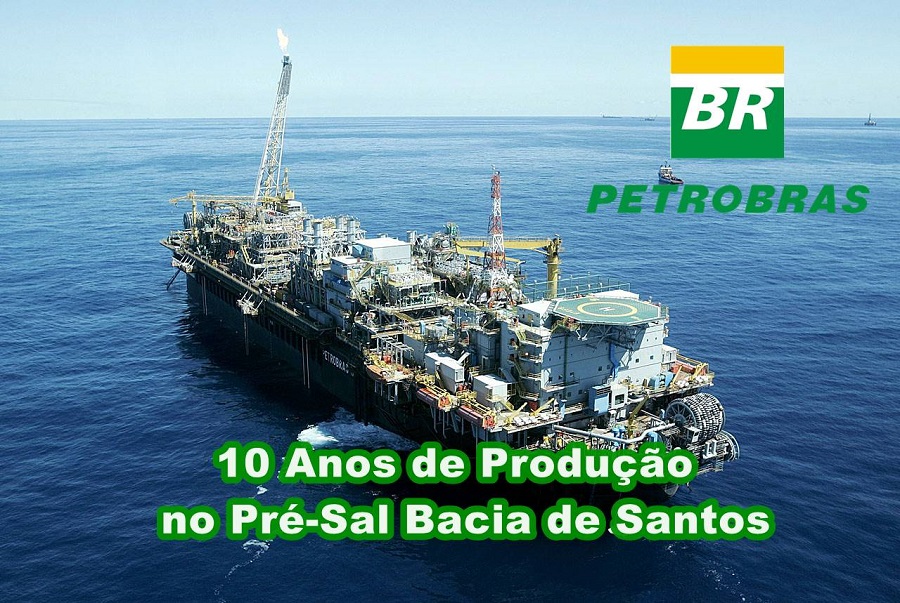
With 16 Platforms and More Than 150 Wells, The Pre-Salt of the Santos Basin Is Today One of the Most Competitive Production Hubs in the Sector
Petrobras completed, in May, ten years of production in the pre-salt of the Santos Basin, with efficiency and productivity indicators above the offshore industry average. There are 16 platforms and more than 150 wells operating only in that hub, which account for 90% of all production in the Brazilian pre-salt. The extraction cost below US$ 7 per barrel and the high productivity of the fields elevate the pre-salt to one of the most competitive frontiers in the sector. Of the 30 most productive wells in the country, 29 are in this province, with the average production per well reaching 25,000 barrels of oil per day, about four times more than wells in the Gulf of Mexico, for example.
- Aker’s Factory in Paraná Delivers Wet Christmas Tree to Equinor
- Offshore Company Just Announced a Major Call for Future Oil and Gas Projects in Brazil
- Wilson Sons Announces Radio Operator Position on 28-05
- Petrobras is Close to Reaching 1 Billion Dollars with the Sale of Two Offshore Fields
- UPGN Works at Comperj Are Employing Around 1200 Workers
In the pre-salt of the Santos Basin, the three largest producing fields in Brazil are currently located: Lula, Petrobras’s largest producing field with nine systems in operation; Sapinhoá, with two systems; and Búzios, with four. Still in this layer, the Mero field, in the Libra block, has also shown promise. With only one well linked to the FPSO Pioneiro de Libra, the field has already surpassed the mark of 60,000 barrels of oil equivalent (boe), indicating high future potential. The only system operating in the field, the Pioneiro de Libra is dedicated to gathering information about the reservoir before the implementation of the definitive system. Part of the success in Mero is due to the exchange of experience with major companies in the sector that partner with Petrobras.
-
Government unlocks R$ 554 million for a highway that has been requested for decades and accelerates the duplication of BR.
-
Without bricks, without cement, and without endless construction: the cardboard house that is assembled in modules and can be moved.

-
Billions of barrels on the equatorial margin could lead Amapá to double its oil production in Brazil — the state aims to enter the route of companies in the Campos Basin, attract investments, and boost jobs and businesses in the oil and gas sector.
-
Without bricks, without cement, and without endless construction: the cardboard house that is assembled in modules and can be moved.

“The unique characteristics of the pre-salt of the Santos Basin, such as its location in ultra-deep waters, the salt layer that reaches 2 km in thickness, and the distance of 300 km from the coast, constituted an unprecedented challenge for Petrobras and the industry. But that was not a hindrance: ten years after the first oil from Tupi, we not only developed unprecedented solutions to overcome the challenges in the pre-salt, employing the highest technical competence, but also proved its economic viability and broke a succession of records. We have plenty of reasons to celebrate this date,” stated Petrobras’ Director of Exploration and Production, Carlos Alberto Pereira de Oliveira.
Pre-Salt Layer Sets Successive Records
In April, Petrobras’s operated production in the pre-salt layer set two new records: a monthly average production of 1.94 million boe reaching a daily production peak of 2.07 million boe. Additionally, on May 16, the operated production in the Lula area surpassed the daily mark of 1 million barrels of oil per day (bpd).
The accumulated production operated by the company in the pre-salt also reached 2.5 billion barrels of oil equivalent in just a decade, a volume that corresponds to all the proven reserves of Argentina, for example. Today, the pre-salt of the Santos and Campos basins accounts for approximately 60% of national production.
Future Vision
In the last 11 months, six platforms have started operations in the pre-salt of the Santos Basin, each with the capacity to produce up to 150,000 barrels of oil per day. And the future looks even more promising. The projects destined for that layer are the company’s main investment front: of the 11 platforms planned for the next five years, seven will be installed in the pre-salt of the Santos Basin and one in the pre-salt of the Campos Basin, with an expected investment by Petrobras of US$ 27 billion in the next five years.
“For the next ten years, the projection is to develop new production projects in the pre-salt under even more challenging conditions. The blocks acquired in the recent auctions and the recent discoveries are located, mostly, in even deeper water depths, ranging from 2,500 to 3,000 meters. Far from being a barrier, the company is already studying new technological solutions that enable production in these areas – in a multidisciplinary effort that again brings together the most significant technical competencies of the company,” revealed the E&P director.
Source: Petrobras Press Release









Seja o primeiro a reagir!