





 Portuguese
  English
  Spanish
  4 min of reading
  0 comments


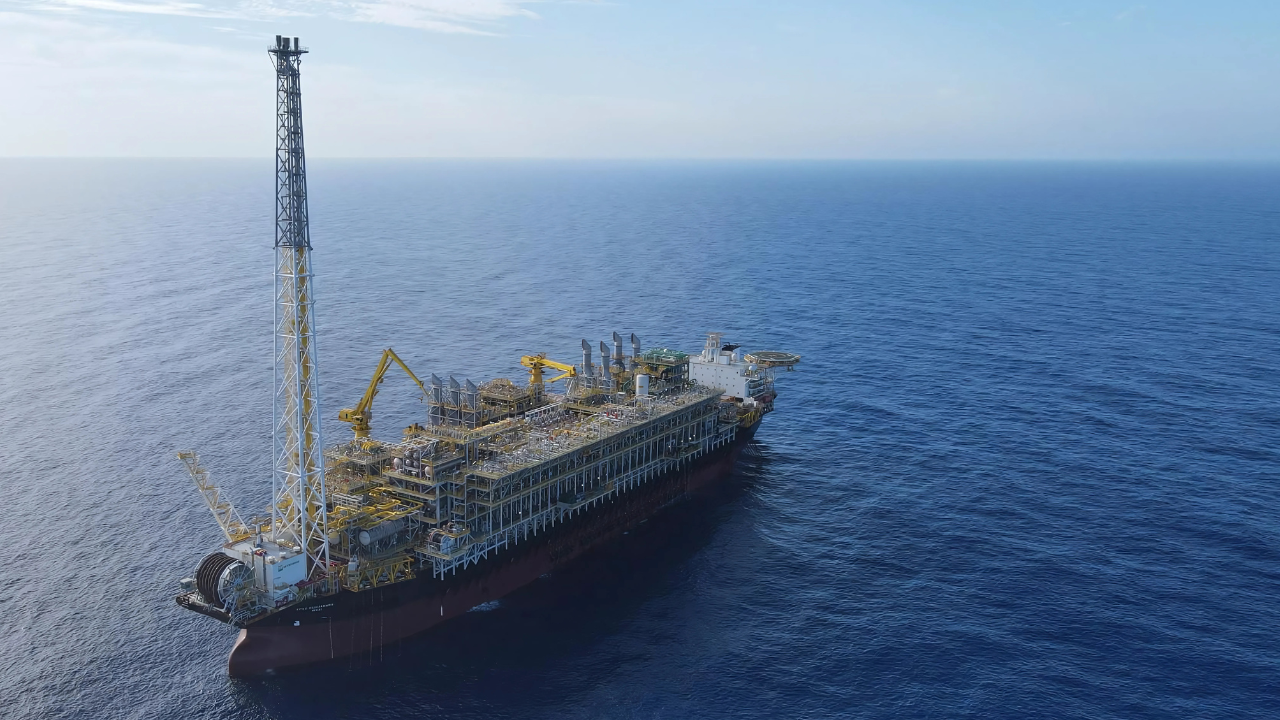
The Mero Field, in the Pre-Salt of the Santos Basin, has reached 500 thousand barrels per day, becoming the third-largest producer of Petrobras. With investments in technology and new platforms, such as the FPSO Alexandre de Gusmão, production will reach 770 thousand barrels per day, consolidating its importance for Brazil’s energy security.
Located in the Pre-Salt of the Santos Basin, the Mero Field achieved an important milestone by reaching 500 thousand barrels of oil produced per day, as announced on Friday, February 28. This result places the Mero Field as the third-largest producer of Petrobras, surpassing other fields operated by the company. Oil production in this field has been essential for increasing national output, reflecting the technological advances of Petrobras, which consistently invests in innovations to improve platform efficiency and expand oil production capacity.
The Mero Field and Production Evolution
The Mero Field is located in the Libra block, acquired by the Libra Consortium in 2013, marking the first contract signed under the production-sharing regime in Brazil. Since the start of operations in 2017, Petrobras has excelled in its ability to increase production, operating various platforms.
Currently, four platforms are operational in the Mero Field, including the FPSO Pioneiro de Libra, FPSO Guanabara, FPSO Sepetiba, and FPSO Duque de Caxias.
-
Offshore industrial demand in Macaé skyrockets with the recovery of oil and gas and could grow by up to 396% by 2026 in the Campos Basin.
-
Offshore industrial demand in Macaé surges with the recovery of oil and gas and could grow by up to 396% by 2026 in the Campos Basin.
-
Brazilian giant expands borders in the Southeast: Petrobras confirms new oil discovery in ultra-deep waters in the pre-salt of the Campos Basin.

-
Alert in the global energy market: Severe tropical cyclone hits the coast and disrupts gas production at major plants in Australia, threatening global supply.

With the start of operations of the FPSO Alexandre de Gusmão in 2025, the field’s production capacity will further increase.
The presence of these platforms has been essential for Petrobras to reach the milestone of 500 thousand barrels of oil per day. Each year, the company invests in new technologies to enhance the platforms and ensure the safety and sustainability of operations.
Soon, the entry of the new platform will enable Petrobras to achieve production of 770 thousand barrels of oil per day in the Mero Field.
Investments in New Platforms and Production Increase
Petrobras has been dedicated to the development of new platforms to increase its oil barrel production capacity, especially in the Mero Field.
With the installation of new platforms, such as the FPSO Alexandre de Gusmão, oil production in the field will expand from 500 thousand to 770 thousand barrels per day, further consolidating the Mero Field as one of the main contributors to national production.
Petrobras has heavily invested in technologies that facilitate productivity increases while minimizing environmental impacts and enhancing operational safety.
Additionally, Petrobras has prioritized the development of new products that address a low-carbon market, aligning with its mission to reduce greenhouse gas emissions and operate sustainably.
The company is constantly evaluating its operations and seeking ways to improve the efficiency of its platforms and other facilities.
The Importance of the Mero Field for Brazil
The Mero Field, located in ultra-deep waters, was discovered in 2010 and is situated 2,100 meters deep.
With the increase in production in the field and ongoing investment in new platforms, Petrobras has solidified the Mero Field’s position as one of the largest fields in Brazil.
With the entry of more platforms, Petrobras expects to further increase production and ensure that Brazil continues to benefit from the riches of the pre-salt.
The Mero Field, operated by Petrobras in partnership with companies like Shell Brasil, TotalEnergies, and CNOOC, exemplifies Petrobras’ success in the oil and gas sector.
The production of oil barrels in this field is among the largest in Brazil and is essential for ensuring the country’s energy security.
With the entry of new platforms and the increase in production capacity, Petrobras will continue to play a fundamental role in energy supply and Brazil’s development.
Learn More About Petrobras
Petrobras is one of the largest oil companies in the world, with a history that dates back to 1953, when it was created during the government of Getúlio Vargas as a state-owned company.
Since the breakup of the oil sector monopoly in 1997, the company has transformed into a mixed-economy corporation, publicly traded, and has become one of the main players in the global oil and gas market.
Petrobras’ mission is to transform the oil and gas sector and lead a fair and inclusive energy transition, focusing on sustainability.
The company seeks to operate at low costs and reduce carbon emissions while leveraging its expertise in deep and ultra-deep water exploration and production.
Petrobras’ commitment to innovation, integrity, and sustainability has been a pillar for the company’s success, helping Brazil position itself as one of the largest oil producers in the world.








Seja o primeiro a reagir!