





 English
  Francês
  Alemão
  Italiano
  Japonês
  Norueguês
  Portuguese
  Spanish
  4 min of reading


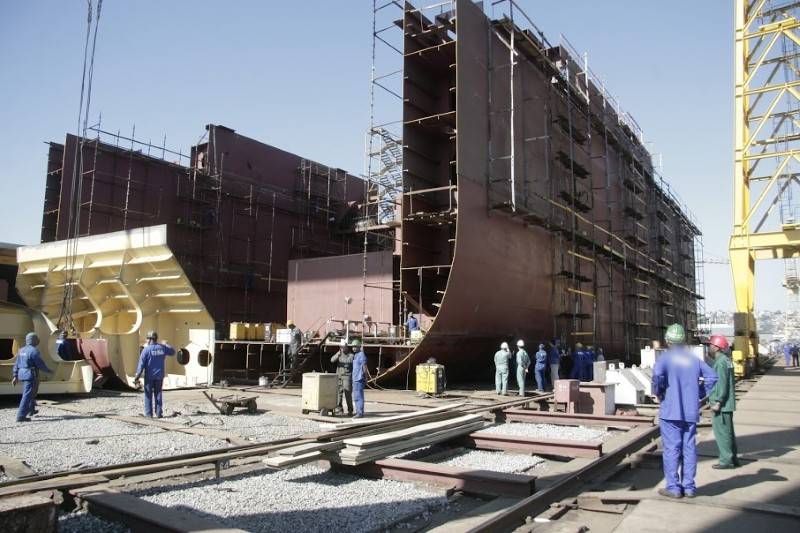
Currently, there are four FPSO-type platforms operating in Búzios, accounting for over 20% of Petrobras’ total production and more than 30% of production from pre-salt fields.
Petrobras announced yesterday Thursday (07/23) in a relevant fact that its Executive Board approved the initiation of the contracting processes for three new FPSO-type platforms for the Búzios field in the pre-salt layer of the Santos Basin. FPSO is the English acronym for the unit that produces, stores, and transfers oil and gas. According to ANP, decommissioning of platforms can bring a sea of opportunities to our shipyards
Read Also
- Local Content: With the new rule proposed by ANP R$ 1.3 billion in fines can be converted into investments in the national industry
- Naval construction resumption! Petrobras will return to manufacturing its own FPSOs and EBR shipyard is one of the pre-qualified
- Petrobras begins decommissioning the P-12 platform in the Campos Basin
- Sergipe Justice gives ultimatum for Petrobras to eliminate coral-solar on the state’s platforms
The three new FPSO-type platforms will be the first contracted after the acquisition of the excess volumes from the onerous assignment of the Búzios field in November 2019, in partnership with the Chinese companies CNOOC Petroleum Brasil Ltda. (CNOOC) and CNODC Brasil Petróleo e Gás Ltda. (CNODC).
The acquisition of these additional volumes, for which Petrobras paid R$ 61.4 billion as a signing bonus, is the result of active portfolio management by the company.
-
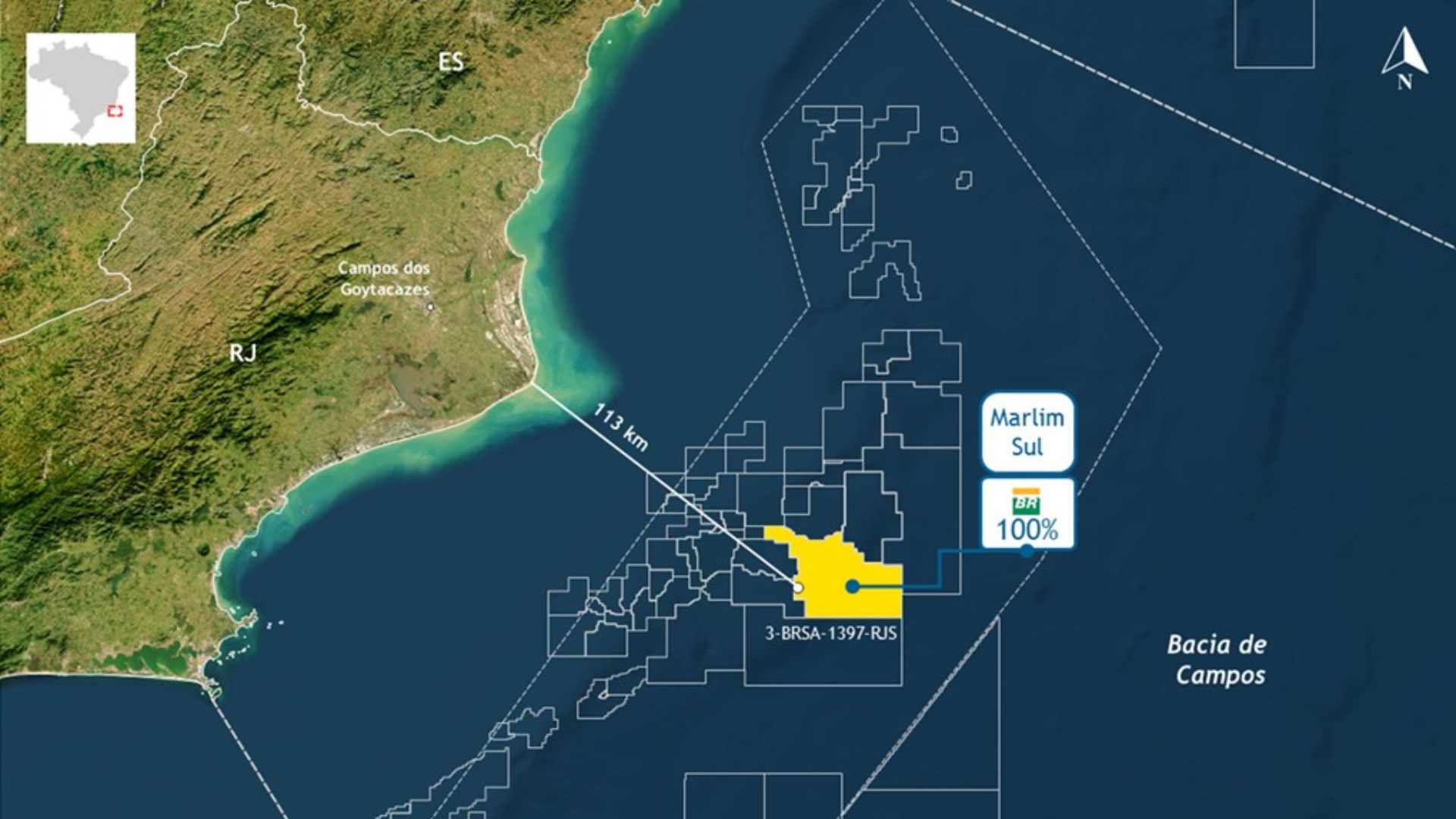
Petrobras finds high-quality oil in the pre-salt at 113 km from RJ and reignites expectations about strategic reserves in the Campos Basin.

-
Ocyan opens registrations for startups focused on innovation in the oil and gas sector and will select projects for Innovation Day with the support of Nexio.

-
Petrobras announces new oil discovery in the pre-salt of the Campos Basin and reinforces Brazil’s prominence with high-quality reserves that can increase production and energy revenues.
-
Alert in the fuel market: Analysts and a former director of ANP warn that oil prices may worsen in the coming months due to global instability.


The sale of assets that bring lower financial returns and that are not part of the company’s core business provides resources for investments in more promising and higher-return projects, such as the Búzios field.
The FPSO platforms are part of the Development Plan for the asset, which foresees a total of 12 units installed by the end of the decade. At the end of the development phase, it is expected that the Búzios field in the pre-salt layer of the Santos Basin will produce over 2 million barrels of oil equivalent per day (boed), becoming Petrobras’ largest asset, with the highest production.
Currently, there are four units operating in Búzios, accounting for over 20% of Petrobras’ total production and more than 30% of production from pre-salt fields. On July 13, these platforms reached production records for the field of 674,000 barrels of oil per day (bpd) and 844,000 barrels of oil equivalent per day (boed).
A fifth platform, with a production capacity of 150,000 bpd of oil, is under construction. Named FPSO Almirante Barroso, it is expected to start production in the second half of 2022.
New Petrobras FPSOs
The first of the three new platforms to begin operation will be the FPSO Almirante Tamandaré, the sixth production system for the field, with production entry scheduled for the second half of 2024. The FPSO will be chartered and will have a daily processing capacity of 225,000 barrels of oil and 12 million m3 of gas. It will be the largest oil production unit operating on the Brazilian coast and one of the largest in the world.
The other two units will be contracted in the EPC format (English acronym for engineering, procurement, and construction contracting) and will have the capacity to process 180,000 barrels of oil and 7.2 million m3 of gas each per day. These platforms are expected to start operating in 2025. Named P-78 and P-79, these units result from Petrobras’ strategy of developing new proprietary platform projects, incorporating lessons learned from the FPSOs already installed in the pre-salt, including aspects of contracting and construction.
Called Reference Project, the studies carried out by the company consolidated this learning into a FPSO project for future contracts, incorporating additional standardization of specifications and improvements in the market approach model, such as reducing interfaces, with the hiring of a single supplier in the EPC mode, responsible for all stages of the project; pre-qualification of suppliers; alignment of interests in the contract and better detailing of the basic project.
Furthermore, there are technological incorporations in areas such as reservoirs, wells, and subsea systems, focusing on increasing the recovery factor, higher flow rates, cost reduction, safety, and efficiency.
In addition to the platforms, Petrobras will also go to market to contract subsea Christmas trees (ANMs) – which are subsea equipment necessary for controlling the flow of produced or injected fluids in the wells – drilling rigs, well services, and subsea collection and export systems.
According to Petrobras’ report, it is expected that the contracts for the FPSOs and ANMs will be completed and signed in 2021. The remaining contracts will be executed in the next 18 months. All contracts will meet the local content levels required for the Búzios field.
Búzios Oil Field
Búzios, the largest deepwater oil field in the world, is located 180 km from the Brazilian coast and over 5,000 meters deep. The more than 45 wells drilled so far confirm the excellent quality of the reservoir.
Each well in Búzios produces, on average, more than 50,000 barrels of oil per day. Currently, the field has the six highest oil-producing wells in the country. The high productivity of the field justifies the installation of larger FPSOs.
According to Petrobras, the development of Búzios aligns with the company’s strategic positioning, which focuses on world-class E&P assets, especially in the pre-salt. Búzios is Petrobras’ best and most promising asset.
In March of this year, Petrobras signed the production sharing contract, having CNOOC and CNODC as partners, and Pré-Sal Petróleo S.A (PPSA) as the manager.








Seja o primeiro a reagir!