





 Portuguese
  English
  Spanish
 5 min of reading
  0 comments


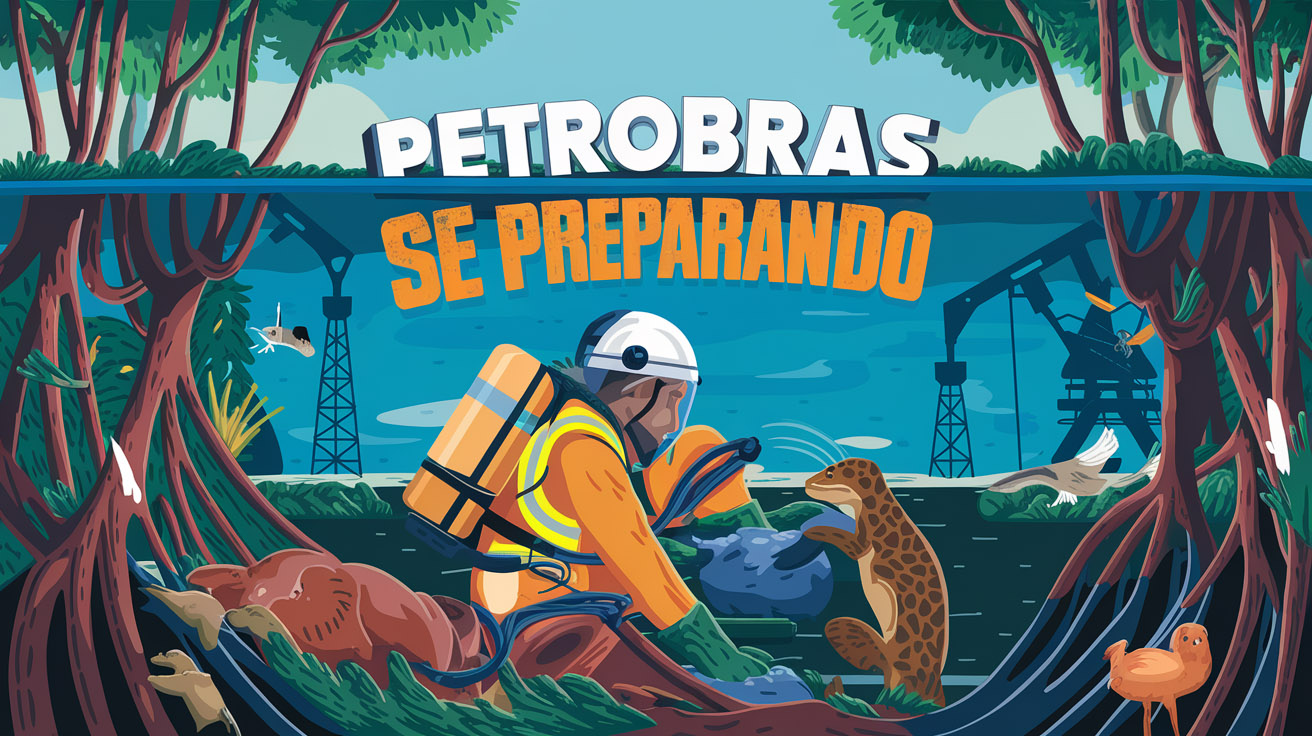
Anticipating Potential Environmental Disasters, Petrobras Intensifies Training in Northern Brazil, Preparing Teams for the Rescue of Wildlife Threatened by Oil Spills in the Sensitive Region of the Amazon River Mouth.
Petrobras has started field training in the Oiapoque region (AP), preparing technicians for the rescue and transport of animals that may be affected by oil in potential incidents during oil exploration in block FZA-M-59, on the Brazilian equatorial margin.
The information is from the newspaper Folha de S. Paulo, which revealed that these practical exercises include moving through muddy areas, using floating mats to access hard-to-reach mangrove regions.
The activities take place even before the granting of the environmental license for drilling the well in the Amazon River Mouth basin, located 160 km off the coast of Amapá.
-
Spain surprises the world by erecting 62 artificial dunes, mixing sand with natural remains of posidonia, and causing the structure to lose only 1.4% of its volume in 1 year.

-
With 16 Bulava missiles, improvements in acoustic stealth, and a design focused on silent patrols, Russia’s nuclear submarine was born to ensure Moscow’s invisible retaliation and has become one of the pillars of its maritime strength.

-
‘Populous’ city in Rio among the worst in Brazil in national ranking and exposes silent development crisis.
-
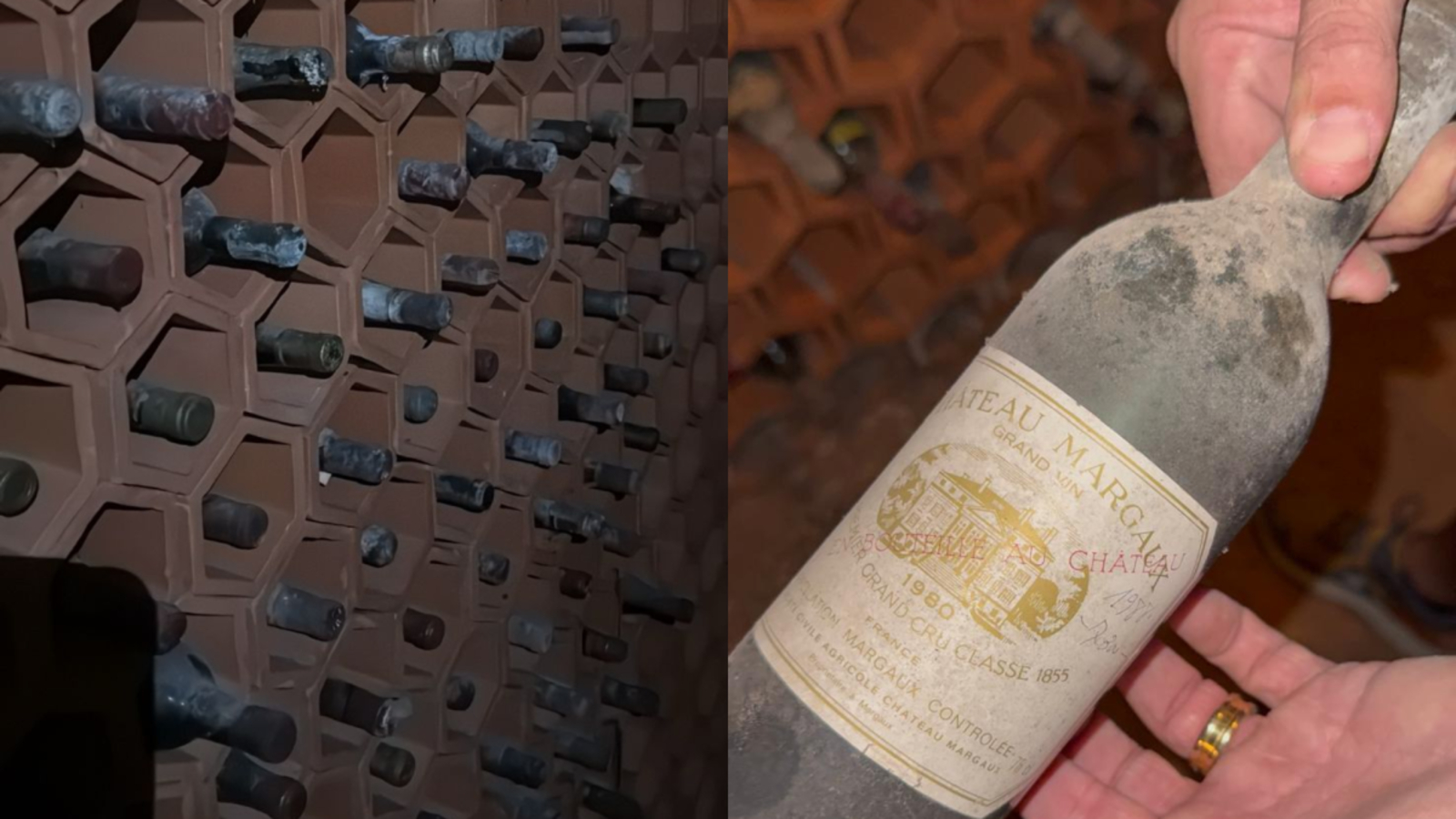
Couple buys house in the South Zone of São Paulo, opens a hidden door in the garage, and finds a secret wine cellar with dozens of old wines forgotten since the 1970s.

The president Lula (PT) has pushed for the release of the license, counting on the support of political figures such as the Minister of Mines and Energy, Alexandre Silveira (PSD), and Senators Davi Alcolumbre (União Brasil-AP) and Randolfe Rodrigues (PT-AP).
Advance Preparation and Infrastructure
According to the newspaper, in addition to the training, Petrobras has adapted vessels for the collection of animals that may be impacted by oil in the event of a spill at the platform.
An agreement is being negotiated for larger vessels, within the wildlife protection plan, to be anchored at installations of the Chico Mendes Institute for Biodiversity Conservation (ICMBio).
In a statement, Ibama mentioned that the boats designated for attending to oil-affected wildlife have been presented as part of the emergency response structure and are under technical analysis.
The environmental agency clarified that it does not monitor “parallel activities of the entrepreneur.”
The state-owned company announced that the wildlife reception unit in Oiapoque will operate in “synergy” with the de-oiling center for wildlife in Belém.
“In total, there will be more than one hundred professionals dedicated to animal protection,” stated Petrobras. The company expressed optimism regarding obtaining the license for deep-water drilling in Amapá, emphasizing that “it will be possible to carry out the pre-operational assessment and, soon, obtain the license.”
Ecological Sensitivity and Social Impacts
The Oiapoque region is home to Cabo Orange National Park, an area of mangroves and forests that serves as a nursery for various species and supports thousands of fishermen.
Managed by ICMBio, the park extends for 590 km of coastline and is close to the block that Petrobras intends to drill.
In addition to the presence of the vessels, according to Folha, Petrobras is building a stabilization and de-oiling unit for animals in Oiapoque, on BR-156.
The license for construction was granted in December by the Amapá state government’s Environmental Secretary, and the works are progressing rapidly, with completion expected this semester.
This center will have the capacity to attend to birds, reptiles, and marine mammals, such as cetaceans up to three meters and manatees, according to information from Petrobras.
After completion and operationalization, the center will undergo inspection by Ibama, as part of the assessment of the emergency response structure for the activity.
The training, vessels, and construction of the animal rehabilitation center are the responsibility of the company hired by Petrobras, Mineral Engenharia e Meio Ambiente, which is tasked with executing the wildlife protection plan required by Ibama during the licensing process.
Movements in the Local Community
Petrobras’ presence in Oiapoque, even before the granting of the license, has generated expectations in the local community.
There are reports of increased migration flows to the city, with people from different parts of the country, especially from the North region, relocating to Oiapoque in search of opportunities.
In July of last year, Folha de S. Paulo visited the region and observed growth in settlements along the roads leading to the city airport, such as the areas known as Areia Branca and Nova Conquista.
Currently, other settlements are expanding, advancing through forest areas and connecting to existing neighborhoods like Belo Monte and Novo Canaã, according to professionals monitoring the movements stemming from the oil activities.
Ibama stated that “the studies presented by Petrobras did not foresee this type of impact” and emphasized that land management and occupation are not the responsibility of the environmental licensing of the activity in question, with the municipality and the state being tasked with overseeing any irregular occupations in their territory.
Challenges and Concerns of Indigenous Communities
Outside the urban environment, indigenous leaders in the region report pressure from Petrobras for the enterprise to be accepted by the communities.
The tides influence the lives of many of the 12,000 indigenous people from four ethnicities who live in three demarcated territories in the Oiapoque region.
These indigenous people claim that there was no consultation process with the communities, which number 66 villages in total.
The models presented by Petrobras indicate that, in the event of spills, the oil would not reach the Brazilian coast but could affect the coast of eight countries and two French territories neighboring Brazil and in the Caribbean.
In the monitoring and animal rescue plan submitted to Ibama in November, the state-owned company states: “Conservatively and due to the ecological sensitivity of Cabo Orange National Park, coastal monitoring actions are also planned in its northern section, near the mouth of the Oiapoque River, in Oiapoque (AP).”
The response structure, in the case of an oil spill, will include a helicopter available for emergencies, as well as a containment system with barriers and support vessels that can be rapidly deployed.
However, environmentalists and researchers warn that given the complexity of the Amazonian and coastal ecosystems in the region, any incident could have severe and irreversible impacts.
Today, Petrobras’ project continues to generate debates between economic development and environmental risks, while Oiapoque transforms into a key point for the future of oil exploration on the Brazilian equatorial margin.






Seja o primeiro a reagir!