





 English
  Francês
  Alemão
  Italiano
  Japonês
  Norueguês
  Portuguese
  Spanish
  3 min of reading


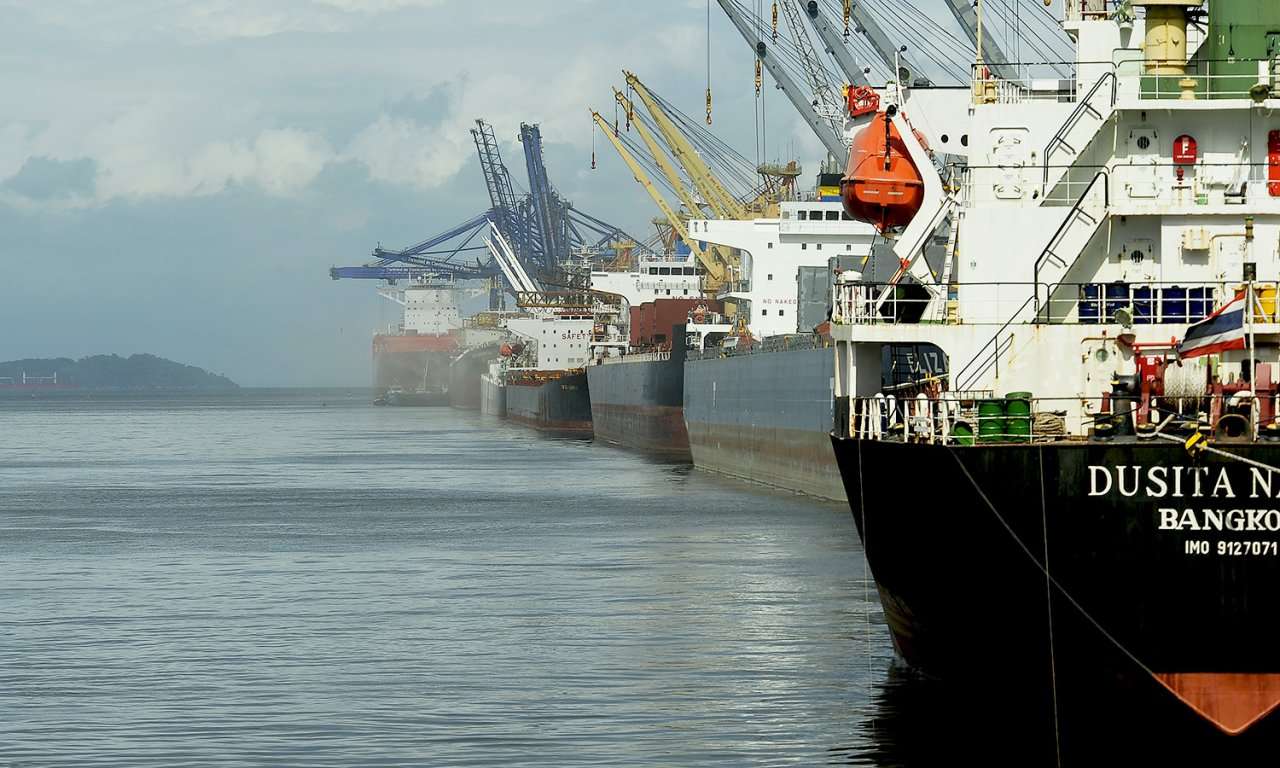
Iranian Ships Are Barred From Receiving Fuel Due To Being On U.S. List And Have Been Anchored For A Month In Paranaguá
Two Iranian-flagged ships are anchored 20 kilometers from the Port of Paranaguá (PR) with no possibility of fulfilling the freight for which they were contracted, due to a lack of fuel.
Petrobras claims that because the vessels are on the OFAC list (Office of Foreign Assets Control of the United States).
No further details were provided by Petrobras, as the process is under confidentiality. Petrobras is the main manufacturer in Brazil of HFO 380 fuel used in ships.
The exporting company from Santa Catarina, which chartered the ships MV Bavand and MV Termeh, declares that it requested the fuel, but Petrobras refused to supply it.
-
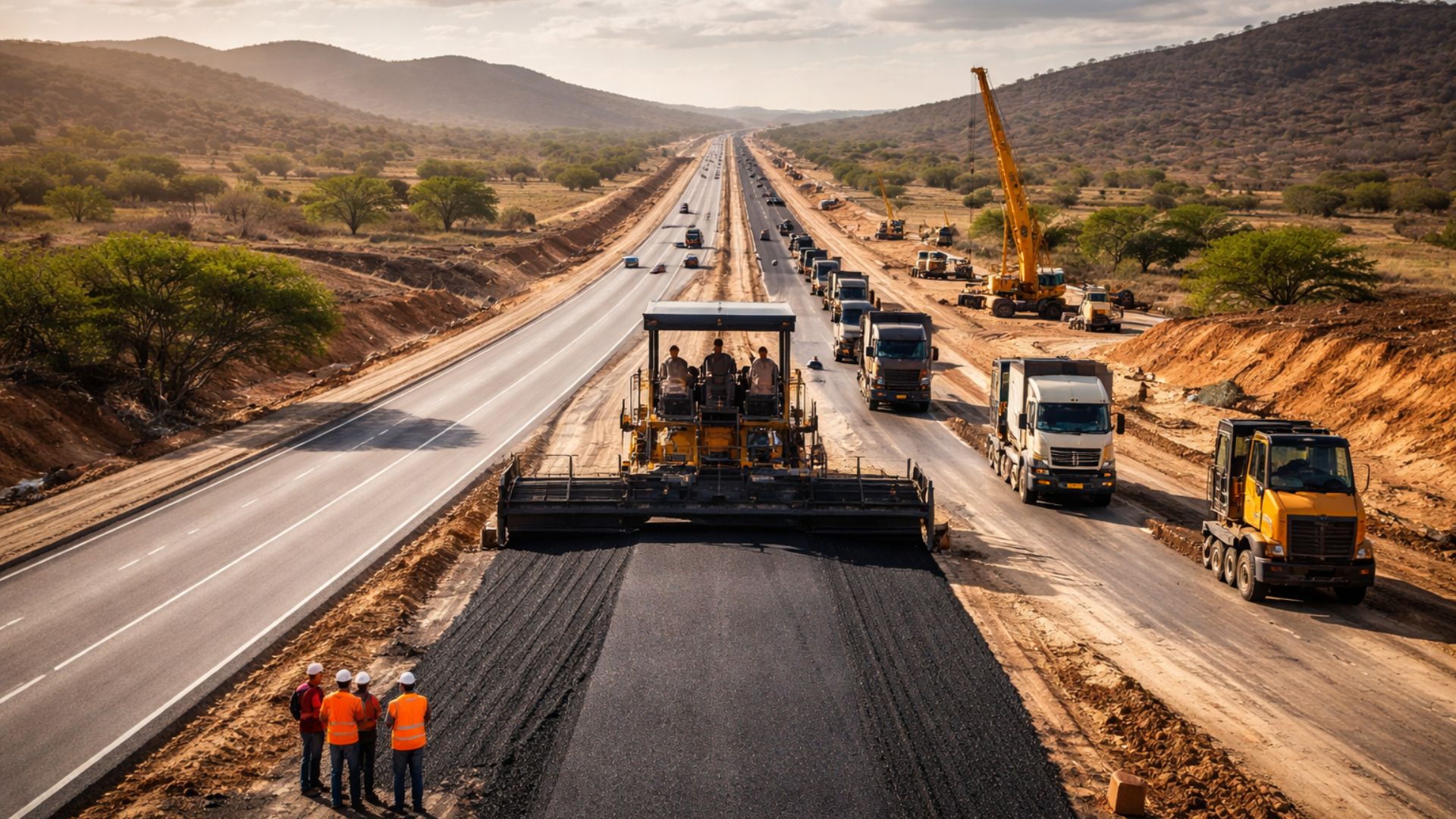
Government unlocks R$ 554 million for a highway that has been requested for decades and accelerates the duplication of BR.
-
Without bricks, without cement, and without endless construction: the cardboard house that is assembled in modules and can be moved.

-
Billions of barrels on the equatorial margin could lead Amapá to double its oil production in Brazil — the state aims to enter the route of companies in the Campos Basin, attract investments, and boost jobs and businesses in the oil and gas sector.

-
Without bricks, without cement, and without endless construction: the cardboard house that is assembled in modules and can be moved.

The MV Bavand has been waiting for fuel supply since June 8 and is already loaded with 48,400 tons of corn, valued at R$ 45.5 million.
The MV Termeh has been waiting for fuel since June 9 so that it can proceed to the Port of Imbituba (SC) and load approximately 60,000 tons of bulk corn, worth around R$ 60 million.
Both vessels have licenses to carry out the export operation and are destined for the Port of Bandar Imam Khomeini in the Persian Gulf.
Although the fuel was requested by Sapid Shipping, the owner of the ships, from two shipping agents (1,200 tons of HFO 380 fuel for the MV Bavand and 500t for the MV Termeh), the request was denied.
The owner was also warned by one of these shipping agencies that the risk of running out of fuel would lead to a series of problems, such as with the crew, the environment, and navigation around the vessels, not to mention expenses of US$ 15,000 just for demurrage and extra costs per day of chartering.
Another serious issue to be taken into account would be the cargo, which could be condemned and refused in the destination country if this situation persists for a longer time.
The Impasse
In October 2018, the International Court of Justice ruled that the United States must lift all embargoes on the export of food and agricultural commodities to Iran.
A preliminary injunction was granted by the reporting judge in the 2nd civil court of the Court of Justice of Paraná (TJ-PR) on July 4, requiring Transpetro to urgently supply enough IFO 380 fuel for the two ships to at least return to Iran.
However, Minister Dias Toffoli, President of the Federal Supreme Court (STF), revoked the injunction after an appeal was requested by Petrobras. As the decision is preliminary, there is still an appeal to the court of the supreme court.
In the overturned injunction, TJ-PR judge Fernando Paulino da Silva Wolff Filho had established a 72-hour period from the decision for the fuel supply to be provided, under the penalty of a daily fine of R$ 50,000, limited to 10 days (R$ 500,000).
The judge understood that, even though other companies could meet the exporting company’s demand, Transpetro (a subsidiary of Petrobras) could not refuse to supply the fuel.
While the impasse continues, the parties are still awaiting a resolution; neither Petrobras nor the Ministry of Foreign Relations wanted to comment on the case.
Source: Portos e Navios
Read Also! Australian Oil Company Wants To Buy Petrobras Field In The Santos Basin!









Seja o primeiro a reagir!