





 English
  Francês
  Alemão
  Italiano
  Japonês
  Norueguês
  Portuguese
  Spanish
  5 min of reading


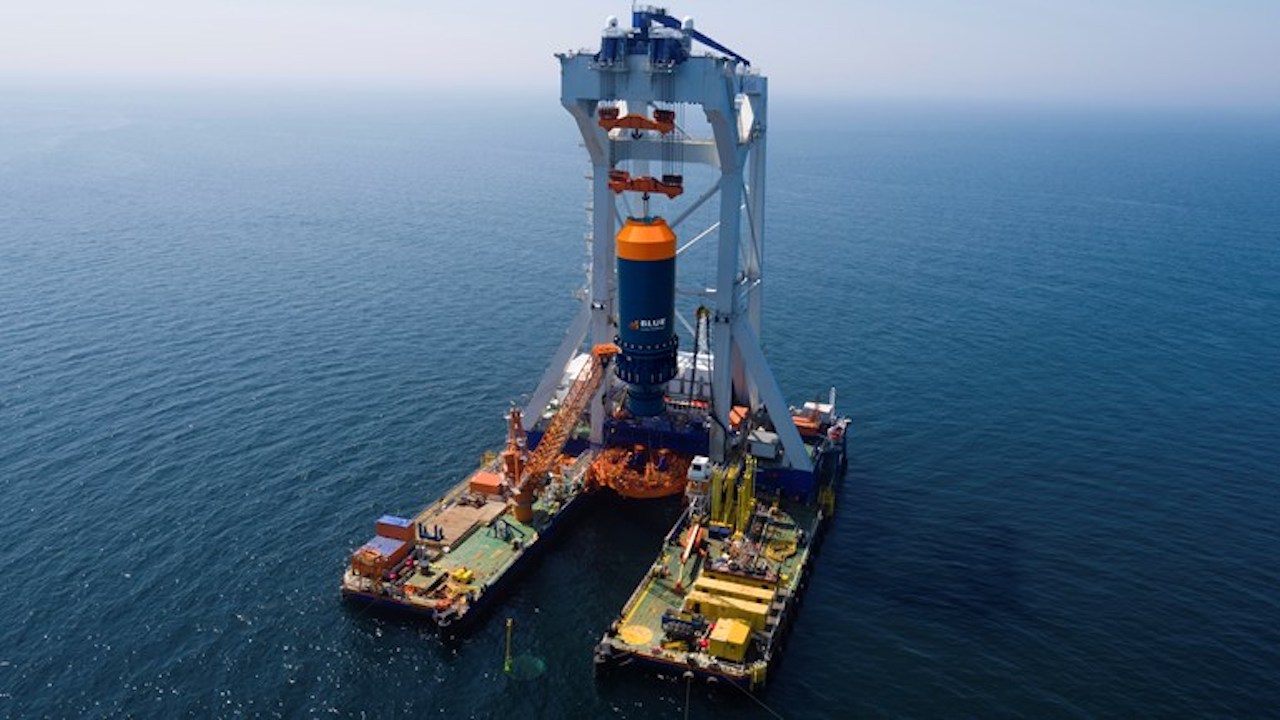
Monai Exploratory Well in Espírito Santo Pre-Salt Reaches 7,700 Meters Deep and Sets Multiple Operational Records
The Brazilian oil giant Petrobras announced in a significant market notice last Friday (12/10) that it has completed drilling the pioneering exploratory oil well in block ES-M-669, located in the pre-salt of the Espírito Santo Basin. Drilled 145 km from the coast, at a site known as Monai, a mythological figure from Guarani culture, the project set multiple records, including the deepest well ever drilled in Brazil, at around 7,700 meters; and the largest salt layer ever drilled in the country, at approximately 4,850 m.
Read Also
- OPEC Increases Crude Oil Production by 500,000 Barrels Per Day in November Amid Omicron Uncertainty
- Constellation Secures Multi-Million Contract from Petrobras for Chartering the Drillship Amaralina Star for a Project Involving the Drilling of 27 New Oil Wells
- Petrobras Invested About R$ 2 Billion This Year in Preventive Maintenance, Inspecting Over 4,000 Refinery Equipment, and Maintains High Fuel Production Levels
- Highest Average Price for Ethanol and Gasoline Found at Fuel Stations in Rio de Janeiro, with an Increase of Over 10% for the Biofuel
“The intensive use of technology and the efficient performance of the teams involved also allowed us to reduce the drilling time of the well by approximately 50% compared to the historical average for projects of this nature and complexity, which also represents a significant cost reduction. The exploration of this new frontier in the pre-salt of the Espírito Santo Basin reaffirms Petrobras’ focus on working in ultra-deep waters through partnerships with other companies,” highlighted the Director of Production Development, João Henrique Rittershaussen.
Unlike a producing oil well, an exploratory well aims to obtain information about the characteristics of the drilled rocks, their geology, existing pressures, and the presence of reservoirs with oil or gas. The drilling of the pioneering Monai well obtained all the expected geological information for the proper assessment of the area. The data collected is being analyzed to define the future of block ES-M-669. It is worth noting that the geological information obtained in exploratory frontier areas, such as Monai, also supports the improvement of studies and modeling for other areas and basins, incorporating important strategic knowledge for the company.
-
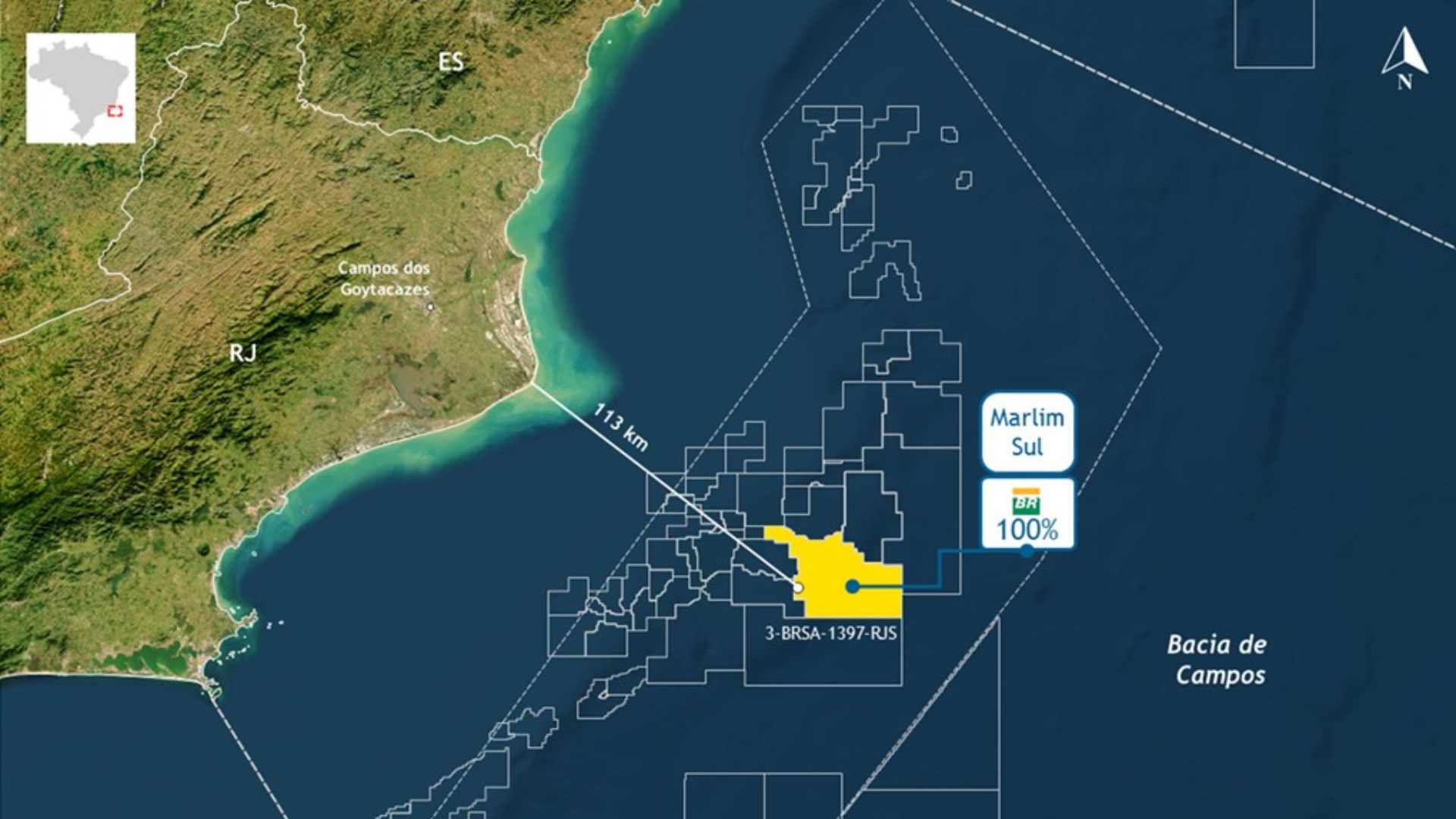
Petrobras finds high-quality oil in the pre-salt at 113 km from RJ and reignites expectations about strategic reserves in the Campos Basin.

-
Ocyan opens registrations for startups focused on innovation in the oil and gas sector and will select projects for Innovation Day with the support of Nexio.

-
Petrobras announces new oil discovery in the pre-salt of the Campos Basin and reinforces Brazil’s prominence with high-quality reserves that can increase production and energy revenues.
-
Alert in the fuel market: Analysts and a former director of ANP warn that oil prices may worsen in the coming months due to global instability.

Monai Well Drilled to Record Depth of 7,700 Meters, Equivalent to 1.3 Times the Height of Mount Kilimanjaro, the Tallest Mountain in Africa.
Located in a new exploratory frontier, the drilling of the Monai well was characterized by a scenario with significant technical challenges and a high level of operational complexity. The well was drilled in an area with a water depth (the distance between the water surface and the sea floor) of 2,366 meters. The total record depth of the well, 7,700 meters, for comparison, is equivalent to 1.3 times the height of Mount Kilimanjaro, the tallest mountain in Africa. The previous depth record was held by the well known as Parati, one of the precursors to the pre-salt discovery, drilled in 2005 in the Santos Basin, at 7,630 meters.
Another important record achieved by the Monai well was for the greatest thickness of salt layer ever drilled, at 4,850 meters, equivalent to the height of nearly six Burj Khalifa, the tallest skyscraper in the world. The usual thickness of the salt layer in oil wells in the pre-salt of the Santos Basin, the largest pre-salt oil hub on the planet, is around 2,000 to 2,200 meters.

Monai Well Had the Highest Weight of Casing Ever Laid in Brazilian Waters, at 794 Tons, Equivalent to Five Blue Whales, the Heaviest Animal on the Planet.
The Monai well also surpassed other drilling records in Brazil. It is the well with the greatest extent of single phase (segment) in vertical/directional wells in the country, at around 3,400 meters. Additionally, the well also set the record for the largest tie-back column, a type of steel tubing that connects a section of tubing at the bottom of the well to the “head” of the well, installed on the seabed. The tie-back column in the Monai well has a total length of 4,300 meters. Finally, the Monai well had the highest weight of casing ever laid in Brazilian waters, at 794 tons, equivalent to five blue whales, the heaviest animal on the planet. The casing is a steel column that lines the walls of the well to maintain its stability and integrity, preventing the collapse of rocks into the well and also serving as an important barrier against fluid leaks to the outside environment.
The great depths achieved imposed a series of challenges for Petrobras. Generally, the deeper the drilling, the more compact and dense the existing rocks are. For comparison, the drilling speed near the seabed reaches about 100 meters per hour. In very deep horizons, such as the final phases of Monai, the drilling speed drops to less than 5 meters per hour. The pressure at great depths, such as those reached by the Monai well, also poses a significant challenge for the safe drilling of the well. In these geological horizons so deep, the pressure reaches values around 17,000 psi, equivalent to approximately 1,200 times the pressure at sea level or 500 times the air pressure in a passenger car tire.
Drilling at these levels of severity has required constant technological evolution from Petrobras. The project utilized cutting-edge technologies, such as drilling rigs with high technical specifications, state-of-the-art drill bits, and advanced drilling systems like Managed Pressure Drilling (MPD), which consists of managing pressures in the well in real time, through the use of sensors, increasing efficiency and primarily the safety of the operation. The project also included 24×7 operational surveillance systems both on board and remotely, significantly contributing to operational efficiency and safety. Furthermore, both in the planning and execution of the wells, Petrobras has made extensive use of lessons learned, new technologies, automation, and digital solutions to ensure that operations are carried out with excellence and generate significant value for its projects.
A Milestone in Brazil’s Oil Exploration Industry, the Monai Well Drilling Project Reflects Petrobras’ Focus on Safety, Efficiency, Technology, and Value Generation
Block ES-M-669 was acquired in 2013 during the 11th Bidding Round of the National Agency of Petroleum, Natural Gas and Biofuels (ANP). Petrobras operates the block with a 40% stake, while Equinor and Total, which complete the consortium’s formation, hold 35% and 25% respectively. Since the acquisition of the block, significant resources have already been invested in seismic surveys, drilling the pioneering exploratory well, and other activities. These investments, which are still occurring under uncertain production viability, reflect the usual economic risk that the entire oil industry faces. In addition to this capital already spent on exploration, other considerable expenses will be incurred in the production and refining of oil, and in the transportation and marketing of derivatives, to ensure fuels, such as gasoline and diesel, reach the final consumer.
A milestone in Brazil’s oil exploration industry, the Monai well drilling project reflects Petrobras’ focus on safety, efficiency, technology, and value generation. Following these principles, the company will be increasingly strong and capable of contributing to society’s prosperity.







Seja o primeiro a reagir!