





 English
  Francês
  Alemão
  Italiano
  Japonês
  Norueguês
  Portuguese
  Spanish
  3 min of reading


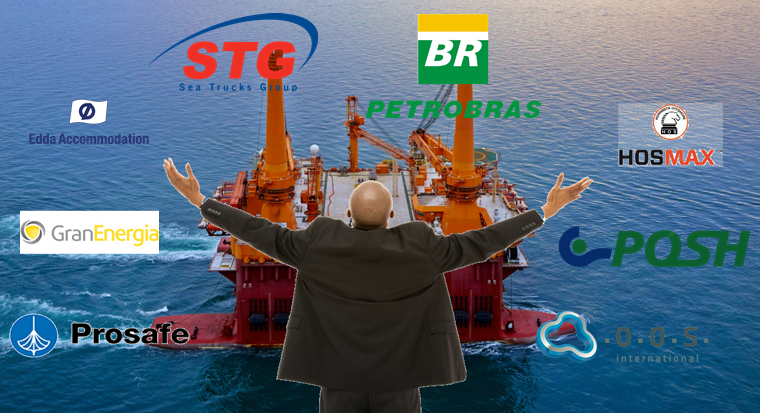
The Last Time Petrobras Opened A Bid For Floater Units Of This Magnitude Was In 2014, Before The Crisis, The Major Players In The Sector And The Market Are “Hot”.
Vessel providers are preparing for an intense competition on January 21 for a contract to supply Floaters to Petrobras. In the current bidding, Petrobras is looking for units equipped with dynamic positioning, helipads, and fully automatic and retractable gangways, with a capacity for at least 450 people.
An online competitive bidding process will decide the winners of two or more units to work with Petrobras under a three-year renewable contract.
The proposal is divided into two packages. The specifications of the first package exclude converted vessels in ship form, while the second allows them.
-
Government unlocks R$ 554 million for a highway that has been requested for decades and accelerates the duplication of BR.
-
Without bricks, without cement, and without endless construction: the cardboard house that is assembled in modules and can be moved.

-
Billions of barrels on the equatorial margin could lead Amapá to double its oil production in Brazil — the state aims to enter the route of companies in the Campos Basin, attract investments, and boost jobs and businesses in the oil and gas sector.

-
Without bricks, without cement, and without endless construction: the cardboard house that is assembled in modules and can be moved.

In the first bidding, Petrobras wants the accommodation vessels to be ready 150 days after the contract award, but there is a risk that a slow decision-making process could undermine the goal of placing the new units into operation before the end of the year.
A second bidding, issued just before the Christmas holiday, provides for the deployment of a single flotel by the production, storage, and offloading floating vessel P-50 in the Albacora Leste field, managed from the port of Vitória, in Espírito Santo. The bidding for the supply of this unit is scheduled for January 28.
Petrobras is seeking a unit that will be available within three months from the contract signing, and is offering a deadline of just 210 days, renewable for the same period.
GranEnergia is likely to base its bids on the accommodation vessel CSS Venus and possibly on CSS Themis, which is currently owned by builder Fujian Mawei Shipyard.
CSS Venus is working on Total’s Kaombo project in Angola until mid-year and should be available in time for any of Petrobras’s contracts.
CSS Themis is working on Total’s Egina project in Nigeria, under a bareboat contract with MAC Offshore, and may also be available for Petrobras’s new contracts.
When GranEnergia purchased CSS Venus, the Brazilian company also negotiated exclusive rights for CSS Themis in Latin America, as well as the right to match any third-party offer to acquire the vessel.
Other probable competitors in Petrobras’s auction include Floatel International, PACC Offshore (POSH), OOS International, Sea Trucks, and Hornbeck Offshore.
Prosafe will also be a competing winner, with three new units docked at Cosco Shipyard. These are the recently acquired Axis Nova and Axis Vega, plus the sister unit Safe Notos, which is currently working for Petrobras in Brazil.
Edda Accommodation is competing with the monohull Edda Fides, while Aquário Brasil, partially owned by Singapore’s Sembcorp Marine shipyard, is also expected to appear.
“It’s going to be very crowded there, and bidders with monohulls are pushing for a chance to show that they can do the job well,” commented an industry member.
POSH Xanadu is serving Petrobras for a renewable eight-month period in the Campos Basin, so POSH’s most likely option for the bidding is SS Arcadia.
Prosafe also has Safe Concordia in Brazil, working for the Japanese floater specialist Modec on a short-term contract that expires in May.
The last time Petrobras sought floaters for periods of three years or more was in 2014.
For the new auction, bidders are cautious about the operation of the online auction format because technical disqualification can follow an apparently successful bid. The specifications have changed to mitigate the supposed risk of allowing monohulls, and even the CCS format may be challenged by deck space demands.
Regardless of Petrobras’s demand for larger floaters, the state-owned company has also signaled an intention to seek smaller units with a capacity of 200 to 250 people.









Seja o primeiro a reagir!