





 Portuguese
  English
  Spanish
 3 min of reading
  0 comments


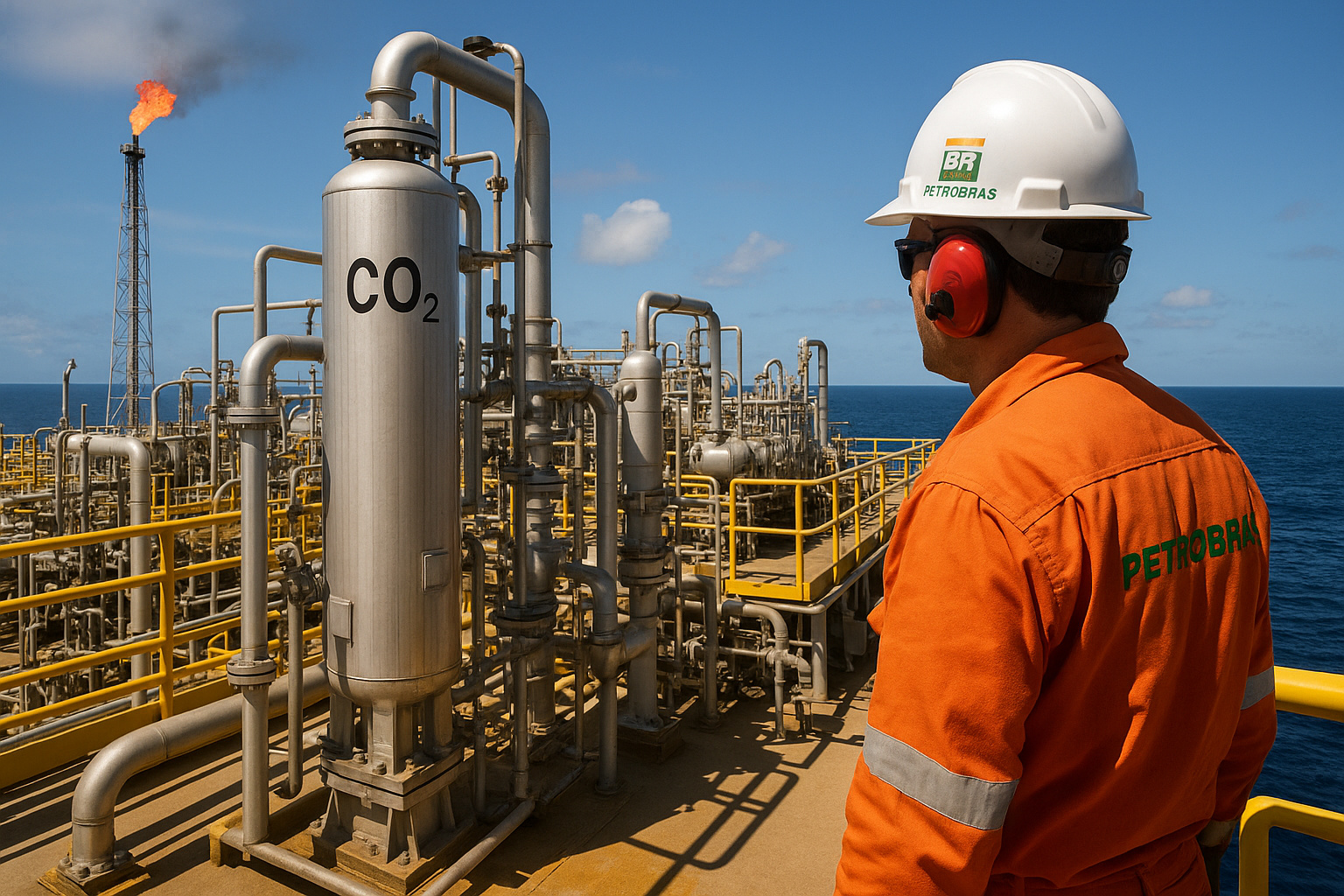
Strategic Initiative Plans CO₂ Injection in Saline Reservoir from 2028 and Places Brazil on the Global Decarbonization Route.
Petrobras announced in 2025 the construction of the São Tomé CCS Pilot Project in Macaé (RJ). Additionally, the plan aims for the capture of up to 100 thousand tons of CO₂ per year starting from 2028, with injection into a deep saline reservoir located in Barra do Furado, Quissamã (RJ).
Therefore, the company has defined the project as a strategic priority to accelerate its goal of carbon neutrality by 2050. Thus, the National Agency of Petroleum, Natural Gas and Biofuels (ANP) and the State Institute of the Environment (INEA) will monitor each stage to validate standards and ensure environmental safety.
Technical Investigation Reveals Unprecedented Decarbonization Potential
Petrobras developed the project based on technical studies with experts in reservoir geology and carbon capture technologies.
-
Petrobras evaluates suspension of sales to distributors and considers canceling the cooking gas auction following guidelines from the Federal Government.
-
Lula reveals a masterstroke by Petrobras to undo a deal made by Bolsonaro, which involves the return of an important refinery that currently produces less than half of what was expected and makes Brazil dependent on international diesel.
-
A study confirms that the natural gas sector will reduce greenhouse gas emissions in Brazil by 0.5% and accelerate the energy transition by 2026.

-
Petrobras implements a severe adjustment and confirms a 55% increase in the price of aviation kerosene with a proposal for installment payments for the companies.

According to the Director of Energy Transition and Sustainability, Angélica Laureano, the company leverages its experience in offshore technology to implement solutions that reduce emissions. Furthermore, she emphasized that the CCS São Tomé symbolizes another concrete step toward effective climate solutions.
Thus, the company reinforces its commitment to carbon neutrality by 2050. Therefore, the pilot will serve as a learning platform and open up space for new technological solutions.
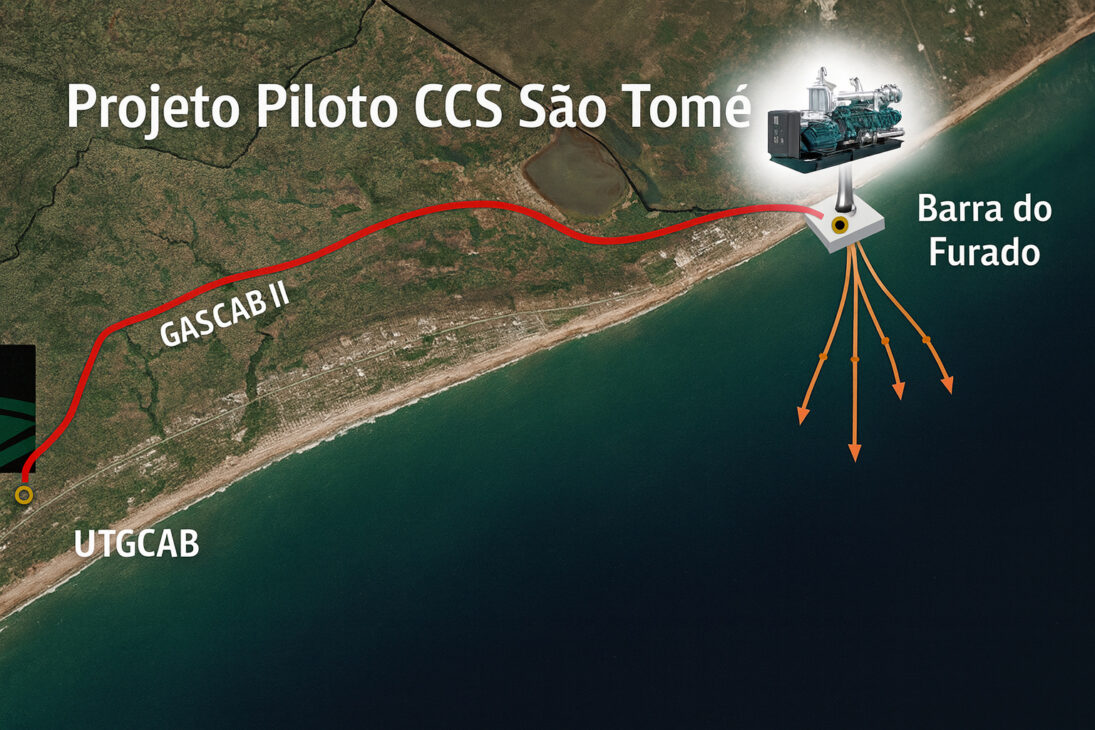
Economic and Technological Impacts of the Project
The CCS São Tomé strengthens the low-carbon market in Brazil. Thus, the operation will enable the integration of capture, transportation, and geological storage in an unprecedented way in the country.
The Director of Engineering, Technology, and Innovation, Renata Baruzzi, explained that the pilot will provide unprecedented data on the behavior of CO₂. Additionally, she highlighted that the results may indicate new uses for carbon, such as the production of synthetic fuels.
Therefore, the initiative can generate positive impacts on the economy. It stimulates job creation, attracts investment in innovation, and strengthens the clean energy chain.
Regulatory Monitoring and Governance Challenges
Petrobras determined that regulatory bodies monitor all phases of the project. Thus, ANP and INEA will be able to validate standards and create regulations for future large-scale projects.
Consequently, this governance model brings Brazil closer to international climate mitigation trends. Therefore, the sector will be able to align technical procedures with global standards.
However, experts highlight that the country needs to balance governance, operational safety, and environmental sustainability to ensure consistent progress. Thus, success will depend on continuous oversight and effective regulation.
Brazil in the Global Context of Energy Transition
The CCS São Tomé positions Brazil among countries investing in pioneering CCUS projects. Moreover, the initiative follows the global trend of large-scale solutions.
In 2023, for example, Norway and the United States initiated similar operations to reduce industrial emissions. Thus, the global movement reinforces the significance of the Brazilian project.
Thus, Petrobras envisions the pilot functioning as a Research, Development, and Innovation (R&D&I) platform. Therefore, the country will validate methodologies in a real environment and create conditions to scale up in the future.
Moreover, the state-owned company intends to apply learnings in both onshore and offshore projects, establishing Brazil as a key player in the global energy transition.
What Does the Future Hold for Brazil?
Experts believe that the CCS São Tomé can become a turning point for the country. Therefore, success will depend on efficient governance, regulatory transparency, and commitment to sustainable development.
Meanwhile, the challenge will be to consolidate the technology, ensure environmental safety, and advance toward carbon neutrality by 2050. Thus, Petrobras will have to balance innovation with responsibility.
What do you consider a priority for Brazil: to rapidly expand CCS projects to meet climate goals or to adopt a gradual model that ensures environmental sustainability?










-

Uma pessoa reagiu a isso.