





 Portuguese
  English
  Spanish
 3 min of reading
  0 comments


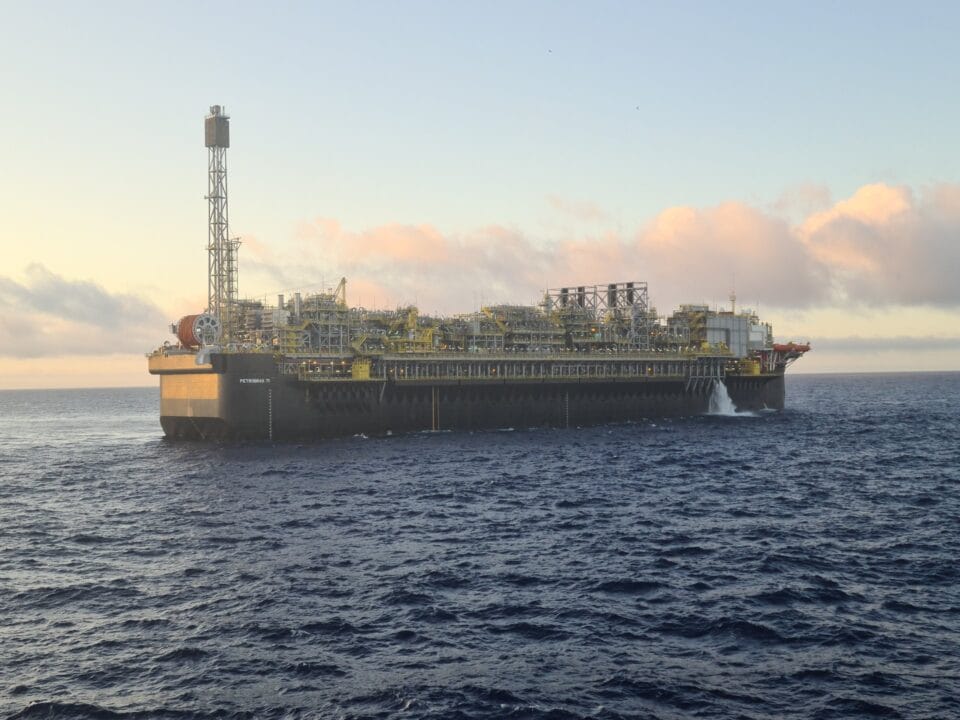
The Company Achieved Historic Production Milestones in the Pre-Salt Oil Field and Operated Production During the Period. Furthermore, Refinery Performance Reached Its Best Quarterly Result Since 2014 in Terms of Utilization Factor.
Petrobras Production records growth of over 9% in the third quarter, achieving record results both in the pre-salt and in the refineries. According to the Petrobras Third Quarter Production and Sales Report released this Wednesday (10/26), the company achieved an average production of 2.88 million barrels of oil equivalent per day (boed), an increase of 9.1% compared to the second quarter of 2023.
This growth was driven by the operational performance of pre-salt platforms, which showed a high level of productivity. In addition, the reduction in the volume of production losses due to shutdowns and maintenance of units also contributed to the increase in the company’s production. Notable is the production growth from platform P-71 in the Itapu field, the FPSO Almirante Barroso in the Búzios field, and the FPSO Anna Nery in the Marlim field.
Robust Growth in Petrobras Production
The startup of FPSO Anita Garibaldi in the Marlim and Voador fields, as well as the contribution of new wells from complementary project in the Campos and Santos Basins, were also factors that boosted Petrobras’s production.
-
Offshore industrial demand in Macaé skyrockets with the recovery of oil and gas and could grow by up to 396% by 2026 in the Campos Basin.
-
Offshore industrial demand in Macaé surges with the recovery of oil and gas and could grow by up to 396% by 2026 in the Campos Basin.
-
Brazilian giant expands borders in the Southeast: Petrobras confirms new oil discovery in ultra-deep waters in the pre-salt of the Campos Basin.

-
Alert in the global energy market: Severe tropical cyclone hits the coast and disrupts gas production at major plants in Australia, threatening global supply.


An important milestone was the record production in the pre-salt, which reached 2.25 million barrels of oil equivalent per day (boed), representing 78% of Petrobras’s total production. This result surpassed the previous record of 2.06 million boed in the second quarter of 2023. The total production operated by Petrobras also reached a record, hitting 3.98 million boed in the same period, a 7.8% increase compared to the second quarter.
In the Búzios field, the FPSO Almirante Barroso reached its maximum capacity of 150 thousand barrels per day (bpd) in just 146 days after first oil, a record in the pre-salt. The Búzios field stands out as the largest deep-water field in the world, with low emissions and substantial reserves.
Another highlight was the arrival in Brazil of the FPSO Sepetiba, which will be installed in the Mero field in the pre-salt of the Santos Basin. With a capacity to produce 180 thousand bpd and 12 million cubic meters of gas per day, the FPSO is in the anchoring and interconnection phase and is scheduled to start operations by the end of the year.
Subtitle 2: Notable Advances in Refineries and Commitment to Sustainability
Regarding the refineries, the utilization factor (FUT) reached 96% in the third quarter, the best quarterly result since 2014. This allowed meeting market demands with reliability and operational availability, resulting in a total production of derivatives of 1.829 million barrels per day (Mbpd) during the period. Diesel, gasoline, and QAV production accounted for 69% of total production, an increase of 2 percentage points compared to the second quarter.
Petrobras also reduced its greenhouse gas emissions, achieving the best quarterly results from refineries in Energy Intensity and Greenhouse Gas Emission Intensity. This was possible due to investments in the RefTOP Program (World-Class Refining) and advances in energy efficiency.
In the third quarter, S-10 diesel sales reached a record of 496 thousand barrels per day (bpd), accounting for 62% of the total diesel sold by Petrobras. S-10 diesel production also registered a record of 464 thousand bpd, resulting from optimization actions in production processes and investments.
In summary, Petrobras’s own production experienced significant growth in the third quarter, achieving records both in the pre-salt and in the refineries. The company continues investing in innovative technologies and projects to ensure increased production and reduced emissions, contributing to the sustainable development of the oil and gas sector in Brazil.









Seja o primeiro a reagir!