





 Portuguese
  English
  Spanish
  3 min of reading
  0 comments



Petrobras Will Invest R$ 11 Billion in the Segment Between 2025 and 2029, Seeking Strategic Partnership with Major Producers.
Petrobras is officially back in the ethanol market. After years away from the segment, the state giant announced an investment of R$ 11 billion between 2025 and 2029, aiming for an annual production of 2 billion liters of the biofuel. The strategy was detailed by the company’s management in the new business plan presented this Friday (22).
According to Maurício Tolmasquim, Executive Director of Energy Transition, the entry into the market will be robust and strategic. “The idea is to start big; we are not starting from scratch,” Tolmasquim stated at a press conference. The company is already in talks with “four or five” potential partners to form a joint venture in the sector.
Petrobras Plans Strategic Partnership to Boost Ethanol
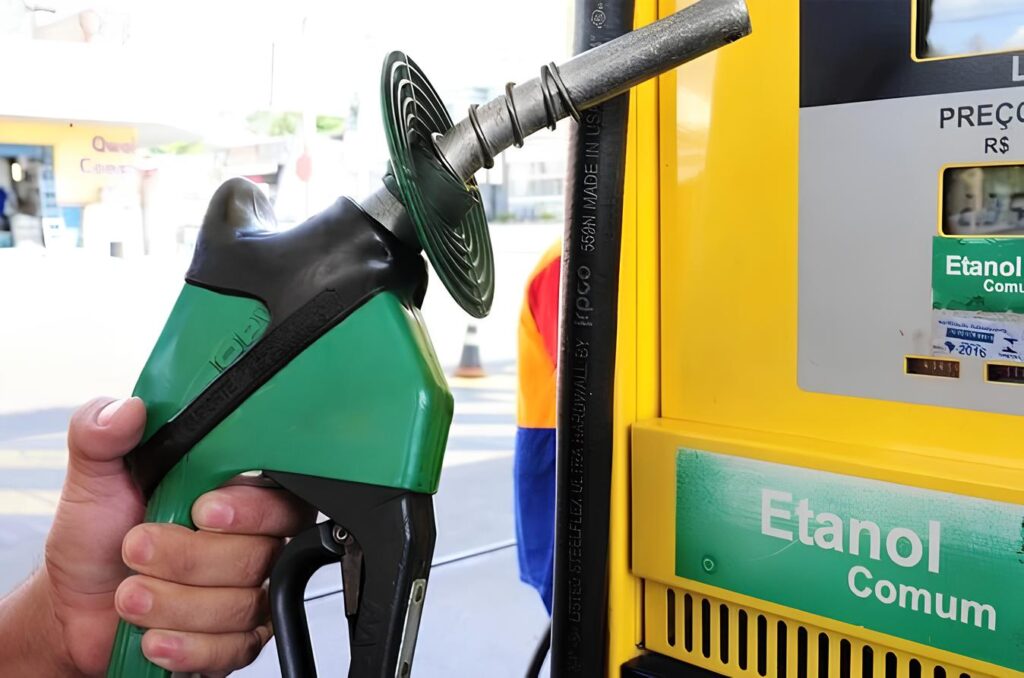
Petrobras’s plan is to enter the ethanol segment through a partnership with a large, established company. The model assumes that partners will bring existing opportunities while the state company will contribute to expanding production capacity.
-
Brazilian city bets on the business environment to generate jobs and attract investments in the energy sector — secretary reveals strategy at Macaé Energy 2026.

-
50 viaducts, 4 tunnels, 28 bridges, and 40 kilometers of bike paths: BR-262 in Espírito Santo will receive 8.6 billion reais for the largest engineering project in the state’s history, inspired by the Immigrant Highway in São Paulo.

-
Brazil produces too much clean energy and doesn’t know what to do with it: over 20% of solar and wind capacity was wasted in 2025 while investors flee and 509 renewable generation projects were abandoned in the last year.

-
Piauí will produce a new fuel that replaces diesel without needing to change anything in the truck’s engine and reduces pollutant gas emissions by half: truck drivers from all over the Northeast are already celebrating the news that will arrive later this decade.


Magda Chambriard, CEO of Petrobras, emphasized the logic behind the decision. “It didn’t make sense for us to be out of the ethanol market, which is the main competitor of gasoline, one of our most relevant products. We have been in this market since the 1970s, and we have all the infrastructure for it.”
This return happens at a time when gasoline is facing greater competition from ethanol, driven by the Fuel of the Future program, sanctioned by President Lula, which aims to increase the use of biofuel.
Sugar Cane and Corn on the Radar
Petrobras is evaluating two main routes for ethanol production: sugarcane and corn. While the corn route has been rapidly expanding, especially in the Midwest, sugarcane can bring synergies with the production of sustainable aviation fuel (SAF).
“Corn is growing rapidly in Brazil and makes sense for the Midwest, while sugarcane would be a strategy focused on the Southeast,” Tolmasquim explained. He also mentioned that a new pipeline for transporting fuels to the Midwest is on the company’s radar for the next decade.
Guaranteed Profitability
Tolmasquim assured that the ethanol project will be economically viable, with a return above 10%. According to him, the plan can be implemented quickly, depending on the conclusion of a strategic agreement with partners. “With this, we bring back an important asset in ethanol to Petrobras’s portfolio,” he stated.
Investments in ethanol are part of a larger package of R$ 21.5 billion allocated to bioproducts, which also include biorefining, biodiesel, and biomethane.
Focus on Molecules, Not Electrons
CEO Magda Chambriard highlighted that the return to ethanol reflects Petrobras’s strategy to focus on molecules in the low-carbon segment. “We have installed infrastructure for the distribution of liquids, such as tanking and pipelines. Our DNA is molecular, and this facilitates our return to ethanol as a relevant operator,” Chambriard said.
Nevertheless, the company maintains plans to explore renewable energy sources, such as wind and solar, with R$ 21.5 billion in projects evaluated until 2029.
Market Relevance
With this move, Petrobras not only reaffirms its commitment to the energy transition but also seeks to consolidate a prominent position in the ethanol market. The expectation is that this return will create a positive impact on the competitiveness of biofuel and strengthen the state company’s presence in the Brazilian energy landscape.








Seja o primeiro a reagir!