





 Portuguese
  English
  Spanish
  5 min of reading
  0 comments


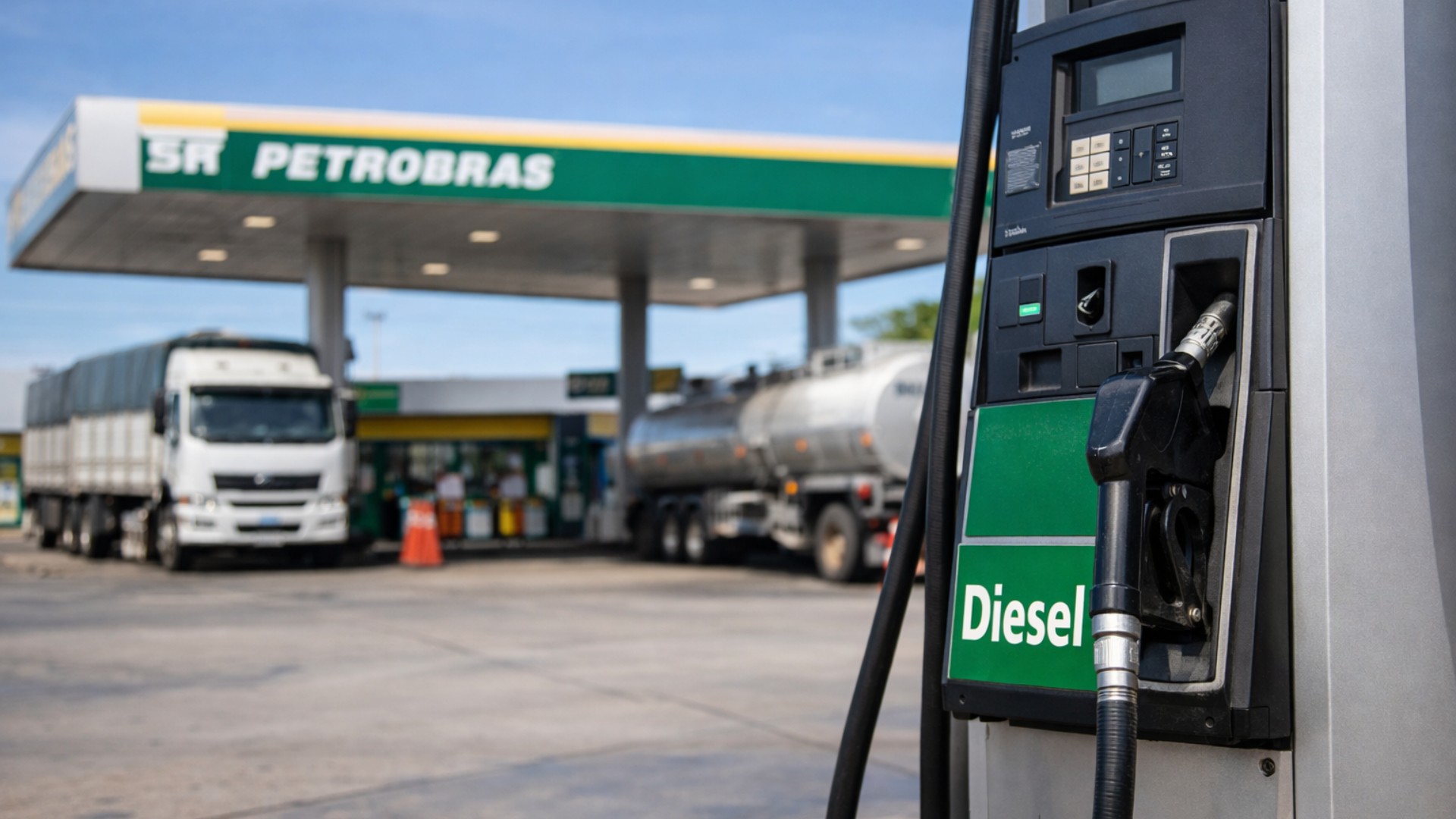
Petrobras’ diesel strategy gains strength amid global tensions and bets on expanding domestic refining to reduce external dependence, protect internal prices, and reinforce Brazil’s energy security with a focus on road transport and the Latin American market.
Petrobras is studying the inclusion of a goal in its next business plan to bring Brazil to self-sufficiency in diesel production within five years, a move that, according to the company’s president, Magda Chambriard, could reduce the internal market’s exposure to external shocks and provide more predictability for the supply of a fuel central to cargo transport in the country.
The statement was made at an event hosted by CNN in São Paulo, amid international pressure on energy prices and uncertainties caused by the situation in the Middle East.
Today, according to the executive, the state-owned company’s refining park already accounts for about 70% of diesel consumption in the Brazilian market.
-
Mothers and daughters come together, create an ‘express’ beauty salon and turn the idea into a network with 21 units, revenue of R$ 16.7 million and 12,000 subscribers.

-
End of the 6×1 schedule: how the reduction of hours can affect service companies, industry, and agribusiness.

-
Brazil Ignores Trump’s threats to BRICS, Buys 42 tons of gold and reduces the Dollar’s share by 6.45% in international reserves.

-
Havan buys historic football land in Blumenau for a million-dollar amount protected by a confidentiality clause and is already planning to change even the layout of streets to build a megastore in half-timbered style costing 80 million reais.


In the current planning, the company is working on increasing the supply of the derivative by about 300,000 barrels per day over five years, which would raise the capacity to meet something close to 80% of national demand.
The new announcement by Magda is the revision of this ambition, now with the possibility of achieving 100% of domestic consumption.
Self-sufficiency in diesel and impact on the Brazilian market
Detailing the scope of this strategy, Magda stated that the change would have a direct effect on those who depend on diesel in the daily economy of Brazil.
“For consumers, this means that external volatility will no longer haunt us.
For shareholders, it is a guarantee of the largest market in Latin America,” said Petrobras’ president at the event.
This statement reinforces the importance of diesel in the country’s logistics chain, especially for truck drivers, transport companies, and sectors that depend on the continuous circulation of goods.
Strait of Hormuz and geopolitical influence on diesel
The discussion gained traction at a time when geopolitics has once again begun to influence the energy sector intensely.
Commenting on the international environment, Magda cited both the instability associated with Iran and the risks surrounding the Strait of Hormuz, a route considered strategic for global supply.
According to the U.S. Energy Information Administration, the flow of oil through the strait was around 20 million barrels per day, a volume equivalent to about 20% of global liquid petroleum consumption.
In scenarios of tension or blockage, any interruption in this corridor tends to affect prices, freight, and fuel availability in various regions.
Brazil gains space in the international oil market
In this context, the assessment of Petrobras’ president is that Brazil is beginning to occupy a more relevant position in international oil trade when suppliers from the Middle East face logistical restrictions or uncertainties.
Magda stated that almost 50% of Brazil’s oil production goes to Asia, which increases the country’s importance for buyers seeking alternatives in light of difficulties in the Gulf region.
This observation was made as part of a broader reading on the repositioning of global energy flows in times of crisis.
Investments in refining and increase in diesel production
Although the new goal is still under study, Petrobras has already been increasing the capacity of its refining system and maintaining high utilization of its assets.
In March 2025, the company completed works on Train 1 of the Abreu e Lima Refinery in Pernambuco, raising the processing capacity of the unit to 130,000 barrels of oil per day.
The state-owned company also reports that the refinery has one of the highest crude oil to diesel conversion rates among Brazilian plants, which helps explain the company’s focus on increasing the production of the derivative.
This industrial advancement connects to the company’s most recent investment plans.
In the 2026-2030 Business Plan approved by Petrobras, the refining, transportation, marketing, petrochemical, and fertilizer segment received a forecast of US$ 15.8 billion in investments, with the prospect of increasing the share of diesel in the total produced by the company.
Even though Magda’s statement pointed to an additional revision of the internal supply goal, the strategic direction already shows the intention to extract more value from the refining park and reduce dependencies on items sensitive to the international market.
Diesel and cargo transport in Brazil
For the domestic market, the weight of this discussion goes beyond corporate numbers.
Diesel is the main fuel for road cargo transport, and any significant fluctuation in international oil prices or supply routes tends to quickly impact Brazilian logistics costs.
By advocating for the expansion of national production, Petrobras signals that it intends to use its refining structure as a tool for protection against external turbulence, especially during periods of conflict or restrictions on the circulation of oil and derivatives in strategic points of global trade.
Still, the self-sufficiency mentioned by Magda depends on the formalization of the new plan and the execution of the initiatives planned to increase domestic supply.
What is currently on the table is a revision of the previously announced goal, which aimed to meet 80% of national consumption, to a broader objective of full coverage of the Brazilian market.
The executive herself summarized this stage as a question under analysis within the company: whether Petrobras will be able, in the next five years, to produce all the diesel that Brazil needs.
In the scenario described by the president of the state-owned company, the combination of refining expansion, increased diesel production, and reduced exposure to the outside can change the country’s relationship with one of the most sensitive fuels in the economy.
For truck drivers and transport companies, the message issued by Petrobras was that national supply has entered the center of the company’s strategy precisely when international crises have once again tested energy security and price stability.








Seja o primeiro a reagir!