





 Portuguese
  English
  Spanish
 5 min of reading
  0 comments


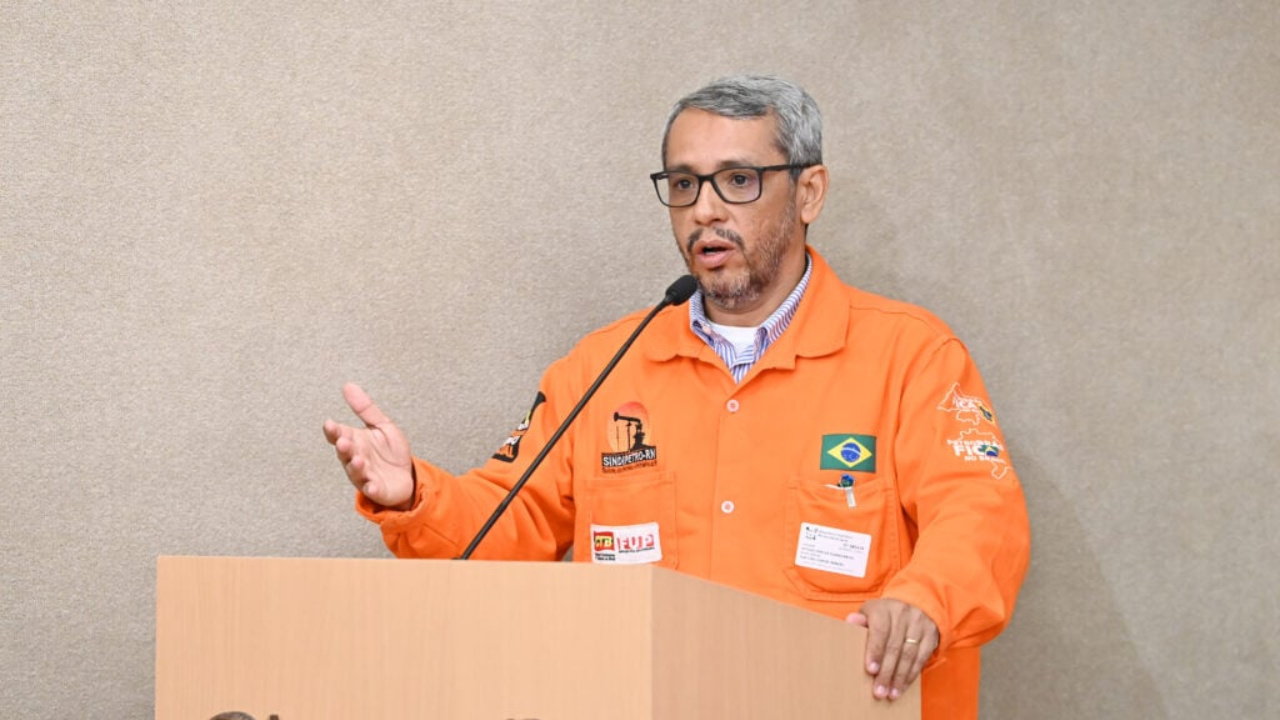
During Public Hearing at the Legislative Assembly of RN, Oil Workers Demanded More Investments in the Potiguar Basin and Highlighted That, Without Increasing Production, the Country May Depend on Oil Imports in the Next Decade.
The oil sector has returned to the center of the economic and political debate in Rio Grande do Norte. In a public hearing held at the Legislative Assembly on Tuesday (14), oil workers, parliamentarians, mayors, state government representatives, and business leaders gathered to discuss the future of the Potiguar Basin — one of the historical hubs of oil exploration in the country.
The meeting, proposed by deputies Isolda Dantas (PT), Francisco do PT, and Divaneide Basílio (PT), focused on the need for new investments and the strengthening of the oil and gas production chain in the state. The concern is that, without incentives, Rio Grande do Norte may lose ground in the national energy map, directly affecting jobs, revenues, and Brazilian energy sovereignty.
Potiguar Oil Production Shows Signs of Decline and Concerns Workers
According to the Monthly Bulletin of Oil and Natural Gas Production, released by the National Agency of Petroleum (ANP) on October 1, potiguar production in August 2025 reached 39,144 barrels of oil equivalent per day (boe/d) — a figure below the average of the last 18 months, which was 39,610 boe/d.
-
With the war silencing the wells of Iran, Brazil set a record of 5.3 million barrels per day and rose in the global oil ranking without anyone noticing — the pre-salt now accounts for 80% of everything that comes from the seabed.

-
After years of delays and billions invested, the Golden Pass megaterminal in Texas is about to start exporting liquefied gas and will reshape the global energy map amid the Middle East crisis.

-
The artificial intelligence market within the oil industry is worth billions today and will more than double by 2033, and those who do not get on board now with the race for digital twins and autonomous drilling will be left behind.

-
Petrobras quietly installed an artificial intelligence system called Smart Tocha in six of its largest refineries, and the technology independently controls the burning of gases to reduce emissions without any operator needing to intervene.

Between March 2024 and August 2025, the total accumulated volume was 712,986 boe/d, with the peak registered in April 2024 (41,734 boe/d) and the lowest production in August 2024 (37,303 boe/d). Despite the increase in the number of producing fields — from 64 in March 2024 to 70 in August 2025 — the persistent decline raises concerns for the Oil Workers Union of RN (Sindipetro).
The union warns that the slowdown has led to job losses, a brain drain of qualified labor, and a decline in tax revenue. These effects, according to the organization, threaten the stability of producing municipalities and weaken the state economy, in addition to posing a risk to national energy sovereignty.
Marcos Brasil: “Without Increasing Production, Brazil Will Have to Import Oil Until 2032”
During the hearing, the general coordinator of Sindipetro-RN, Marcos Brasil, made a strong warning. He stated that, considering current reserves and production rates, Brazil may have to import oil between 2030 and 2032 unless investments in the Potiguar Basin and new fronts, such as the Equatorial Margin, are increased.
According to him, a drillship for exploration of the Equatorial Margin is expected to arrive in January, but political pressure is needed to ensure that the promise materializes. “Most members of Petrobras’s Board of Directors come from the Southeast, so they want to prioritize investments in the Southeast. When there is no political force here from Rio Grande do Norte demanding it, they let the matter cool down,” he criticized.
Marcos Brasil also emphasized the potential of onshore production as a source of economic and social growth for Rio Grande do Norte. According to him, for every R$ 1 billion invested, 5,000 direct and indirect jobs are created.
Moreover, the activity promotes an increase in royalties, boosts local commerce, and stimulates new technological investments, especially in the recovery of mature fields — a technique that enhances oil extraction from already explored areas.
“Onshore production fosters integration with communities, increases consumption in hotels, supermarkets, and other services. It adds value to the locations where it occurs, in addition to generating royalties for landowners and municipalities,” he highlighted.
Sindipetro Launches Manifesto for More Investments in the Potiguar Basin
Director Márcio Dias, also from Sindipetro-RN, presented the Manifesto in Defense of Investments in the Potiguar Basin, a document approved during the 40th State Congress of Oil Workers (CEPETRO-RN). The text has been delivered to political, business, and social leaders, aimed at uniting the state around the resumption of investments in the oil sector.
Márcio recalled that the Potiguar Basin has nearly 50 years of activities, historically led by Petrobras. However, he highlighted that, due to political and market issues, much of the operations have been privatized, reducing the state’s presence in the region. “Today, we have several private companies operating, but Petrobras’s leading role has been lost. And this has direct repercussions on the local economy,” he stated.
The mayor of Macau, Flávia Veras (PDT), also called for more investments and royalty distributions for the municipalities. She emphasized that oil production represents development, job creation, and the capacity to meet public commitments.
“This represents economic development, job and income generation. Having these production royalties from our oil basin is a blessing. In the past, this meant our glory, but today we face a decline in production and in the percentages of distribution,” she lamented.
According to data from the Department of Economic Development (Sedec), Rio Grande do Norte received R$ 155 million in royalties in the second quarter of 2025, an increase of 26.4% compared to the same period in 2024. The Clara Camarão Refinery, with a capacity to process 40,000 barrels per day, was cited as a strategic asset to ensure greater energy autonomy and local value generation.
Deputies Highlight the Role of Petrobras and National Energy Sovereignty
During the meeting, deputy Isolda Dantas (PT) reinforced that Petrobras is a strategic company for Brazil and for Rio Grande do Norte. According to her, “it is not possible to think about a country’s sovereignty without considering its energy sovereignty, and Petrobras is deeply connected to this.”
The parliamentarian reminded that the Potiguar Basin has been one of the main oil-producing regions in the country since the 1970s. “When we look at the history of Petrobras in RN, we see how fundamental it has been for the development that reaches the municipalities. And now, with the release of 33 new drilling sites by the ANP, it is reaffirmed that the state continues to have oil,” she added.
Deputy Francisco do PT also highlighted the new moment the state-owned company is experiencing. “We had to denounce the dismantling and disinvestment that took place in Petrobras. Now, our fight is for more investments because we have a government that has begun to see the company as an instrument of national development,” he said.
Divaneide Basílio (PT), who participated via video, emphasized that the Potiguar Basin represents more than 60% of national oil production and plays an essential role in job generation. “We need to advance in this real care that Sindipetro brings to our basin, to ensure new investments and opportunities,” she stated.
Perspectives and Challenges for the Future of Oil in RN
Even with the challenges, Sindipetro-RN and political representatives believe that the productive potential of the Potiguar Basin is still vast. Technical studies indicate promising areas for exploration, both on land and at sea, especially in the Equatorial Margin.
For oil workers, strengthening Petrobras’s presence and resuming public and private investments are essential to revive the potiguar economy, generate jobs, and consolidate the strategic role of the state in the oil and gas sector.








Seja o primeiro a reagir!