





 English
  Francês
  Alemão
  Italiano
  Japonês
  Norueguês
  Portuguese
  Spanish
  3 min of reading


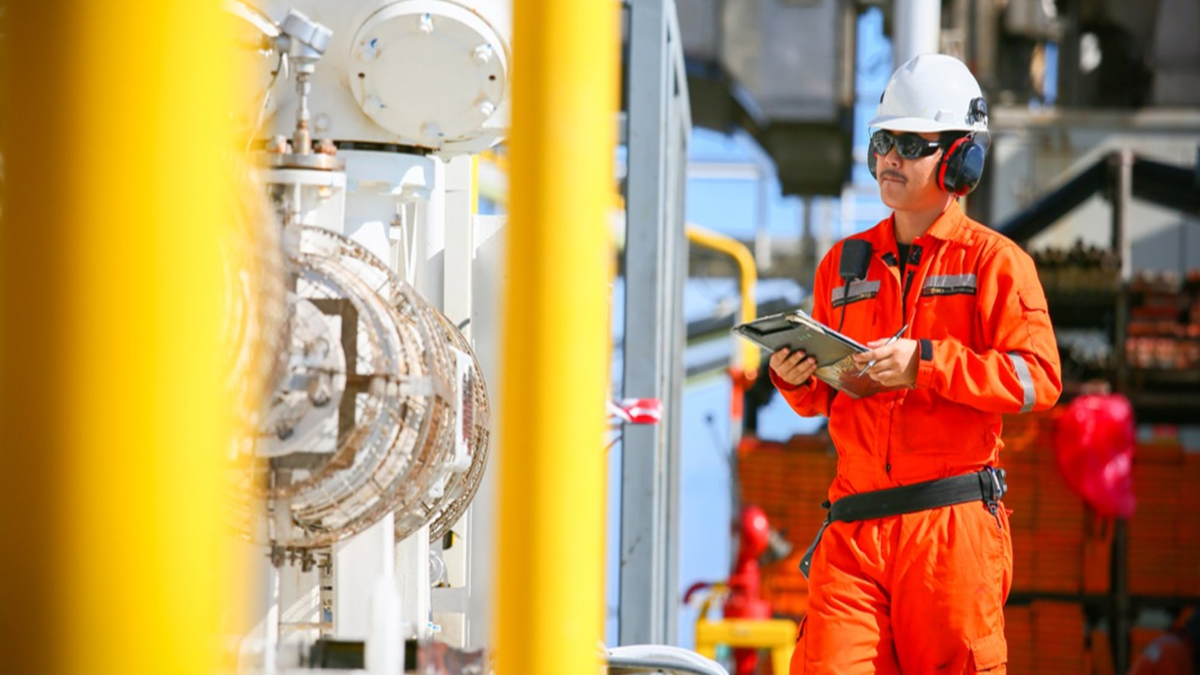
New Technologies Promise to Boost the Oil and Gas Sector in Distributed Production Wells Across Brazil.
What once seemed impossible has finally become a reality! From now on, artificial intelligence (AI) will assist in overseeing oil and gas production in active locations. One of the biggest problems faced in oil production is keeping a person responsible for each sector so that it does not remain inactive.
Related News
Thus, due to the large number of production wells and few engineers available for each project, many failures occurred throughout the process, but there was no one present to reverse the situation.
Given this problem, the most viable option was to migrate to more current and intelligent machines. In addition to increasing production efficiency, they operate autonomously, reducing possible failures.
-
Brazilian giant expands borders in the Southeast: Petrobras confirms new oil discovery in ultra-deep waters in the pre-salt of the Campos Basin.

-
Alert in the global energy market: Severe tropical cyclone hits the coast and disrupts gas production at major plants in Australia, threatening global supply.

-
Petrobras finds high-quality oil in the pre-salt at 113 km from RJ and reignites expectations about strategic reserves in the Campos Basin.

-
Ocyan opens registrations for startups focused on innovation in the oil and gas sector and will select projects for Innovation Day with the support of Nexio.


What Are the Challenges in Introducing Technologies in Oil Production?
From the beginning, the idea of introducing the latest machines and technological resources in oil wells has always been present.
However, implementation has never been successfully completed due to various factors, including the fact that drilling points are dispersed, remote, and located in hard-to-access areas.
Thus, automating each of these points would result in high financial costs, which at that time were not feasible.
However, throughout the day, the alarms indicating problems in the wells sound continuously, requiring engineers to go to the location immediately to attempt fixes.
Due to the large number of oil points and activated alarms, engineers tend to become overloaded with demand. This ultimately causes even greater damage to the machines.
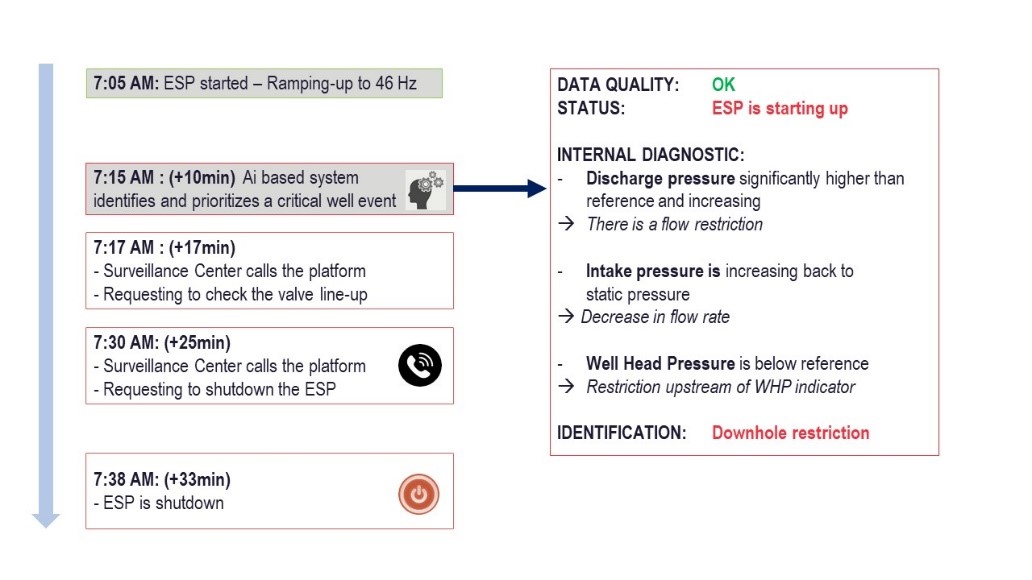
An example of damage occurred in a well with a submersible electric pump (ESP). In 7 months of operation, there was interference from gas that resulted in 100 days of unplanned downtime.

In those 100 days, there were 100 stop/start cycles (Hz = 0), and in 4 days, the system showed a stress-induced low flow condition.
To try to reverse this situation, all operations are performed manually. Therefore, until the alarm sounds, engineers arrive at the location, discover the problem, and resolve it, which takes a long period of time.
This causes oil production to stop and equipment to break down or present bigger problems in the near future.
Applying Current Technology in Gas and Oil Wells
Due to the number of drillings in an area, automation at scale would be the ideal solution. Thus, at the moment any problems arise, the AI system would quickly be activated, identifying and resolving the defect.
In this way, as damage emerges in gas or oil drillings, they will be recorded in the AI memory, and if it happens again, it would take little time to resolve.
In the past, when a problem arose, the most experienced workers were sought to resolve it.
When they retired, passed away, or left the job, they took away with them all solutions to potential problems in the machines, leaving the company to start from scratch to resolve.
But now, technology allows that all processes be stored and used by everyone in the company.
Another feature of artificial intelligence is that it can learn everything about the location where the well is situated, whether it is gas or oil.
Thus, the longer it is installed in a location, assisting in problem-solving, the more capable it will be of repairing damages without an engineer on-site.
Although implementation tests are still in the early stages, the results are quite positive.
After all, optimizing production time, keeping machines active in oil drillings, with a long-term maintenance schedule, is beneficial and generates a higher yield over the month.










Seja o primeiro a reagir!