





 Portuguese
  English
  Spanish
  5 min of reading


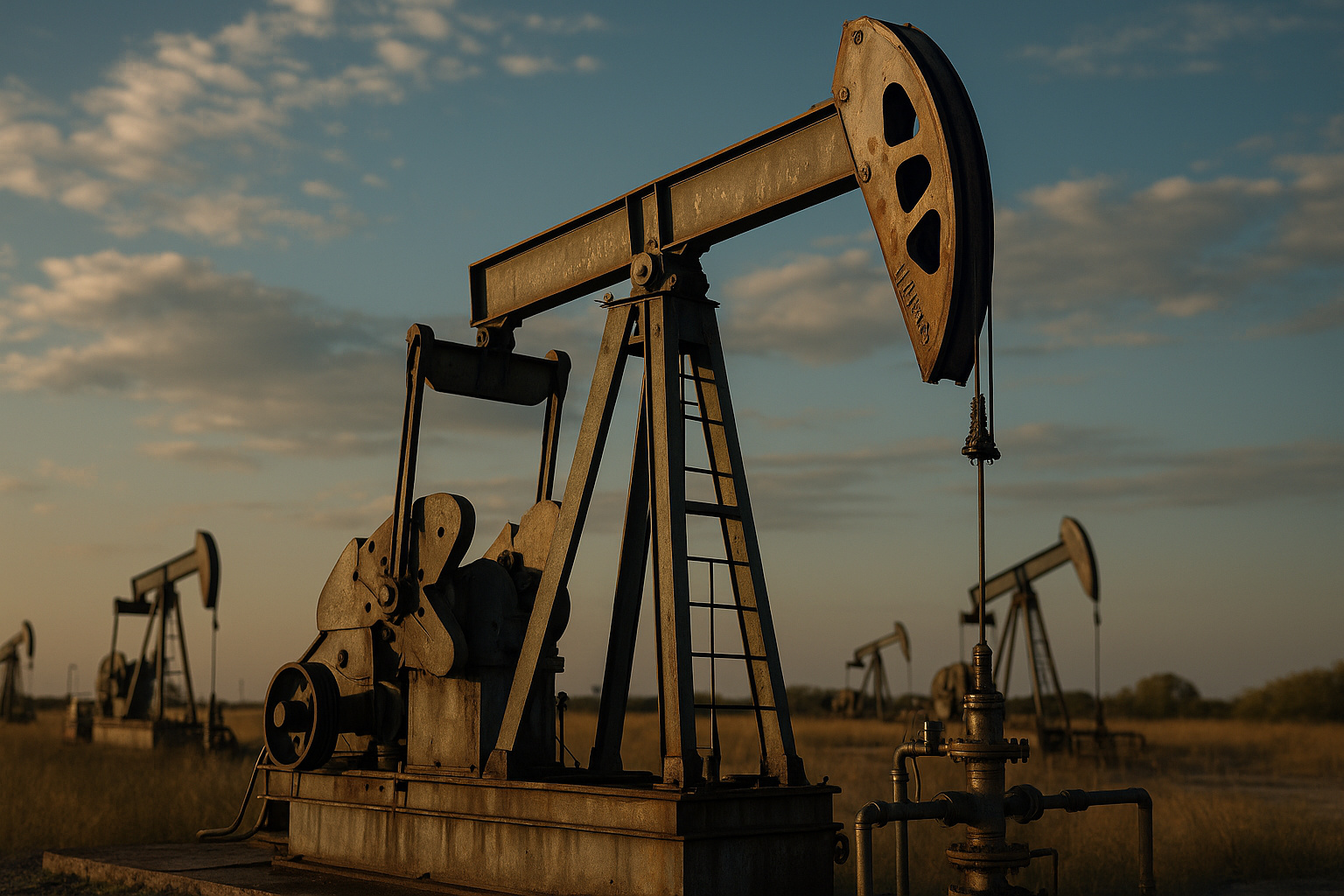
The oil has always functioned as a decisive force in the economic formation of Brazil and, therefore, the holding of the sixth auction by PPSA opens another phase of this trajectory. The sale of 106.5 million barrels of oil from the Union, announced by Pre-Salt Petroleum, creates a moment that invites the country to reflect simultaneously on development, sustainability, and public responsibility. According to the PPSA website, the auction will take place on July 29, 2026, at B3, in São Paulo, and will present volumes from strategic fields such as Mero, Itapu, Atapu, Sépia, Búzios, and Bacalhau.
Although the market follows the announcement with enthusiasm, the topic involves much more than numbers. In practice, oil remains an economic, historical, and social axis. However, it also demands debate about the future, especially as the energy transition advances globally. Therefore, each auction becomes, beyond a commercial operation, an opportunity to enhance policies that align growth and sustainability.
The Historical Evolution of Oil in Brazil
The history of Brazilian oil began to gain momentum in 1953, when the federal government created Petrobras. At that moment, according to the Brazilian government, the country sought energy sovereignty and tried to reduce external dependence. Decades later, with the pre-salt discovery in 2006, Brazil definitively entered the international route of this commodity. With each field discovered, the country expanded its capacity while simultaneously strengthening its geopolitical position.
-
The rise in oil prices could ensure an extra revenue of R$ 100 billion for the Federal Government, indicates a recent economic study.

-
Naturgy begins an investment of R$ 1.6 million to expand the gas network in Niterói and benefit thousands of new residences and businesses.
-
A major turn in the Justice system suspends tax increases and directly impacts oil and gas companies in Brazil by affecting costs, contracts, and financial planning, leaving uncertain what could happen to the sector if these costs had increased.

-
Brava Energia begins drilling in Papa-Terra and Atlanta and could change the game by reducing costs in oil while increasing production and strengthening competitiveness in the offshore market.


Thus, oil has transformed not only into a source of revenue but also into a mechanism for social investment, as part of the resources finance areas such as education and health. However, even in light of this progress, the need for sustainability has grown. Since 2015, with the Paris Agreement, Brazilian companies, governments, and institutions have begun to consider more responsible production models.
This trajectory explains why the auction announced by PPSA should be closely observed. It integrates a timeline in which the country attempts to balance economic efficiency and climate commitment, even while continuing to explore the pre-salt.
The Sixth Auction and the Importance of Marketing Oil from the Union
PPSA stated that the volumes entering the auction represent an essential part of future production under the sharing regime. This model determines that the Union receives a share of the extracted oil after operational costs. Therefore, the auction becomes a direct public revenue tool. As a consequence, the event strengthens the federal treasury and increases revenue predictability.
Moreover, the model enhances transparency, as sales occur through public bids. According to PPSA, the goal is to ensure that the Union obtains the highest possible value from marketing and that the oil chain operates predictably. In this context, the sixth auction demonstrates institutional maturity and reinforces governance over non-renewable resources.
However, there is another important aspect: although oil is a fossil fuel, its exploration remains relevant to sustain transitioning economies. Therefore, building clear, technically consistent, and monitored procedures reinforces legal security, integrity, and responsibility in the management of these resources.
Sustainability and Oil: A Continuous Debate
The topic of sustainability frequently appears in public speeches related to the energy sector. This is because oil, despite its ability to generate wealth, also contributes to carbon emissions. Still, the current challenge is not to eliminate oil immediately but to make the chain more efficient, transparent, and compatible with environmental goals.
According to the International Energy Agency, the transition to low-emission models requires cooperation, technology, and long-term investments. However, countries like Brazil remain dependent on the revenue from pre-salt production. For this reason, auctions like those of PPSA need to engage with environmental compensation solutions and robust energy transition policies.
Additionally, companies that purchase the Union’s oil tend to adopt stricter standards, as the global market requires ESG reports, decarbonization planning, and corporate transparency. Thus, sustainability directly integrates into business operations.
Public Responsibility and Economic Impacts
The announcement of the sixth auction arrives at a time of stability in Brazilian production. According to the ANP Bulletin published in December 2025, the country has been recording successive records and expanding its influence in the international market. This means that the commercialization of the Union’s volumes has the potential to move billions and favor structural investments.
However, the aspect that deserves more attention is not just economic. Oil impacts communities, states, and social policies. Thus, the manner in which the resource is auctioned, distributed, and reinvested determines its true value to the country. Therefore, transparency regarding volumes and sale criteria becomes essential.
The federal government emphasizes that part of the revenues directed to public funds contributes to educational and social security policies. Consequently, oil takes on a broader social role, especially when its management is conducted responsibly.
How the Auction Engages with the Energy Future
The global energy sector is undergoing rapid transformations. Countries are discussing carbon neutrality, companies are migrating to renewable sources, and global consumption is diversifying. Still, oil continues to integrate into the energy system as it supports sectors such as maritime transport, aviation, and petrochemical industry.
In this way, Brazil needs to leverage the potential of pre-salt while reinforcing the energy transition. When PPSA organizes an auction, the country reaffirms its intent to manage this resource based on planning, rather than merely commercial exploration. Thus, the event also becomes a sign of institutional stability.
Furthermore, with technology, monitoring, and more modern environmental practices, exploration can become less aggressive. According to ANP, re-injection systems, reduced gas flaring, and environmental monitoring are already part of operational requirements, creating a production system more aligned with international commitments.
A Milestone for Governance and Sustainability
For all these reasons, the sixth auction by PPSA represents more than a financial operation. It symbolizes a continuous effort to reconcile oil, sustainability, and public governance. The presence of institutions like B3 reinforces transparency. The standards set by ANP ensure oversight. International goals demand responsibility.
Thus, oil remains relevant, but its management evolves. And, in this way, Brazil continues to advance toward a model where economic development and environmental protection coexist, even in a historically complex sector.









Seja o primeiro a reagir!