





 Portuguese
  English
  Spanish
  4 min of reading
  0 comments


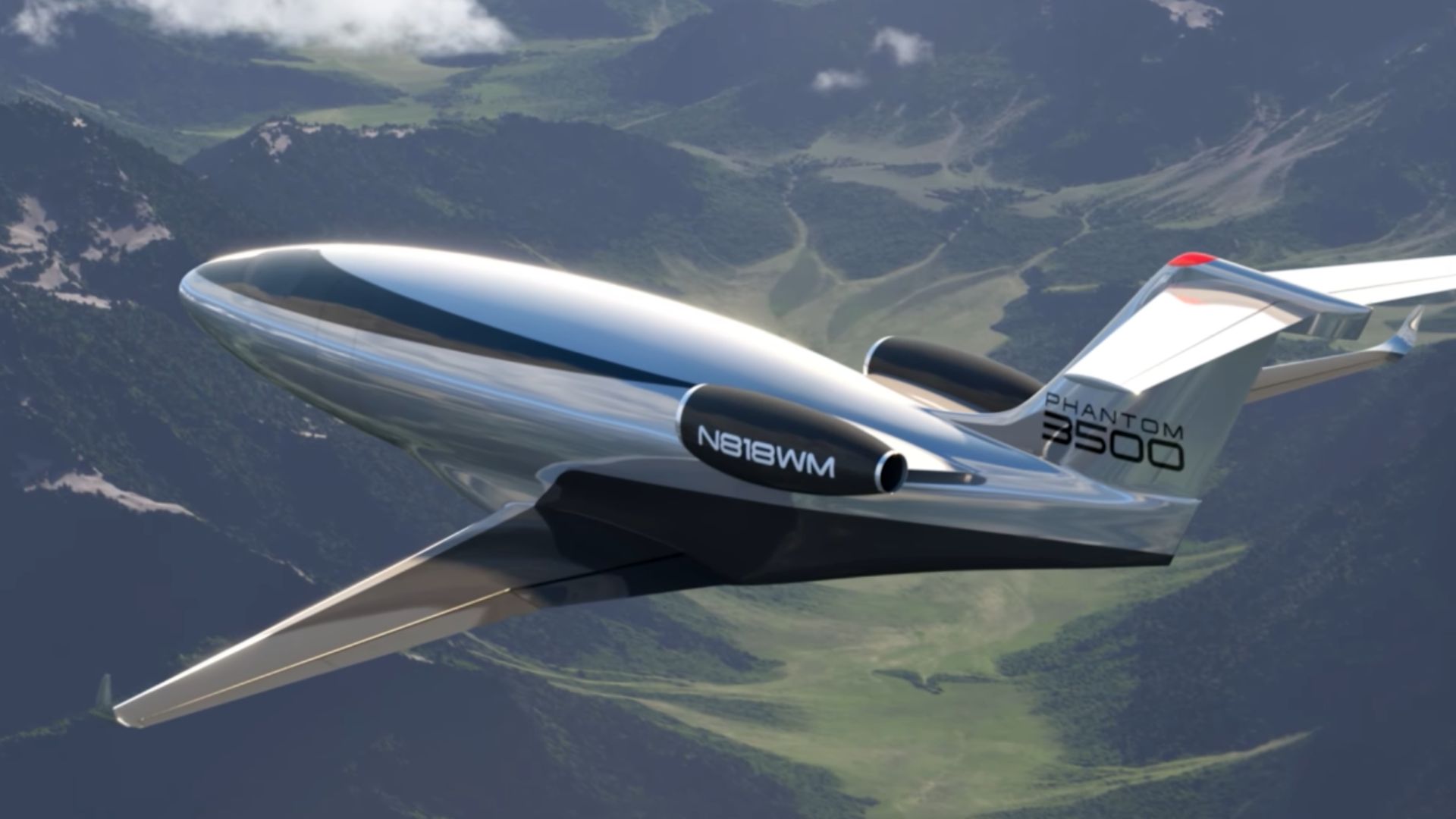
Project Breaks Aviation Standards By Eliminating Windows, Prioritizing Aerodynamic Efficiency, and Betting on Visual Technology to Transform the In-Flight Experience
Commercial aviation may soon undergo one of the boldest transformations in recent decades. The Phantom 3500, developed by the American company Otto Aerospace, emerges as a radical concept by completely eliminating windows from the passenger cabin. The proposal aims not only to create a visual impact but also to reduce fuel consumption, improve aerodynamic efficiency, and redefine the standard of comfort and in-flight experience, with its debut expected in 2027.
The information was disclosed by O Antagonista, based on materials and technical presentations from Otto Aerospace that detail the project as an engineering leap focused on structural efficiency and performance. According to the company, the Phantom 3500 is not just a simple futuristic experiment, but an aircraft designed from the ground up to operate under real market conditions, focusing on private, corporate, and strategic application flights.
A Windowless Aircraft Designed for Efficiency, Not Aesthetics

The main differentiator of the Phantom 3500 is precisely what attracts the most attention: the almost total absence of windows in the cabin. Unlike traditional aviation, where windows are considered an essential element of the passenger experience, in this project they are seen as points of structural weakness and interference with the airflow around the fuselage.
-
With a cost per shot close to zero, the DragonFire laser could change naval warfare in 2027 and provide British ships with nearly unlimited defense against drones.

-
A British startup creates tires that generate electricity in electric vehicles when passing over potholes, speed bumps, and cracks.

-
Scientists have created robots made with living cells that have their own nervous system, swim on their own, explore the environment, and self-organize without any genetic engineering, and now they want to do the same with human cells.

-
Students create a solar-powered ambulance that operates without a plug, without fuel, and still keeps medical equipment running in remote areas.


By eliminating these openings, Otto Aerospace was able to design a cleaner, continuous, and aerodynamically efficient fuselage, favoring what is known as laminar flow — a condition in which the air travels over the aircraft’s surface with less turbulence. As a direct consequence, there is a reduction in aerodynamic drag, which translates into lower fuel consumption, greater range, and better overall performance in flight.
Replacing traditional windows, the Phantom 3500 utilizes high-definition external cameras that transmit real-time images to screens distributed throughout the cabin walls and ceiling. This way, passengers maintain visual contact with the outside, but in a controlled, immersive, and technologically advanced manner, creating a new standard of in-flight experience.
Tear-Drop Design and Advanced Materials Enhance Performance
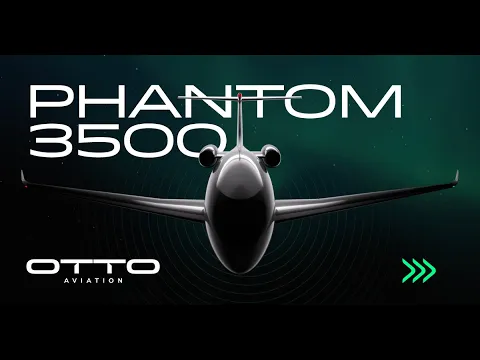

In addition to the windowless cabin, the design of the Phantom 3500 completely diverges from the standard of conventional executive jets. The fuselage adopts a tear-drop shape, uncommon in commercial aviation but highly efficient from an aerodynamic standpoint. This design helps reduce turbulence zones and improve stability during flight.
The wings have been designed to operate in harmony with this laminar flow concept, while the T-tail helps maintain control and stability in different flight regimes. Simultaneously, the project utilizes advanced composite materials, manufactured using the Toray 1100 process, allowing for a lighter, more resilient, and efficient structure compared to traditional aircraft construction methods.
This combination of innovative aerodynamic design and cutting-edge materials results in a more robust aircraft that is also more economical. According to Otto Aerospace, the Phantom 3500 shows significant gains in structural and operational efficiency compared to similarly sized jets currently in operation.
Engines, Capacity, and Target Audience of the Phantom 3500

From a technical standpoint, the Phantom 3500 will be equipped with two Williams FJ44 turbofan engines, known in the aerospace industry for their reliability, low fuel consumption, and reduced operational costs. These engines are widely used in executive jets and fit perfectly into the project’s efficiency proposal.
The cabin of the Phantom 3500 will have approximately 22.65 cubic meters, with height and length close to two meters, offering a comfortable environment despite its compact size. The expected capacity is for up to four passengers, clearly positioning the aircraft in the executive jet segment, aimed at private and corporate flights, as well as missions requiring access to smaller airports.
Due to these characteristics, the Phantom 3500 is also attracting interest beyond the civil market. Experts point out that the concept could be adapted for military, strategic, and intelligence applications, where efficiency, range, and reduced aerodynamic signature are critical factors.
First Flight in 2027 and Certification Expected by the End of the Decade
According to Otto Aerospace, the first flight of the Phantom 3500 is planned for 2027, using aircraft already assembled with specifications nearing production standards. The company states that the intention is to avoid a simple experimental prototype, speeding up the testing and validation process under real operating conditions.
The official certification is expected to occur around 2030, marking the Phantom 3500’s definitive entry into the market. If the schedule is adhered to, the project could influence not only the executive jet segment but also the future of aircraft design, paving the way for a new generation of aircraft focused on extreme efficiency, advanced aerodynamics, and digital in-flight experience.







-

-

-

11 pessoas reagiram a isso.