





 Portuguese
  English
  Spanish
  4 min of reading
  5 comments





The Brazilian Economy Is At A Critical Moment, With Uncontrolled Public Spending And High Interest Rates Pressuring The Debt. According To Bruno Perini, Structural Reforms Are The Key To Overcoming The Current Scenario. Will Brazil Overcome This Challenge And Avoid A Greater Crisis?
Is The Brazilian Economy On The Brink Of An Abyss Or Just Going Through A Temporary Turbulence?
The answer to this intriguing question seems far from unanimous, but a recent analysis conducted by Bruno Perini, a financial educator and renowned influencer, has brought forth numbers and reflections that are generating debate.
The discussion took place during his participation in the Irmãos Dias Podcast, where he addressed fiscal and monetary issues that directly impact the country’s future.
-
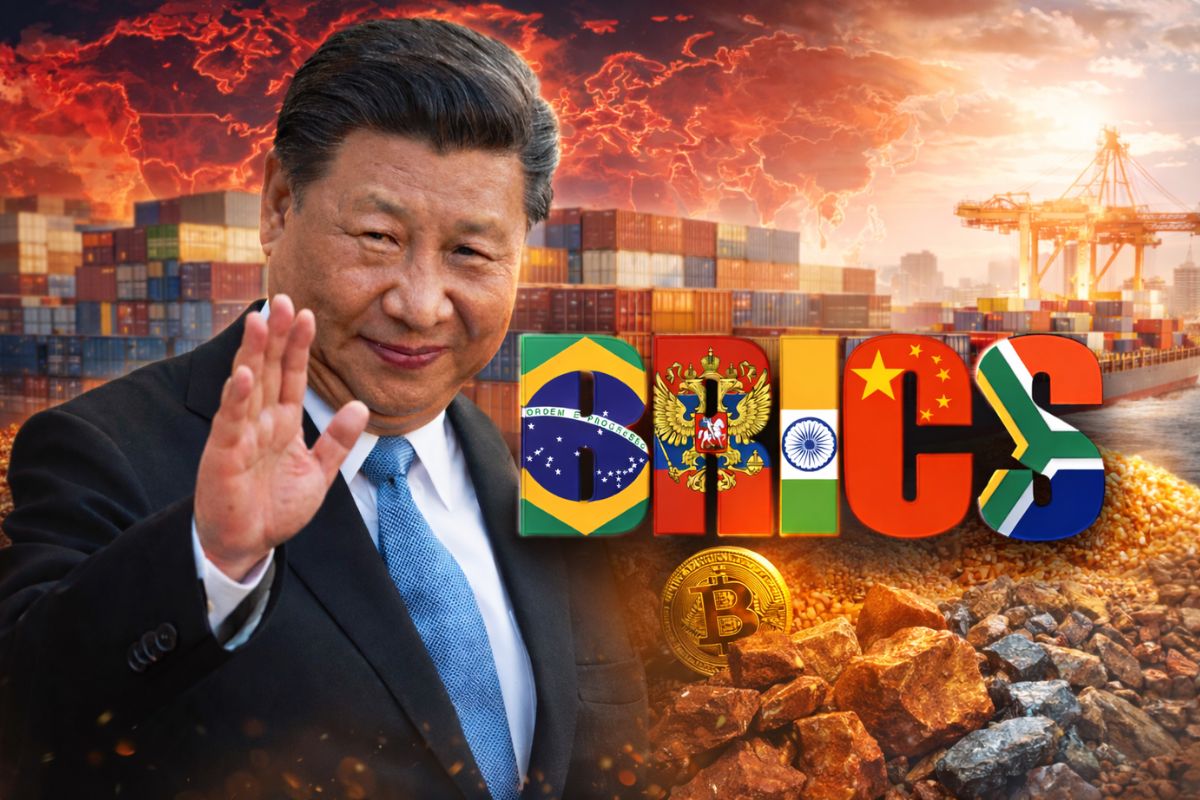
China alone accounts for 70% of trade within the BRICS, while Brazil establishes itself as an essential supplier of food and minerals: understand how the group, which already represents nearly 40% of the world’s GDP, is changing the game.
-
Starting in May, those who do not have registered biometrics will not be able to apply for Bolsa Família, sickness benefits, or unemployment insurance: understand the new rule that changes access to benefits for millions of Brazilians.

-
A new law being voted on in Brazil proposes a minimum fare of R$ 10 per trip and R$ 2.50 per kilometer for Uber and 99 drivers, and promises to ensure they earn as well as taxi drivers did during the golden age of taxis in the country.

-
Bauer Group collapses after failed judicial recovery: 25 years, 800 vehicles, and a network of gas stations leave a debt of R$ 50 million and 100 layoffs, exposing costs, tight margins, and expensive credit in Brazil.

At the center of the analysis, Perini highlighted that, despite successive records of revenue collection, Brazil faces a fiscal deficit that has already surpassed the impressive mark of one trillion reais.
This scenario of uncontrolled public spending, coupled with a growing debt and the impact of the Selic rate, has been eroding the financial health of the country and leaving economists and investors apprehensive.
The Contradiction Between Records Of Revenue Collection And Fiscal Deficit
According to Perini, Brazil is experiencing an economic paradox: while government revenues hit consecutive records, spending continues to increase at an even faster pace.
As a result, the country’s public debt keeps growing. He compared the situation to a “Formula 1 race,” where the country accumulates fast laps in terms of revenue collection but fails to achieve fiscal balance.
This imbalance is reflected in the interest on public debt, which already consumes about 800 billion reais per year.
To make matters worse, the historical economic context of Brazil – with an accumulated inflation of 13 trillion between 1980 and 1994 – fuels investors’ distrust regarding fixed-rate debt securities, further increasing the cost of public financing.
The Selic As The Protagonist Of The Cost Of Debt
According to Perini, the Selic rate, currently at 11.25%, is another factor that pressures public accounts.
During the podcast, he explained that Brazil’s reliance on securities linked to the Selic makes debt servicing extremely costly.
“In The United States, Most Public Debt Is Issued In Long-Term Fixed Rate Securities At Low Rates,” Perini explained.
In Brazil, on the other hand, the constant fluctuations of the Selic hinder predictability and increase the cost of debt during high periods.
Inflation And Social Impact
Perini emphasized that, although increasing the Selic is a necessary tool to curb inflation, it has significant side effects, particularly on the poorest segments of society.
“Inflation Erodes The Purchasing Power Of Families, And It Is The Poorest Who Suffer The Most, As They Spend Virtually Everything On Essential Consumer Goods,” he pointed out.
For him, the rise in interest rates also directly affects the business sector.
Large retail chains like Magazine Luiza and Casas Bahia, which incurred debt during the Selic period at 2%, are now facing severe financial difficulties due to rising financing costs.


The Fiscal Dilemma And The Limitations Of Adjustment
During the interview, Perini pointed out the obstacles to adopting more austere fiscal policies.
“Cutting Spending Is Very Difficult Because The Brazilian Budget Is Rigid Due To Legal Linkages And Previous Increases,” he explained.
He also mentioned the Laffer Curve, which demonstrates how excessively high rates can discourage economic activity and reduce revenue collection.
In his view, Brazil risks entering a scenario of “fiscal dominance,” where the precarious state of public accounts weakens the Central Bank’s ability to implement effective monetary policies.
The Economic Future Of Brazil
Despite the grim diagnosis, Perini believes that Brazil Has The Conditions To Overcome Its Economic Challenges, provided there is political will and discipline in implementing structural reforms.
He highlighted that “Brazil Has Faced Serious Problems In The Past, Such As Hyperinflation, And Came Out Victorious.”
However, implementing significant reforms will require sacrifices and will face political resistance.
Without them, the country may remain trapped in a cycle of high deficits, elevated interest rates, and negative social impacts.
Bruno Perini’s analysis not only highlights Brazil’s fiscal difficulties but also reinforces the importance of decisive actions to ensure a more stable and inclusive economic future.
Is Brazil Prepared For The Challenges Of Structural Reform?









Conforme alguns puxa saco do governo atual, quer dizer que o Brasil está bem! Acredito que esse indivíduo não vai ao mercado. Delírio completo.
“Famoso influenciador digital”… Charlatão se passando por economista.
Site lixo!
Enquanto existir vocês o Brasil jamais sairá do buraco, jornalistinhas puxa saco do patrão ? Pois não é…