





 Portuguese
  English
  Spanish
 3 min of reading
  0 comments



In Jacinto Machado, SC, Farmer Harvests Giant Pitaya Weighing 2.3 Kg. Fruit Impresses With Its Size and Inspires New Experience With Rare Seeds.
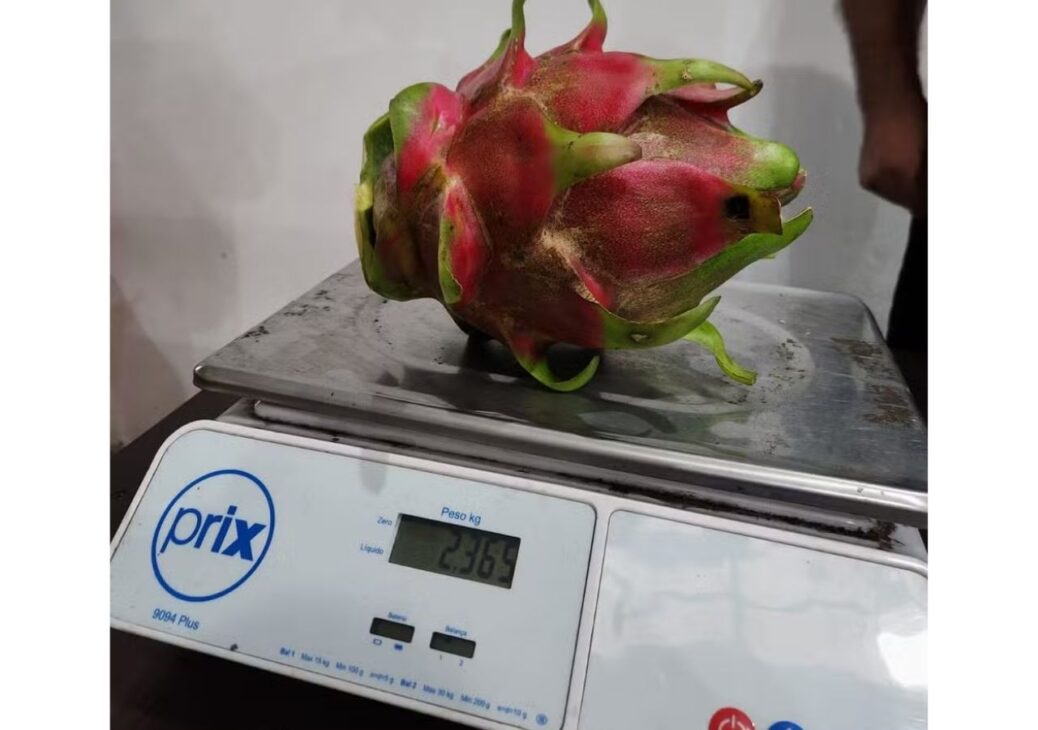
On May 7, 2024, an unusual fruit caught attention in the countryside of Jacinto Machado, in the south of Santa Catarina. Domingos Casagrande, a rural producer from the region, harvested a giant pitaya weighing an impressive 2.3 kilograms.
The cultivation, done with dedication and careful techniques, surprised the farmer, who now intends to start a new experiment with the fruit’s seeds.
The case attracts curiosity not only because of the unusual size of the fruit but also due to the interest in understanding how it can reproduce.
-
The water that almost everyone throws away after cooking potatoes carries nutrients released during the preparation and can be reused to help in the development of plants when used correctly at the base of gardens and pots, at no additional cost and without changing the routine.

-
The sea water temperature rose from 28 to 34 degrees in Santa Catarina and killed up to 90% of the oysters: producers who planted over 1 million seeds lost practically everything and say that if it happens again, production is doomed to end.

-
An Indian tree that grows in the Brazilian Northeast produces an oil capable of acting against more than 200 species of pests and interrupting the insect cycle, gaining ground as a natural alternative in soybean, cotton, and vegetable crops.

-
The rise in oil prices in the Middle East is already affecting Brazilian sugar: mills in the Central-South are seeing their margins shrink just as ethanol gains strength.


The fruit was harvested from Domingos’ own orchard, after months of care for the plant. The producer, however, does not intend to sell it. He wants to use it for new plantings and observe what might emerge in the coming years.
Giant Pitaya Grew From Promising Seedling
The story of the giant pitaya began simply. The sowing was done in a bucket, but one seedling caught attention due to its sturdier stem.
Noticing the vigor of the plant, Domingos transferred it to the field. It was there that, years later, the giant pitaya developed. According to him, the fruit grew in isolation after the 2024 blooming produced only a single fruit.
“We harvested it with the other fruits from the orchard. It was harvested, and it’s now safely kept at home,” said the farmer, still surprised by the size of the harvest.
Reinforcement Technique Ensured the Support of the Fruit
With the unusual weight of the pitaya, Domingos had to take extra measures to ensure the plant was not damaged.
He reinforced the stem where the fruit was forming, which was essential to support the healthy growth of the giant fruit.
About 15 days after pollination, the farmer noticed that the fruit would be unusually large.
Seeds Will Be Used for New Experience
In light of this unusual achievement, Domingos now wishes to deepen his study of the fruit. The plan is to allow the giant pitaya to fully ripen before extracting its seeds.
“We will extract its seeds because I want to do another experiment with it to see what it will produce, what fruit it will produce in four years,” explained the producer.
According to him, a pitaya seed takes about four years to bear fruit. Therefore, patience will be necessary to find out if the experiment can yield other fruits as surprising as this one.
Giant Pitaya May Inspire New Cultivations
This was not the first time the plant produced unusual fruits. In 2023, the same plant had already surprised with larger-than-normal fruits.
Now, with the new specimen weighing 2.3 kg, Domingos seeks to understand if there is a genetic pattern or if environmental factors influenced the growth of the fruit. He states that he will repeat the process he did four years ago when he started cultivating the original seedling.
“Just as I did with this plant four years ago, I will conduct an experiment again in four years,” concluded the farmer.
Growing Curiosity About the Giant Pitaya
The story of the giant pitaya from Jacinto Machado shows how family farming can surprise and contribute to the knowledge of cultivating exotic fruits.
The case can serve as inspiration for other rural producers seeking differentiated results with simple techniques and careful observation of nature.
The dragon fruit, as it is also known, now gains another curious chapter in the history of Brazilian agriculture.
With information from g1.










Seja o primeiro a reagir!