





 Portuguese
  English
  Spanish
  6 min of reading
  0 comments



Pix will gain a version for standardized installment payments that should reach 60 million Brazilians without credit cards, in addition to operating between countries definitively and allowing offline payment by proximity while Trump criticizes the system and Lula guarantees that nothing will change
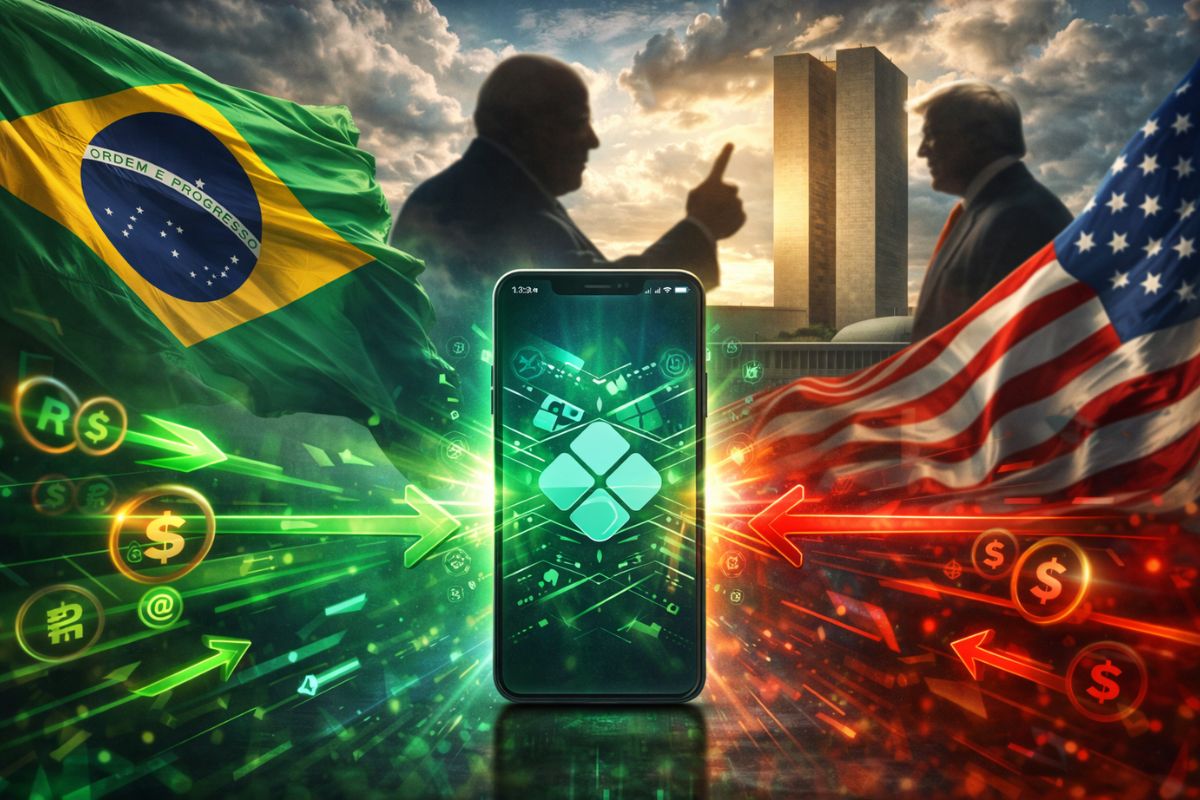
Pix is about to stop being just a transfer tool to become a complete financial platform. According to the portal of G1, the Central Bank revealed the news that is under development for the coming months and years, including installment pix with standardized rules, definitive international pix between countries, and proximity payment that works even without an internet connection. And all of this is happening at a time when the Brazilian system has become the target of criticism from the President of the United States, Donald Trump, who argues that pix harms giants like Visa and Mastercard.
The magnitude of what is at stake becomes clear when looking at the numbers. In 2025, pix recorded R$ 35.36 trillion in transfers, an absolute record. The director of the Central Bank, Renato Gomes, stated that the country is close to having the entire adult population using the tool. Pix is no longer a novelty; it is infrastructure. And what the Central Bank is preparing now is the next layer of this infrastructure.
What is installment pix and why can it change the lives of 60 million Brazilians
Installment pix already exists informally; several financial institutions offer credit lines that allow payments made through the system to be divided. But each bank has its own rules, fees, and conditions.
-
Mercado Livre has just started selling medications with delivery in up to three hours to your door, and this move could completely change the way Brazilians buy medicines on a daily basis.

-
In Dubai, rising tensions from the war in the Middle East are causing super-rich individuals to leave the Gulf and direct their fortunes to a new financial refuge in Asia.

-
“No one will make us change the Pix,” says Lula after the US report.

-
Lula responds directly to Trump and says that Pix is from Brazil and will not change under pressure from anyone, after a report from the United States pointed out the Brazilian payment system as an American trade barrier.

What the Central Bank wants to do is standardize this format, creating unique rules that apply to all institutions. When this happens, the trend is that competition among banks will increase and interest rates will fall.
The social impact is enormous. Today, about 60 million Brazilians do not have access to credit cards.
Standardized installment pix can become a real alternative for this population, offering the possibility of buying on credit without relying on a card that the banking system has never offered them. The Central Bank has not yet set a deadline for standardization, but the topic is under active discussion and is part of the evolutionary agenda of pix.
How true international pix will work
Those who have traveled to Argentina, Miami, Orlando, or Lisbon may have already used pix to pay at some establishments. But the Central Bank considers this current model as “partial”; it only works in specific locations that have adopted the system, without real integration between countries.
The definitive international pix, expected for 2027, aims to interconnect instant payment systems from different nations, allowing cross-border transfers with the same speed as a transfer between two CPF numbers in Brazil.
In practice, this means that in the future you could send money to someone in another country or pay for a product or service abroad using pix directly, without expensive currency exchange intermediaries.
The implementation depends on resources available at the Central Bank and bilateral agreements with other countries, but the direction is set. Pix was born as a domestic tool; the plan is to make it a system with global reach.
Pix by proximity without internet and the offline model being developed
Pix by proximity already exists for those using Android; the experience is similar to tapping a card on a machine. But the next evolution is even more ambitious: the Central Bank is working on an offline model that allows payment by proximity even without being connected to Wi-Fi or a mobile network.
This type of functionality makes a difference in rural areas, at crowded events where the network becomes congested, or in any situation where the phone has no signal.
The technical details of how this will work in practice are still being planned. But the idea of a pix that does not depend on the internet to function represents a paradigm shift for the tool, which since its creation in 2020 has always required real-time connection to process transactions.
If implemented, the offline model could further expand the system’s reach in regions of Brazil where internet coverage is still poor.
The novelties of pix arriving as early as 2026
Before international pix and the offline model, other changes are expected to happen this year. Hybrid billing, for example, will become mandatory starting in November, with the pix QR code also offering the option of payment by boleto.
This means that those receiving a payment request will have two ways to pay in a single document: pix or boleto, simplifying life for both the payer and the payee.
Another novelty is the duplicate via pix. This functionality will allow the payment of commercial credit titles directly through the system, with information updated in real-time.
For small and medium-sized entrepreneurs, this facilitates the anticipation of receivables and reduces operational costs. Pix will also be adapted to the new tax system: starting in 2027, with the consumption reform, the CBS (federal tax) will be paid automatically at the time of purchase when the payment is electronic.
Pix in guarantee can work as a payroll loan for freelancers
Another forecast for 2027 is pix in guarantee, a model that can function as a type of payroll loan for those without a formal job.
The idea is that self-employed workers and private sector professionals can offer their future pix receivables as collateral for bank loans, that is, the transfers they will receive through the system in the coming months.
In the logic of credit, the better the collateral provided, the lower the interest charged. If a service provider can prove what they regularly receive via pix, they could use that flow as collateral to obtain credit at lower rates.
For millions of Brazilians who work for themselves and currently pay exorbitant interest rates due to a lack of formal guarantees, pix in guarantee could represent access to cheaper credit for the first time.
The numbers that explain why pix became Trump’s target
The growth of pix in the last five years explains both the excitement of the Central Bank and the confidence of the American government. In 2021, the first full year of operation, the system moved R$ 5.2 trillion.
In 2022, it jumped to R$ 10.89 trillion. In 2023, R$ 17.12 trillion. In 2024, R$ 26.46 trillion. And in 2025, pix set a record with R$ 35.36 trillion in transfers, a growth of almost seven times in four years.
This advance occurred on territory that previously reached brands like Visa and Mastercard. Payments that went through business card machines generating fees for them migrated to pix, which is free for individuals.
Trump criticized the system arguing that it harmed American credit card giants, and President Lula reacted by saying that no one will make the Brazilian government change pix.
The dispute gained context after the USTR included the Brazilian system in a report on trade barriers, but the Brazilian government treats the issue as a matter of technological sovereignty.
How pix evolved from simple transfer to financial ecosystem
When it was launched in November 2020, pix did one thing: transfer money from one account to another in seconds. Five years later, the tool has accumulated a list of functionalities that transformed it into a complete ecosystem.
Pix Billing replaced the boleto in many commercial transactions. Pix Withdrawal and Pix Change turned stores into withdrawal points, decentralizing access to physical cash.
Scheduled pix brought predictability to periodic payments. Automatic pix democratized automatic subsidies, which were previously concentrated in large institutions. And the integration with Open Finance expanded the reach of digital transactions, allowing payments to be initiated from different platforms.
Pix has also been responsible for bringing millions of Brazilians into the financial system, people who previously received salaries, withdrew everything in cash, and no longer used their bank accounts.
Which of these pix novelties are you looking forward to the most? The installment, the international, or the offline payment? Let us know in the comments.








Seja o primeiro a reagir!