





 Portuguese
  English
  Spanish
  4 min of reading
  3 comments





The Bill 2567/2011, Approved by the Social Security Commission in 2025, Allows For Recalculation of Retirement After Five Years of New Contributions, Correcting a Distortion That Penalizes Active Retirees.
The Social Security Commission of the Chamber of Deputies approved, in 2025, the Bill 2567/2011, which promises to significantly change the reality for those who have already retired but continued to be active in the labor market. The proposal opens up the possibility to recalculate the value of the retirement after five years of new contributions to the INSS, correcting a historical distortion of Brazilian Social Security.
Today, thousands of retirees remain in the workforce, either out of financial necessity or the desire to stay productive. The problem is that, despite being required to continue contributing to the INSS, these contributions do not increase the value of the already granted benefit in any way. In practice, retirees pay but receive no return. The Bill 2567/2011 seeks to correct this inconsistency.
What Does the Bill 2567/2011 Say
The text approved by the Commission establishes that retirees who return to the labor market may request a new calculation of retirement, provided that:
-
The Chamber opens a debate on driver’s licenses at 16 years old as part of a reform that includes around 270 proposals to change the Brazilian Traffic Code and may redesign rules for licensing, enforcement, and circulation in the country.

-
The new Civil Code could revolutionize marriages in Brazil with “express divorce” and changes that could exclude spouses from inheritance.
-
Banco do Brasil sues famous influencer for million-dollar debt and intensifies debate on delinquency, risks of seizure, and direct impact on Gkay’s credibility.

-
The Senate approves a bill that criminalizes misogyny, hatred, or aversion towards women, and includes the crime in the Racism Law with a penalty of up to 5 years.


- They have contributed to the INSS for at least 60 months (5 years) after the first retirement;
- The request is made through an administrative application, similar to a benefits request;
- The new calculation takes into account the contributions made after the start of retirement, which may result in an increase in the monthly benefit.
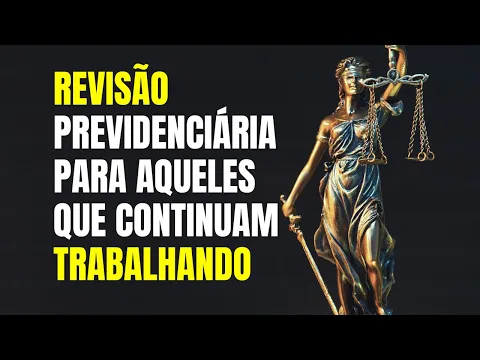

In practice, the project creates a kind of “second chance” in social security, recognizing the effort of those who continue to contribute even after meeting the requirements for retirement.
Why This Change Is Important
According to data from the INSS itself, more than 2.8 million retirees continue to work formally in Brazil. All are required to contribute to Social Security, but with no reflection in the amount of income.
This reality generates criticism from specialists, who point to the situation as a double penalty: the retiree pays but sees no return. The Bill 2567/2011 corrects this imbalance, bringing more justice to a segment of the population that remains active and generates wealth.
Repercussions Among Specialists and Retirees
For specialists in Social Security Law, the approval of the project in the Commission represents a historic advancement. According to lawyers in the field, the measure can be compared to the old desaposentação, which was debated in the Supreme Court but ultimately rejected due to lack of legal provisions.
Now, emerging in the form of law, the right to review the benefit is strengthened and may finally be consolidated.
Retirees who continue in the market see the measure as a recognition of their effort. Many report that they remain active not out of luxury, but because the retirement amount does not cover their monthly expenses.
The Next Steps of the Project
Although already approved by the Social Security Commission of the Chamber, the Bill 2567/2011 still needs to go a long way:
- To be analyzed by other thematic committees of the Chamber;
- To go to the Plenary for voting;
- If approved, to be forwarded to the Federal Senate;
- Finally, to be sanctioned by the Presidency of the Republic to become law.
In other words, the measure is not yet in effect, but the progress in 2025 represents an important victory for those advocating for more justice in the social security system.
Fiscal Impact and Government Concerns
One of the main points of debate is the financial impact of the measure. By allowing millions of retirees to request a recalculation, the government will have to deal with a significant increase in the INSS payroll.

Preliminary studies indicate that, should all retirees who remain active take advantage of the rule, the additional cost may reach billions of reais per year. Therefore, there is pressure for the proposal to be adjusted with transition rules and budget limits.
Nonetheless, proponents of the project emphasize that social justice should prevail over fiscal difficulties, reminding that the retiree would not be gaining anything “for free,” but rather receiving back what they have already contributed.
Social Security Justice: Correcting an Old Distortion
The essence of the discussion lies in social security justice. Today, the retiree who continues to work contributes to a system from which they can no longer benefit. The Bill 2567/2011 seeks to change this logic, allowing these contributions to be recognized and bring practical effects.
It is a historical correction, especially in a country where the average retirement benefit from the INSS hovers around R$ 1,900.00, an amount insufficient for many families.
The Beginning of a New Era for Active Retirees
The Bill 2567/2011 has not yet become law, but its approval in the Social Security Commission already represents a paradigm shift. For the first time in years, Congress officially recognizes that retirees who continue contributing to the INSS deserve a fair return.
If definitively approved, the project may herald a new era in social security, where post-retirement contributions will no longer be seen as a useless burden, but as a legitimate investment to improve the worker’s income.
At its core, it sends a clear message: in Brazil of tomorrow, every contribution made by the worker should count — even after retirement.










Bom dia ! Finalmente uma esperança para os aposentados que continuam trabalhando e recolhendo o inss !
Inacreditável nem sabermos o que fazem com esse recolhimento que vai totalmente de graça para o INSS e nada de retorno pro aposentado
me coloco dentro desse grupo, aposentei em 2011 e continuo trabalhando e contribuindo pelo teto até os dias de hoje, minha aposentadoria deve corresponder a 50% do teto….e já estou com 68 anos completos….
Bom dia estou muito feliz com essa notícia nada mais justo me aposentei em 2009 e até hoje estou contribuindo com o inss, perdi muito co. O fator previdenciário isso é uma injustiça pois contribuo com o inss mais de 44 anos comei em 1979 e nunca parei de contribuir isso será justo com essw nova contabilidade pois até agora só paguei e nunca recebi nada em troca, tomara que nao demore muito para nos ter esse direito,porque se demorar muito não conseguirmos nem aproveitar um grande abraço