





 Portuguese
  English
  Spanish
  4 min of reading
  0 comments



Bill 2677/2025 Proposes to Establish Mediation in Labor Relations, Allowing Conflicts Between Employers and Employees to Be Resolved Without Judicial Action, Speeding Up Agreements and Reducing Costs.
A new project under discussion in the Chamber of Deputies promises to profoundly change the way employers and employees resolve their labor disputes in Brazil. This is Bill 2677/2025, which creates mediation in labor relations, an alternative mechanism to solve misunderstandings without the need for litigation in the Labor Court.
In practice, the proposal would allow companies and workers to make direct agreements with the help of a mediator, without a judge, without a hearing, and without the costs of a legal action. The idea is for mediation to serve as a preliminary step to the process, reducing the number of actions and encouraging quick and consensual solutions.
What Bill 2677/2025 Proposes
Presented in June 2025, Bill No. 2677/2025 seeks to include a new chapter dedicated to extrajudicial mediation in the Consolidation of Labor Laws (CLT).
-
The end of the 6×1 shift becomes a hot topic in Congress! Lula makes the decision, confirms the submission of a project to eliminate the 6×1 shift and reduce the workweek to 40 hours, with two days off and maintenance of salaries.

-
In Spain, a law has created paid menstrual leave funded by the state, turning debilitating cramps into legal leave and placing the country among the most advanced in Europe in terms of women’s health rights.

-
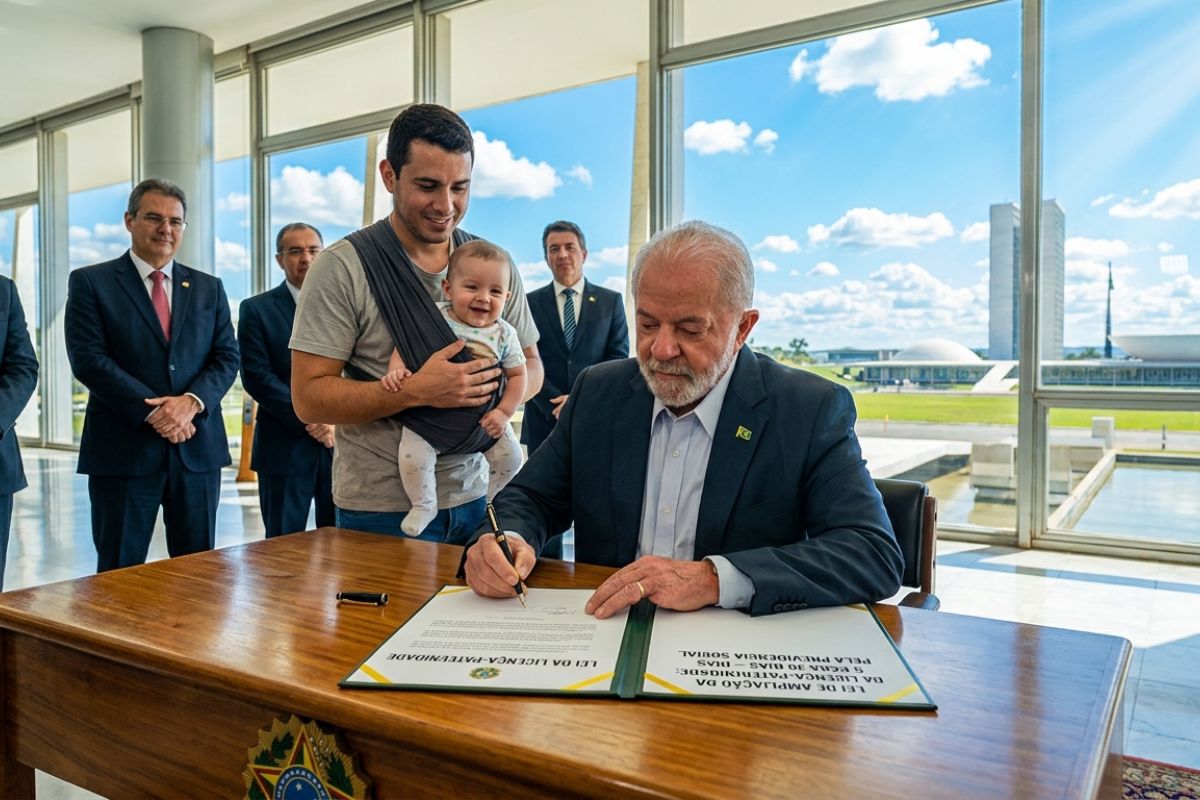
Government enacts new law: paternity leave increases from 5 to 20 days with gradual increases until 2029, and Social Security pays the paternity salary; companies no longer bear the absence cost, estimated at R$ 5.4 billion.
-
End of the 1-hour lunch break in the CLT? Current labor law maintains the break, allows for negotiated reductions, and defines rules for working hours and home office in Brazil.

According to the text, conflicts between employers and employees — whether individual or collective — could be resolved voluntarily, with the assistance of a certified mediator. This mediator would act as a neutral party, listening to both sides and helping to construct an agreement that has legal validity. The bill provides that:
- The parties can freely choose the mediator;
- The agreement reached between the parties will have the force of an extrajudicial enforcement title (meaning it counts as a judgment);
- Mediation can occur before or after the termination of the employment contract;
- The participation of lawyers is optional, provided that the worker fully understands the terms of the agreement.


The Objective: Reduce Processes and Accelerate Solutions
According to the author of the proposal, Deputy Paulo Magalhães (PSD-BA), the idea is to “unclog the Labor Court” and encourage peaceful conflict resolution, avoiding lengthy processes and unnecessary costs.
Currently, Brazil has over 1.5 million active labor lawsuits, according to data from the Superior Council of the Labor Court (CSJT). A large portion of these suits involve simple issues, such as overtime, vacation pay, and termination payments — topics that, in the view of the legislator, could be resolved through dialogue and mediation.
The proposal also aims to strengthen the culture of dialogue in labor relations, something that already exists in countries like Portugal, France, and Canada, where mediation has been successfully used for decades.
How Mediation Would Work in Practice
If the project is approved, a worker who has a problem with the company — for example, not receiving termination payments or disagreeing with overtime amounts — can seek a registered mediator with government-recognized bodies.
This mediator will listen to both parties and attempt to build an equitable solution, respecting the law and the rights provided in the CLT. If a consensus is reached, the agreement will be documented, signed, and registered, thus acquiring legal validity as if it were a judicial decision.
In more complex situations, the case may still proceed to the Labor Court, but with the record of the mediation attempt, which can expedite the judgment.
Advantages and Concerns
Among the advantages are low cost, speed, and reduction of the burden on the courts, which currently face long queues for hearings and appeals. For the worker, the process would be simpler and more accessible, without needing a lawyer in less complex cases.
However, the project also raises concerns among unions and legal experts, who fear that companies may use mediation to pressure employees to accept agreements less favorable than what the court would grant. Therefore, the text stipulates that all mediation must respect the minimum rights set out in the CLT, under penalty of nullity.
Processing and Next Steps
Bill 2677/2025 is still at the initial stage of processing in the Chamber of Deputies. First, it will be analyzed by the Committee on Labor, Administration and Public Service (CTASP) and then by the Finance and Taxation and Constitution and Justice Committees (CCJ).
If approved, the text will proceed to the Federal Senate and then to presidential sanction. The expectation is that the proposal will be on the agenda by the first half of 2026, according to the Chamber’s portal.
A Change That Could Transform Labor Justice
With the rise of flexible relations and remote work, the number of labor disputes is likely to increase. Mediation emerges as an attempt to modernize the system and reduce judicialization, but it also requires oversight and transparency, so that workers are not disadvantaged.
If Bill 2677/2025 is approved, Brazil will have a new way to resolve labor disputes, simpler, quicker, and at the same time more controversial. The challenge will be to ensure that the search for efficiency does not undermine the rights secured by the CLT over nearly a century.










Seja o primeiro a reagir!