





 Portuguese
  English
  Spanish
  5 min of reading
  0 comments


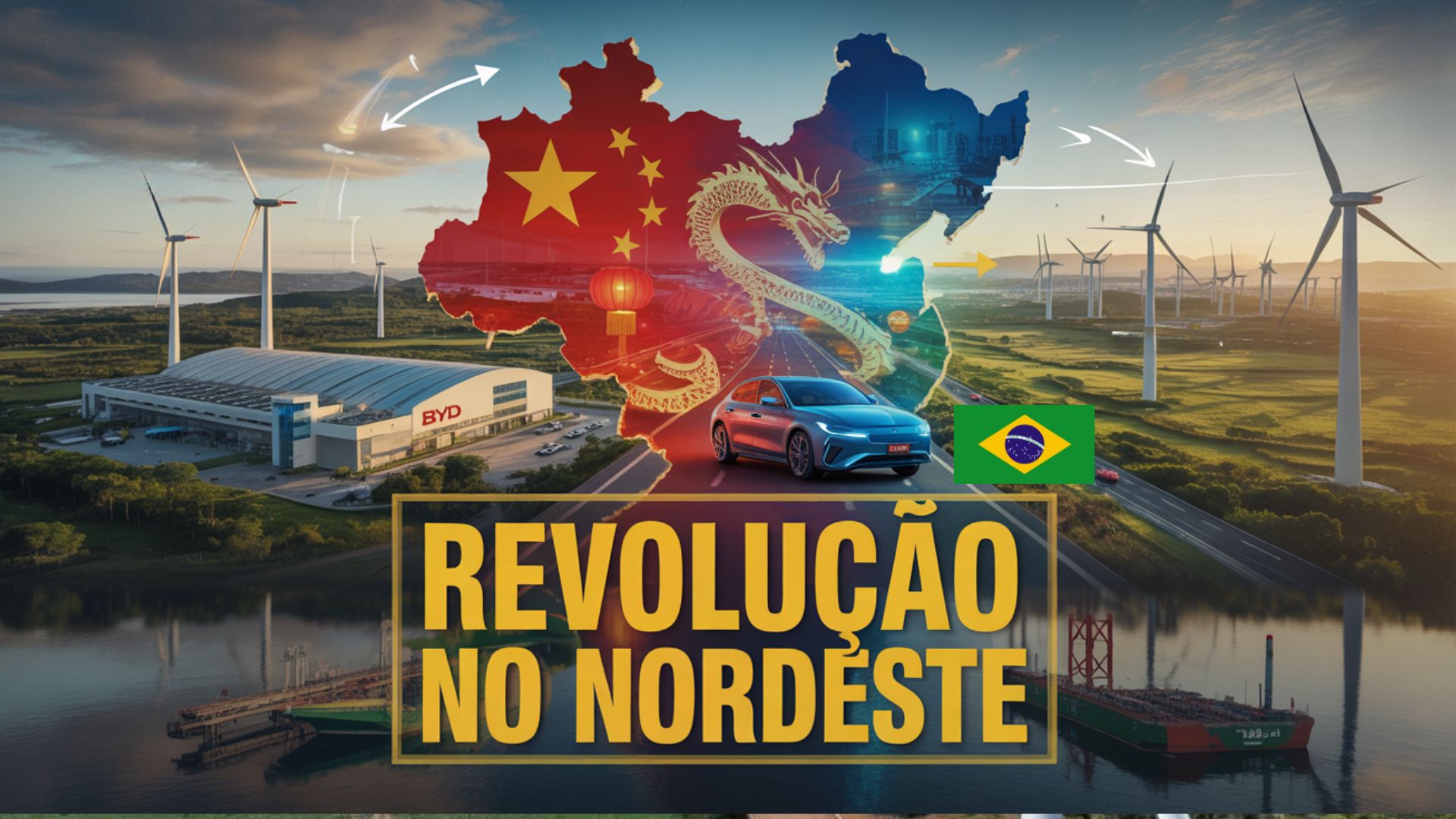
Chinese Expansion Brings New Industrial Investments, Renewable Energies, and Logistics Megaprojects to the Northeast, With Potential to Reverse Economic Trends and Drive Reindustrialization of Brazil in the Coming Decades.
The inauguration of the Chinese automaker BYD’s factory in Camaçari, Bahia, marks a new chapter for the Brazilian industrial sector and has the potential to significantly alter the country’s economic landscape in the coming years.
The topic was extensively discussed by Alvaro Borba, in a video published on the Arvro channel on YouTube, reflecting not only the resumption of industrial activity in the region but also the advancement of Chinese influence in the national economy.
The Camaçari factory, which for years housed operations of the American Ford, underwent a period of inactivity after the automaker decided to close its activities in the municipality in 2021.
-
A new Brazilian shopping center worth R$ 400 million will be built in an area equivalent to more than 4 football fields, featuring 90 stores, 5 cinemas, a supermarket, a college, and parking for 1,700 cars, potentially generating 3,000 jobs.

-
Larger than entire cities in Brazil: BYD is building a 4.6 km² complex in Bahia with a capacity for 600,000 vehicles per year, but the discovery of 163 workers in conditions analogous to slavery has shaken the entire project.

-
With an investment of R$ 612 million, a capacity to process 1.2 million liters of milk per day, Piracanjuba inaugurates a mega cheese factory that increases national production, reduces dependence on imports, and repositions Brazil on the global dairy map.

-
Brazilian city gains industrial hub for 85 companies that is equivalent to 55 football fields.


The closure resulted in the loss of approximately 60 thousand direct and indirect jobs, as well as the risk of waste of the entire infrastructure installed in the region by the State of Bahia to support automotive production.
According to Alvaro Borba, the arrival of BYD represents an investment over R$ 5 billion and occurs in a context of profound transformations in the global automotive industry.
Global Automotive Industry and Chinese Advance
The replacement of a traditional combustion vehicle manufacturer with a company focused on producing electric cars reflects a global trend.
As highlighted by Alvaro Borba, China now accounts for about 76% of the electric vehicles sold globally, demonstrating the rise of Chinese companies in this sector.
The choice of Bahia to install the factory was not random and is part of a broader strategy of Chinese expansion in Latin America.
The recent move by BYD, according to the journalist’s report, was preceded by the inauguration of the Shankai megaport in Peru, currently the largest in South America.
The project, completed in less than nine months before the new Brazilian factory, is integrated into large-scale logistical projects.
According to Alvaro Borba, Brazil sent a delegation to China to discuss the construction of a railway connecting the Shankai port in Peru to the port of Ilhéus in Bahia, just 400 km from Camaçari.

Renewable Energy in the Northeast and Chinese Investments
The Chinese presence in the Brazilian Northeast goes beyond the automotive sector.
Investments started in the energy generation sector, mainly wind energy.
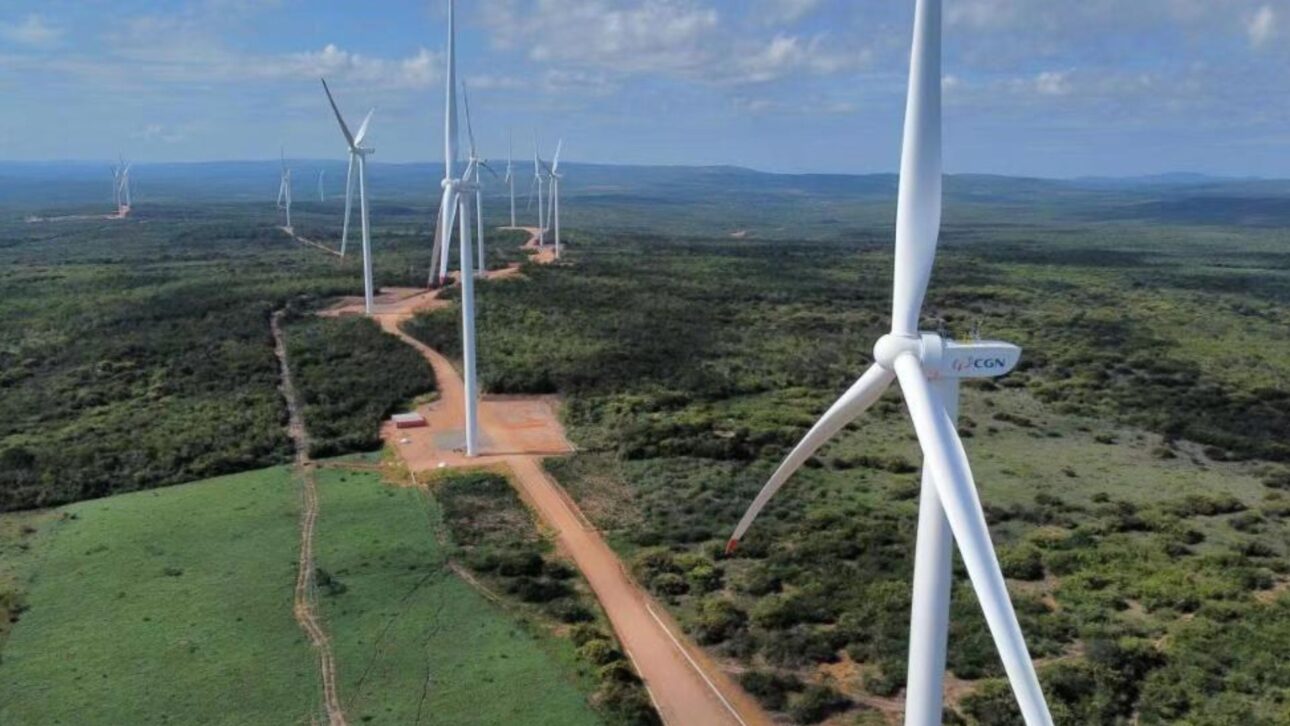
According to Alvaro Borba, the state-owned China General Nuclear Power Group (CGN) currently operates the largest wind farm in the world in Piauí, with 83 towers distributed across ten parks.
The expansion in 2021 received an investment of R$ 444 million, further increasing the capacity for clean energy production in the region.
More recently, the Chinese manufacturer Goldwind took over an old General Electric factory in Camaçari and began producing wind turbines on-site, consolidating Bahia as a hub for sustainable energy.
As revealed by Alvaro Borba, this unit can produce up to 150 turbines per year, generating approximately 100 direct jobs and another 5,000 indirect ones.
The investment exceeds R$ 100 million and is the company’s first outside Chinese territory.
Technological Hubs and Demand for Clean Energy
The abundance of renewable energy in the Northeast attracts technology companies interested in operating data centers in Brazil.
According to Alvaro Borba, the Chinese giant ByteDance, owner of TikTok, plans to invest in a data center in the region, leveraging the wind potential of the northeastern coast, especially through negotiations with Casa dos Ventos, a Brazilian renewable energy generation company.
This move could be decisive in diversifying the northeastern economy, as emphasized by the governor of Bahia during the inauguration of BYD, mentioning that the goal is to bring energy-intensive industries closer to clean energy-producing areas.
Borba highlighted that, among these industries, the technology sector stands out given the high energy consumption of data centers and artificial intelligence systems.
Risks, Reindustrialization, and Regulatory Challenges
Chinese investments are seen as an opportunity to reverse the deindustrialization process observed in Brazil since the 1980s.
According to Alvaro Borba, the participation of industry in Brazil’s Gross Domestic Product (GDP) has drastically fallen, especially after the commodities boom of iron ore and soybeans.
He cites, for example, statements from President Luiz Inácio Lula da Silva, in 2010, about the appreciation of commodities at the expense of manufactured goods production.
However, the arrival of foreign capital, especially from China, imposes challenges in terms of regulation and oversight.
As reported by Alvaro Borba, Brazil still lacks clear rules on the minimum distance between wind turbines and residences, which has already led to complaints from local communities, such as the quilombo of Talhado in Paraíba, and families living just a few meters from turbines.
Moreover, recent episodes such as the rescue of 163 Chinese workers in conditions analogous to slavery, outsourced by a company in the construction of the BYD factory, draw attention to the need for strict oversight of working conditions.


Logistics, Continental Integration, and Future of Infrastructure
The proposal to build a railway connecting Ilhéus to the Shankai megaport could transform Brazilian logistics, facilitating the flow of national production to Asian markets and enhancing the reindustrialization of the country.
According to information gathered by Alvaro Borba, it is expected that new details about the project will be presented during the BRICS summit happening this week.
The journalist himself points out that this is a historic chance for Brazil to regain prominence in the industry, but warns of the need to ensure that foreign investments respect national laws, promote quality jobs, and avoid environmental and social violations.
He also recalls that solar technology, now widely produced in China, originated from Brazilian research, highlighting the importance of the country not losing new opportunities for technological development.
Do you believe that the Chinese presence can indeed promote the reindustrialization of Brazil, or are there risks of the country losing control over its development once again?







Seja o primeiro a reagir!