





 Portuguese
  English
  Spanish
  6 min of reading
  8 comments


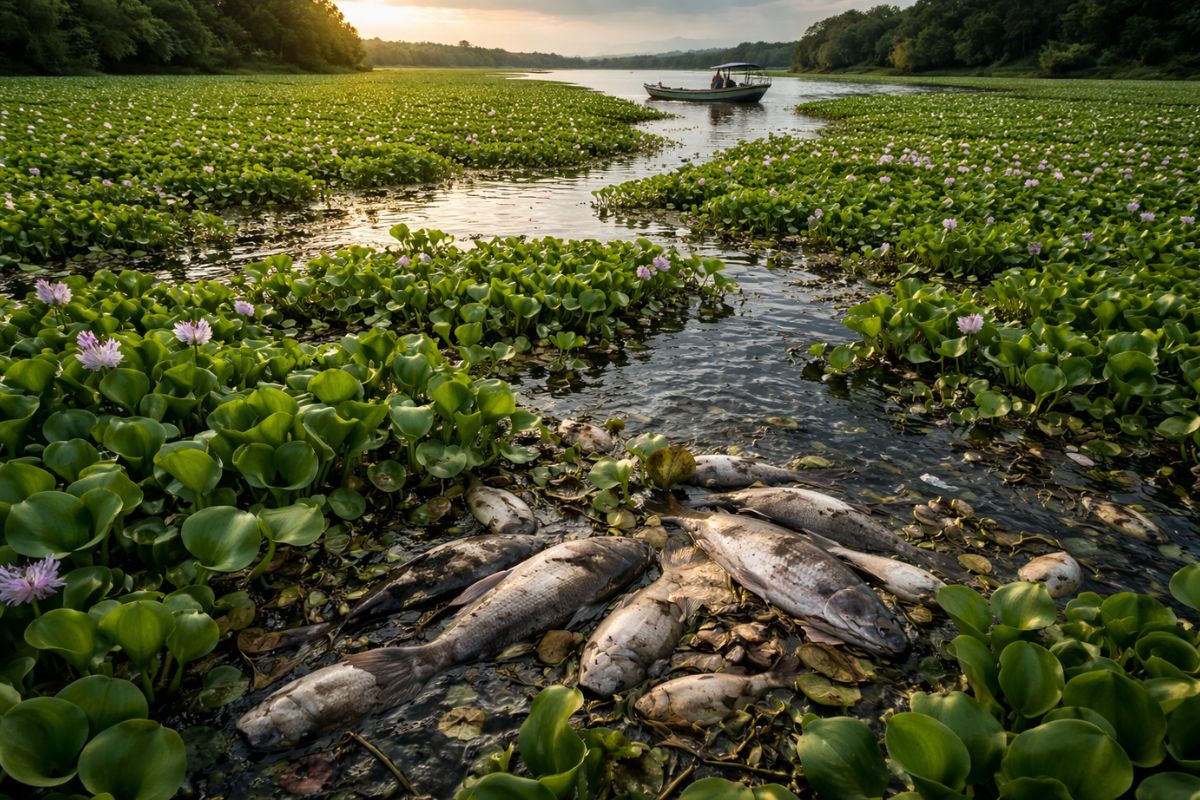


Common in the Basins of the Amazon and the Rio de la Plata, the invasive aquatic plant Water Hyacinth has spread globally and forms dense mats that block light passage and oxygenation of the water. In Lake Victoria, it exterminated tilapias. Now, scientists are trying to convert biomass into energy and sustainable income today.
The invasive aquatic plant Water Hyacinth has become synonymous with a problem that starts as a “green carpet” and can end in aquatic life collapse. As it spreads across lakes and rivers, it creates a dense layer on the surface that alters the functioning of the ecosystem and directly pressures fish, invertebrates, and the entire food chain.
What is more provocative is that the same invasive aquatic plant that suffocates environments and generates billion-dollar losses is now at the center of a turnaround: scientists are trying to transform the aquatic plague into useful biomass, with potential to become energy and sustainable wealth, instead of just following as an environmental and economic cost.
Water Hyacinth, the Invasive Aquatic Plant That Conquered the World

The Water Hyacinth, scientifically named Eichhornia crassipes, is described as common in the South American basins of the Amazon and the Rio de la Plata. Despite this origin associated with freshwater environments in South America, it has become the most widely spread invasive species in the world, according to a report from the Intergovernmental Platform on Biodiversity and Ecosystem Services, known as Ipbes, linked to the United Nations.
-
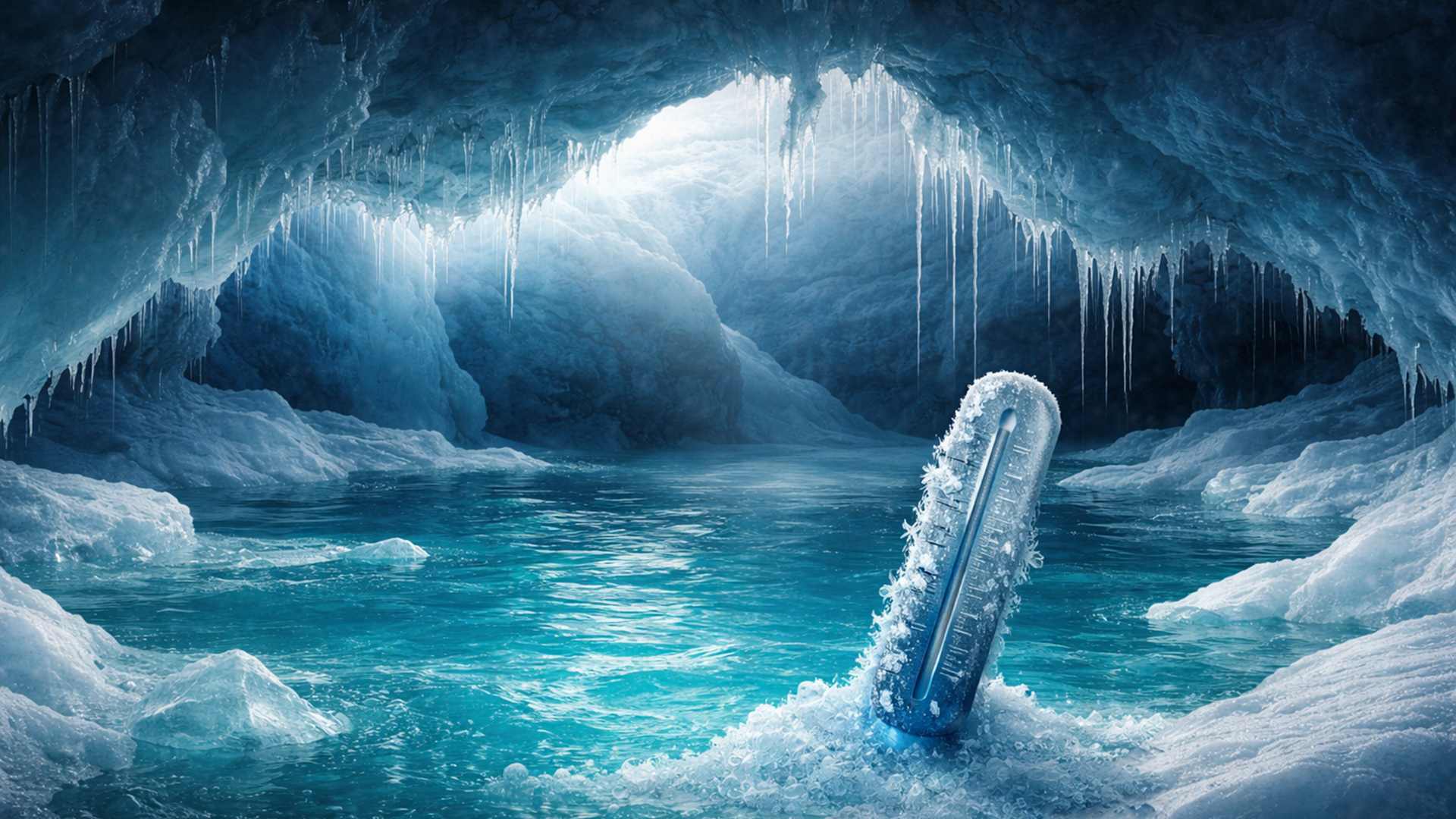
The coldest seawater ever recorded in Earth’s history was hidden under extreme ice 717 million years ago and reached an impressive -15°C.
-
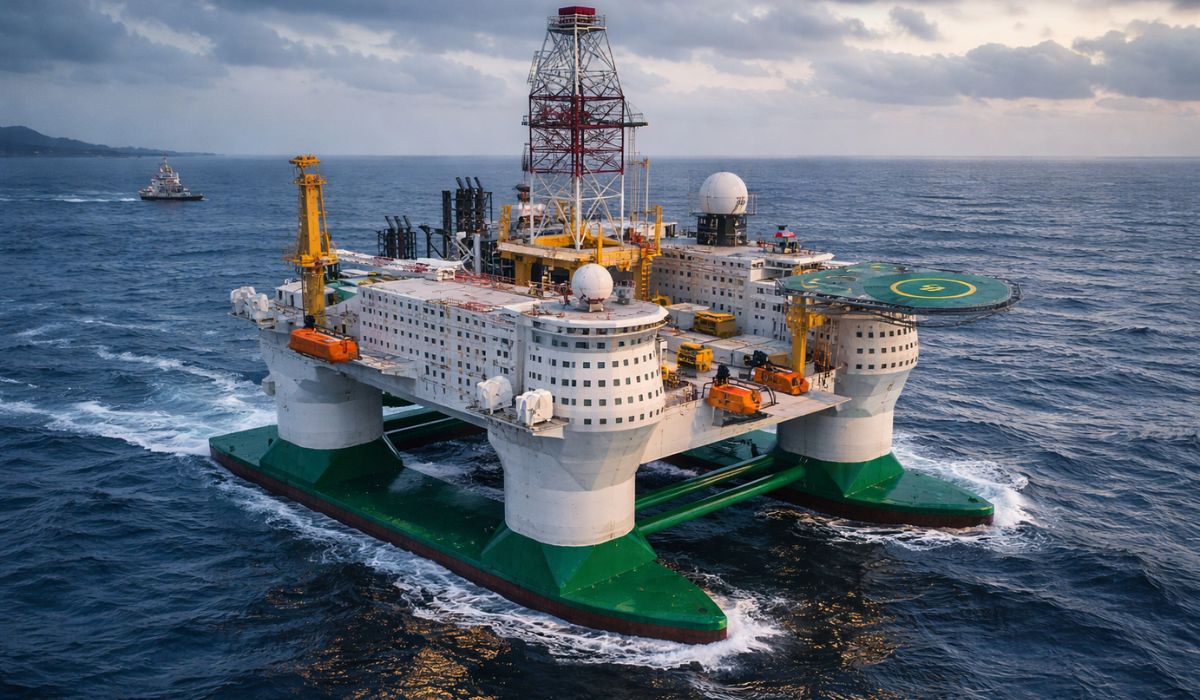
China has launched the world’s first floating artificial island, a scientific structure designed to face open seas, test equipment weighing hundreds of tons, and reach depths of 10,000 meters.
-
China accelerates global science and may surpass the United States in 2 years with increased public investment, continuous growth, and direct impact on the global technological competition.

-
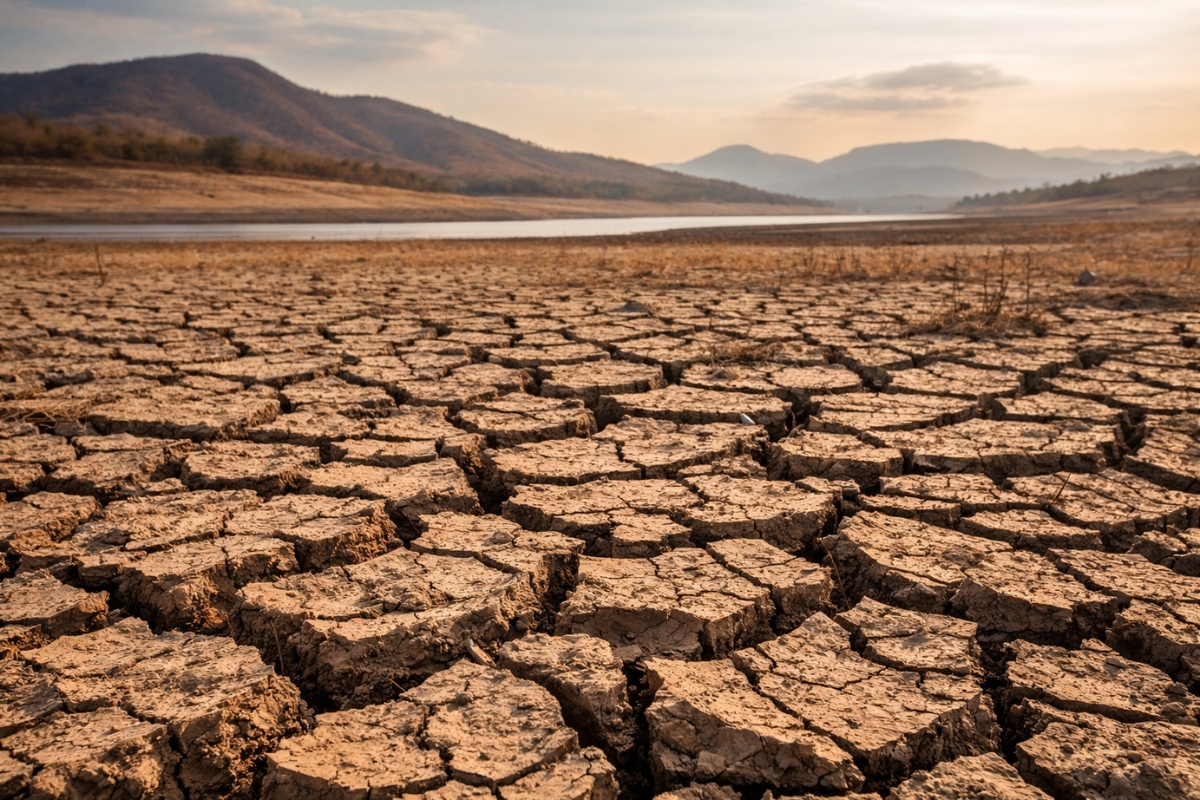
Scientific studies indicate that drought may be strengthening a much greater silent threat: more resistant superbugs.

This detail is crucial because it shows the magnitude of the phenomenon: it is not just an “annoying” plant confined to one location but an invader recognized as global. When a species reaches this level of spread, the impact ceases to be localized and becomes systemic, affecting biodiversity, the economy, and how communities use and depend on water.
The Mechanism of Suffocation: Light Blocked and Oxygen Declining

The central problem of Water Hyacinth lies in how it occupies the surface. By forming extensive vegetative mats, the plant blocks the passage of light and hampers oxygenation of the water. These two effects, combined, alter the basic conditions for survival in the aquatic environment.
Light and oxygen are the foundation of a lake or river’s balance. When light stops penetrating, there is an impact on the functioning of the ecosystem. When oxygenation declines, stress on aquatic organisms increases, especially on fish. The result can be water that is “alive” on the outside but weakened on the inside, with reflections that first appear in wildlife and then in human activities that depend on it.
The Case of Lake Victoria and the Collapse of Tilapias

The most dramatic example cited is that of Lake Victoria, in Eastern Africa. There, by blocking light and oxygenation of the water, Water Hyacinth exterminated tilapia populations, described as an important fishing resource.
This point brings the discussion into practical terms. When an important fishing resource is affected, the impact is not restricted to the natural environment. It reaches fishing, supply, income, and the daily routine of communities that depend on what the lake offers. In this context, Water Hyacinth is not just a plant. It becomes a factor that changes the fate of an entire system.
The Aquatic Plague Within a Larger Problem: Biological Invasions on a Global Scale

Water Hyacinth appears as the most visible face, but it is part of a much broader picture. The aforementioned report states that human activities have caused the spread of more than 37,000 species of plants, animals, and microorganisms. And there is one more significant fact: these invasive species have played a central role in 60 percent of global extinctions.
This is the kind of number that changes the perspective on the problem. It positions biological invasions as a real driver of biodiversity loss, not just a detail. When a species reaches places it shouldn’t and begins to dominate, it doesn’t just compete for space. It reorganizes ecological relationships, pushes native species out, and can destabilize what seemed stable.
The Cost That Explodes in the Budget: Billion-Dollar Annual Economic Impact
In 2019, the economic impact of invasive species exceeded US$ 423 billion per year, roughly R$ 2 trillion. This cost encompasses direct and indirect damages that arise when ecosystems cease to provide essential services, such as healthy fishing, functional water, and natural balance.
The cost is not abstract. It materializes in fishery collapses, operational losses, expenditures on control and remediation, and economic losses tied to production chains that depend on water, biodiversity, and environmental stability. In this scenario, Water Hyacinth becomes a symbol, but the phenomenon is larger than it.
The Americas Export and Also Import Problems
The material highlights an important contrast. In addition to exporting species, the Americas also suffer from invasions. One cited example is the golden mussel, Limnoperna fortunei, mentioned by biologist Ricardo Pinto Coelho, a retired professor at the Federal University of Minas Gerais and owner of the company RMPC Sustainable Environment, described as the only Brazilian on the Ipbes expert panel.
According to the account, in Brazilian waters these mollusks cause problems for aquaculture and also for the operation of power plants, where they become encrusted in cooling systems. This is an invasion that not only alters nature but also creates technical bottlenecks and operational costs. This reinforces the idea that the impact of invasives can be ecological and, at the same time, industrial.
Another example brought up is the Aedes aegypti mosquito, originally from Africa, associated with the transmission of agents causing dengue, zika, and other diseases. Here, biological invasion does not limit itself to biodiversity. It directly touches on public health.
Why Water Hyacinth Becomes the Target of a Turnaround: Transforming Problem into Useful Biomass
It is at this point that the most ambitious part of the story comes in. Scientists want to transform the aquatic plague into a source of energy and sustainable wealth.
The logic is simple yet challenging: if the invasive aquatic plant accumulates in enormous volumes and incurs costs for removal, its biomass can cease to be mere waste and become a resource.
The shift in mindset is strategic. Instead of treating removal as an effort that ends in disposal, the idea is to create a cycle in which environmental control and economic use go hand in hand.
The biomass of Water Hyacinth, which today blocks light and oxygen, could be redirected for productive use, helping to reduce the financial burden of control and creating an incentive for ongoing action.
Sustainability in Practice: Control Without Romanticizing Invasion
Even with this possibility, the story of Water Hyacinth does not change its nature: it remains an invasive aquatic plant capable of dominating environments and causing damage.
What changes is the chance to transform the fight into something less burdensome and more effective, avoiding that removal is merely an emergency measure.
The promise is twofold. On one side, relieving pressure on lakes and rivers, recovering oxygenation and light. On the other, turning an environmental liability into an asset, with energy and economic value.
And all this connects to the larger backdrop: biological invasions have become a global problem, with gigantic annual costs and a central role in extinctions.
What This Case Reveals About the Future of Water
Water Hyacinth is a complete portrait of the modern dilemma. It begins as a common plant in South American basins, becomes the most widely disseminated invader in the world, suffocates fish by blocking light and oxygen, undermines a fishing resource like tilapia in Lake Victoria, and is viewed as biomass with the potential to generate energy and sustainable wealth.
It is a clash between two realities. The reality of rapid destruction and the reality of human creativity trying to redesign solutions from the problem itself.
In the midst of this are the global impact numbers, the more than 37,000 species spread by human action, the role in 60 percent of extinctions, and the annual economic account that exceeds US$ 423 billion.
Do you think transforming the invasive aquatic plant into a source of energy could be a real solution to control the plague, or does this risk merely “masking” a gigantic problem?








Matéria ****, incorpora RACISMO BIOLÓGICO (Especismo), com planta nativa do Brasi. Em outros continentes pode se tornar exótica invasora, mas aqui é nativa. Se há crescimento sem controle, isso decorre do desequilíbrio ambiental, em geral em função do EXCESSO de NUTRIENTES derivado da poluição. Esta matéria deve ser corrigida. Obrigado
É uma ideia, que poderá amenizar o problema em algumas regiões. Mas, qual o produto que poderá ser adquirido com o beneficiamento dessa planta? O melhor seria se possível, criar uma espécie de herbicida seletivo que eliminasse apenas o aguapé sem prejudicar a água os peixes e tudo o que vive e se reproduzi nela, seria uma forma de eliminar essa praga ou ao menos erradicar grande parte dela.
Águapé é uma planta que depende de grande quantidade de nutrientes para proliferar, ou seja, poluição. Antes de acusar a coitada, seria bom investigar quais as condições atuais das águas em que habitam. Aliás, o aguapé foi espalhado pelo mundo justamente com o objetivo de reduzir a poluição de rios e lagos.