





 Portuguese
  English
  Spanish
  4 min of reading
  0 comments


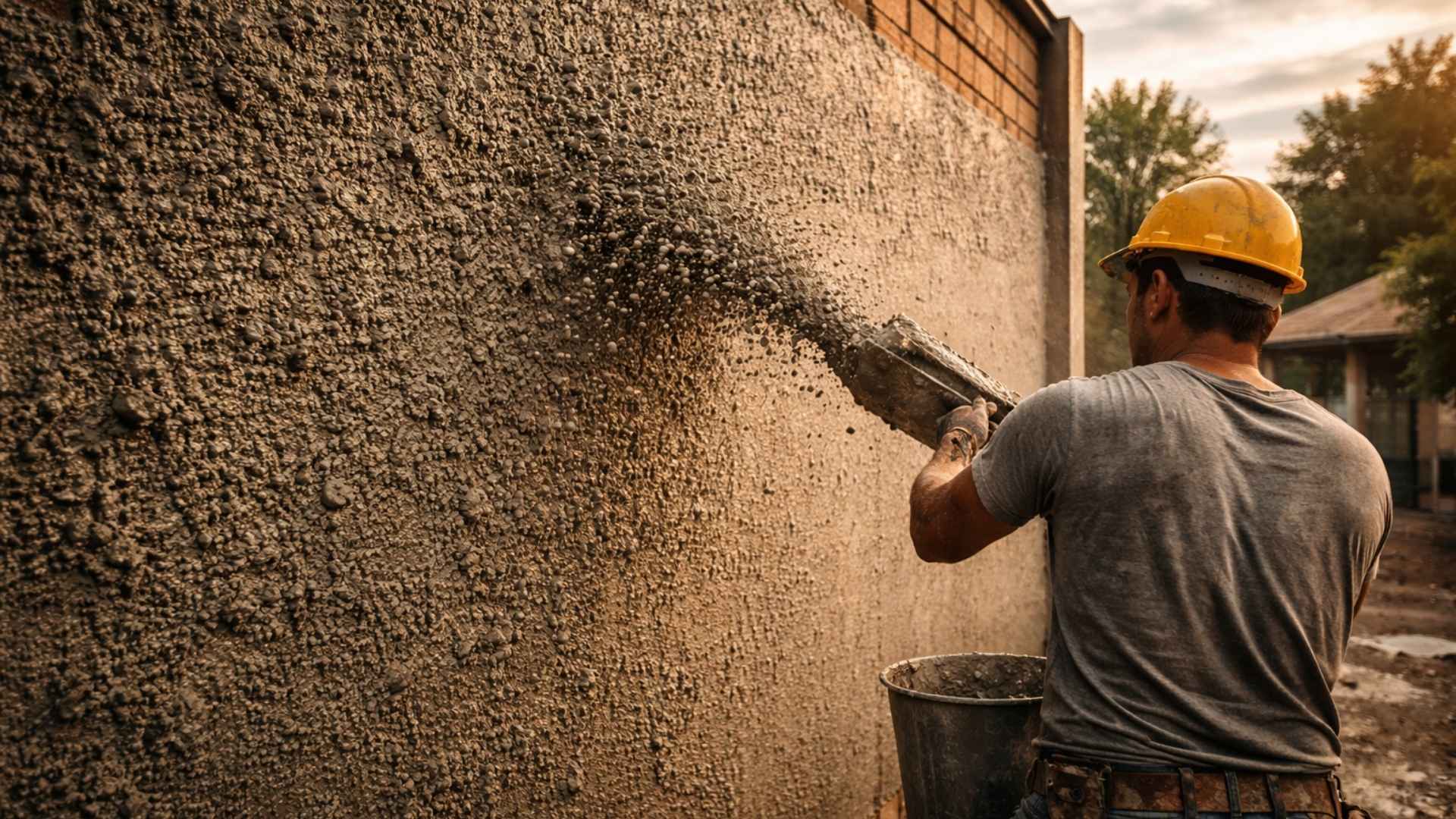
Simple solution for construction gains space as a final finish by uniting protection of masonry, cost reduction, and valued rustic aesthetics in external areas, with correct application, adequate curing, and essential preparation before painting ensuring durability and better performance of materials.
The roughcast has ceased to be seen merely as an intermediate step in the coating and has also come to occupy the place of finish on external walls, especially when the proposal is to keep the masonry protected with a more rustic appearance.
Applied directly over blocks or bricks, it creates a rough surface that improves the adhesion of subsequent layers and, when well executed, can remain apparent without the need for plastering.
In conventional systems, the most well-known technical reference for executing plastered coatings is ABNT NBR 7200, a standard focused on preparing the base, applying, and finishing these layers.
-
With 333 meters and equivalent to a 20-story building: China launches a supertanker that transports 2 million barrels, has 540,000 m² of area, and saves $5 million per year.

-
Brazil becomes a beacon of hope for ending plastic waste by leading a global plan that could prevent millions of tons from entering the oceans.

-
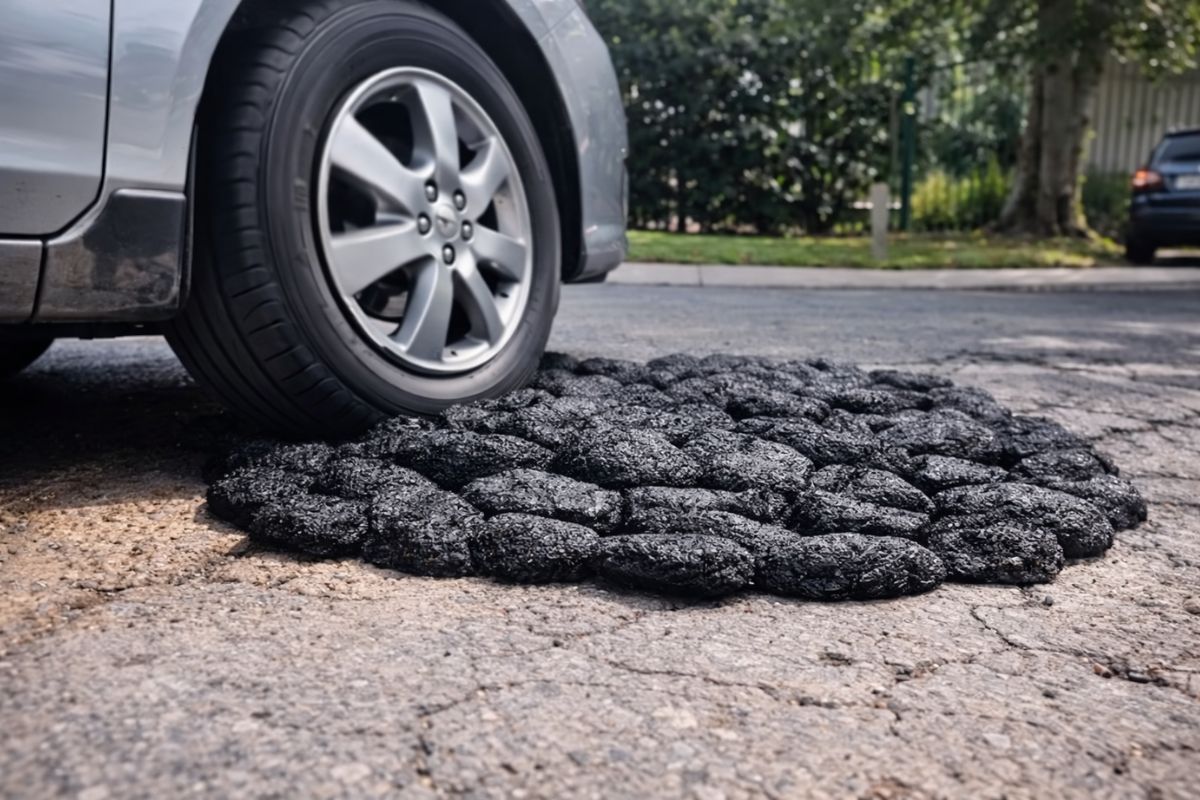
The low-cost solution called PatchPal, invented in South Africa to fix potholes in minutes, does not crack and prevents water from entering, becoming more compact with each car that drives over it, revolutionizing road repairs that governments have forgotten.
-
The 2nd safest city in Brazil is attracting new residents, industries, formal jobs, and also has a giant free park.


In practice, the choice for the roughcast wall serves two fronts at the same time.
On one hand, it reinforces the initial protection of masonry exposed to the elements.
On the other, it eliminates steps when the goal is not to achieve a smooth wall, but rather a uniform, closed texture compatible with external areas.
This result, however, depends less on improvisation and more on correct execution, because the roughcast does not function as an aesthetic solution when there are flaws, application stains, or sections that leave the base excessively apparent.
Roughcast in the wall coating system
In traditional coatings, the roughcast is the first layer of the system.
After it, the plaster usually comes, responsible for regularizing the surface, and finally, the finishing coat, which provides a smoother finish for painting.
When the proposal is to embrace the rustic aspect of the wall, the process can be interrupted at the roughcast, provided that the layer has been distributed evenly and presents good anchoring on the base.
The main function remains technical: to create roughness for adhesion and improve the behavior of the coating.
This application usually works with cement and sand mortar in 1:3 ratio, by volume, a formulation widely adopted in technical references.
It is also common to recommend a thin thickness, in the range of 3 mm to 5 mm, precisely to form the rough layer without turning the roughcast into regularization.
Correct application defines result and durability
The method of applying the mortar directly affects performance and final appearance.
The roughcast can be thrown manually with a trowel or applied with tools that favor splattering and distribution of the mass.
The goal is not to smooth, but to form a firm, homogeneous, and adherent texture.
When the surface has areas that are too smooth or excessively flawed sections, the result compromises both the technical function and the appearance.
On external walls, this finish is often associated with lower cost precisely because it dispenses with subsequent steps.
This does not mean, however, that any application serves as a final solution.
The apparent roughcast needs to come from execution already with a consistent appearance, without marked unevenness and without loose parts.
The more regular the distribution of the material, the more balanced the visual effect tends to be after painting.
Curing and preparation before painting the roughcast
The painting stage requires extra attention on new walls.
Paint and sealer manufacturers for masonry recommend waiting for 28 days of curing on plastered surfaces, mortar, concrete, and cement before applying the finish.
This interval is indicated so that the base stabilizes moisture and reduces the risk of problems such as low adhesion, stains, and excessive product consumption.
In external areas, where the wall is subject to variations of sun and rain, adhering to this deadline tends to make an even greater difference in the final result.
After curing, the most common guidance is to assess the cohesion of the surface.
When there is still dust or loose grains, manufacturers recommend a preparatory primer.
When the wall is firm, the recommendation goes to acrylic sealer, precisely to uniform the absorption.
The product fills pores, improves performance, and helps prevent the texture from “drinking” paint unevenly.
It is at this point that the logic of two coats of sealer comes into play, frequently adopted according to the porosity of the base.
On a very porous roughcast wall, the second application may be necessary to standardize the surface and avoid waste in the finishing paint.
As for the number of coats of paint, it is not fixed and varies according to the product, the chosen color, and the application method.
This difference is important because many painting errors stem from the attempt to save on preparation and later compensate with more paint.
When the sealer does not adequately close the pores, the coverage loses uniformity and consumption tends to increase.
The solution lies in properly preparing the base and following the manufacturer’s specifications.
Economy and aesthetics drive the use of roughcast walls
By dispensing with the finishing coat, the roughcast wall reduces steps and preserves an aesthetic that combines with external areas, side facades, and property boundaries.
The gain is not only in the visual.
The correct execution of the layer, with the appropriate ratio, controlled thickness, and respected curing, is what defines the durability of the finish.
In construction, few solutions depend as much on labor as this one. The material is simple, but the performance shows precisely in the details of preparation, application, and drying.





Seja o primeiro a reagir!