





 Portuguese
  English
  Spanish
  4 min of reading
  0 comments


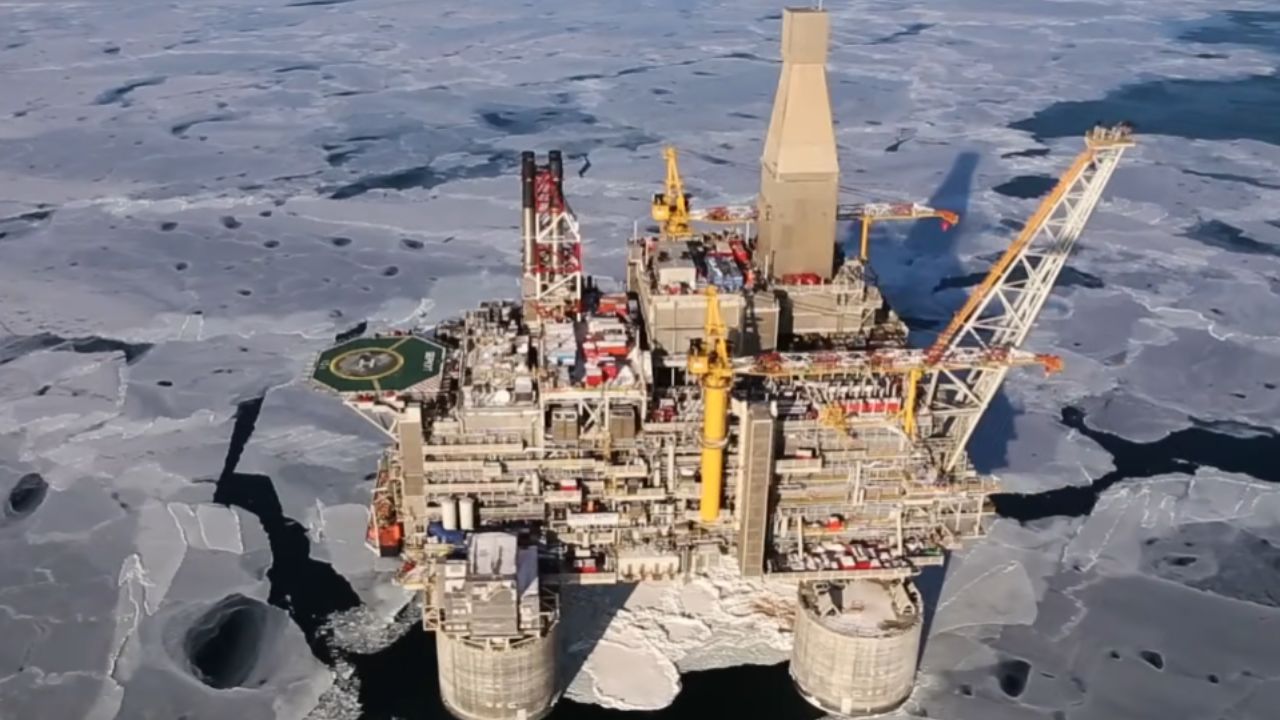
Know The Engineering Behind The Giant That Withstands 9.0 Magnitude Earthquakes And Understand The Real Confusion About Investment Values
The Berkut Platform is often mentioned in discussions about offshore megastructures due to its superlative specifications and the astronomical numbers that surround it. Located in the hostile subarctic environment of the Sea of Okhotsk in Russia, this structure is a landmark of human capability to operate in extreme conditions. However, conflicting information circulates about its true cost and weight records. Several sources have detailed the platform’s data, confirming that its capital expenditure (CapEx) was approximately US$ 12 billion, and not the R$ 42 billion often erroneously attributed to it in recent discussions.
This financial confusion diverts attention from what truly makes the Berkut Platform unique: its resilience. Designed to withstand conditions that would be catastrophic for most structures, it operates in a region subject to severe earthquakes, gigantic waves, and freezing temperatures. With a total height ranging from 144 to 150 meters, comparable to a 50-story building, the Berkut is not just an oil extraction facility; it is a fortress of survival at sea, designed to ensure the safe production of the Arkutun-Dagi field, part of the Sakhalin-1 complex project.
The Truth About Costs: US$ 12 Billion Vs. R$ 42 Billion
The discrepancy in investment values associated with the Berkut Platform results from an inadvertent merging of data from different projects. According to news sources in Brazil, the amount of R$ 42 billion, often confused with the cost of the Russian platform, actually refers to domestic investments. This amount is linked to announcements from Petrobras to expand refining capacity in Rio de Janeiro and Pernambuco, in addition to the National Gas and Biomethane Infrastructure Plan. Therefore, the value in reais has no connection to capital projects in the Arctic or Subarctic.
-
What the Public House of Julius Caesar was like inside in the Roman Forum: layout, atrium with compluvium and impluvium, tablinium and peristyle, and the scandal of the Bona Dea, revealed in an AI recreation.

-
While digging a trench next to a pool in Germany, workers found more than 1,500 silver coins from 1320 in the rubble, revealing a treasure buried for over 700 years.

-
Flight Helios 522, the “ghost” flight with 121 people: the commercial aircraft flew for more than 2 hours on autopilot after a pressurization failure left pilots and passengers unconscious and only stopped when it ran out of fuel.

-
Researchers have located a nearly intact vessel that disappeared 125 years ago on the bottom of icy waters, with masts still preserved and rare details that impress archaeologists.


The true cost of the Berkut Platform, estimated at US$ 12 billion, reflects the price of structural survival in one of the planet’s most challenging environments. This budget places the platform among the most expensive engineering projects in history, a necessary value not only for hydrocarbon extraction but also for implementing cutting-edge engineering solutions capable of mitigating extreme operational risks.
The Real Record: The ‘Topside’ Of 42,000 Tons
Although it is a massive structure of approximately 200,000 tons in total, the Berkut Platform does not hold the title of the heaviest platform in the world in terms of total displacement, a record that belongs to giants such as Troll A and Hibernia, which reach up to 1.2 million tons with ballast. The true world record of the Berkut is more specific and technically impressive: it has the heaviest “topside” (the upper part of the platform where equipment and accommodations are located) ever installed at sea.
Various publications, including Rosneft, a partner in the consortium responsible for the project, confirm that this “topside” weighs about 42,000 tons. The construction of this mega-module was carried out in a controlled environment in South Korea and transported for installation in one single piece. This strategy was crucial to minimize the dangerous and costly assembly work on-site, given the severe conditions of the Sea of Okhotsk.
Survival Engineering For The ‘Frozen’ Apocalypse
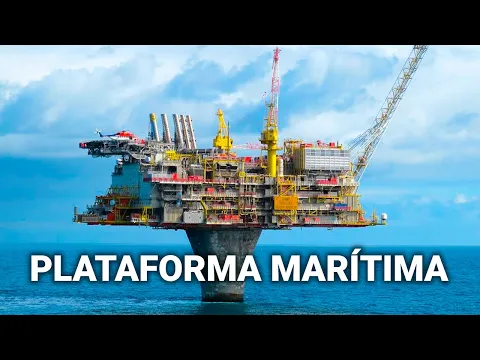

The Berkut Platform was designed to operate autonomously in a scenario that combines multiple extreme natural risks. The structure is capable of withstanding 9.0 magnitude earthquakes on the Richter scale, utilizing friction pendulum bearings to ensure its seismic stability. Furthermore, it was built to withstand the impact of waves up to 18 meters high.
The challenge of the cold is equally overcome by the platform’s engineering. It operates continuously in ambient temperatures that can reach -44°C and withstands the colossal pressure of sea ice fields up to 2 meters thick. To achieve this, the Berkut Platform employs an innovative “concrete belt” for protection against ice, a solution considered more effective and economical than traditional metal protections for this type of Gravity Base Structure (GBS).
Did you know the real details behind the values and records of this megastructure? Do you think investments of this magnitude in fossil fuels are still justifiable in light of new energy technologies? Leave your opinion in the comments, we want to hear your view on the future of offshore engineering.






-

-

6 pessoas reagiram a isso.