





 Portuguese
  English
  Spanish
  4 min of reading
  1 comment


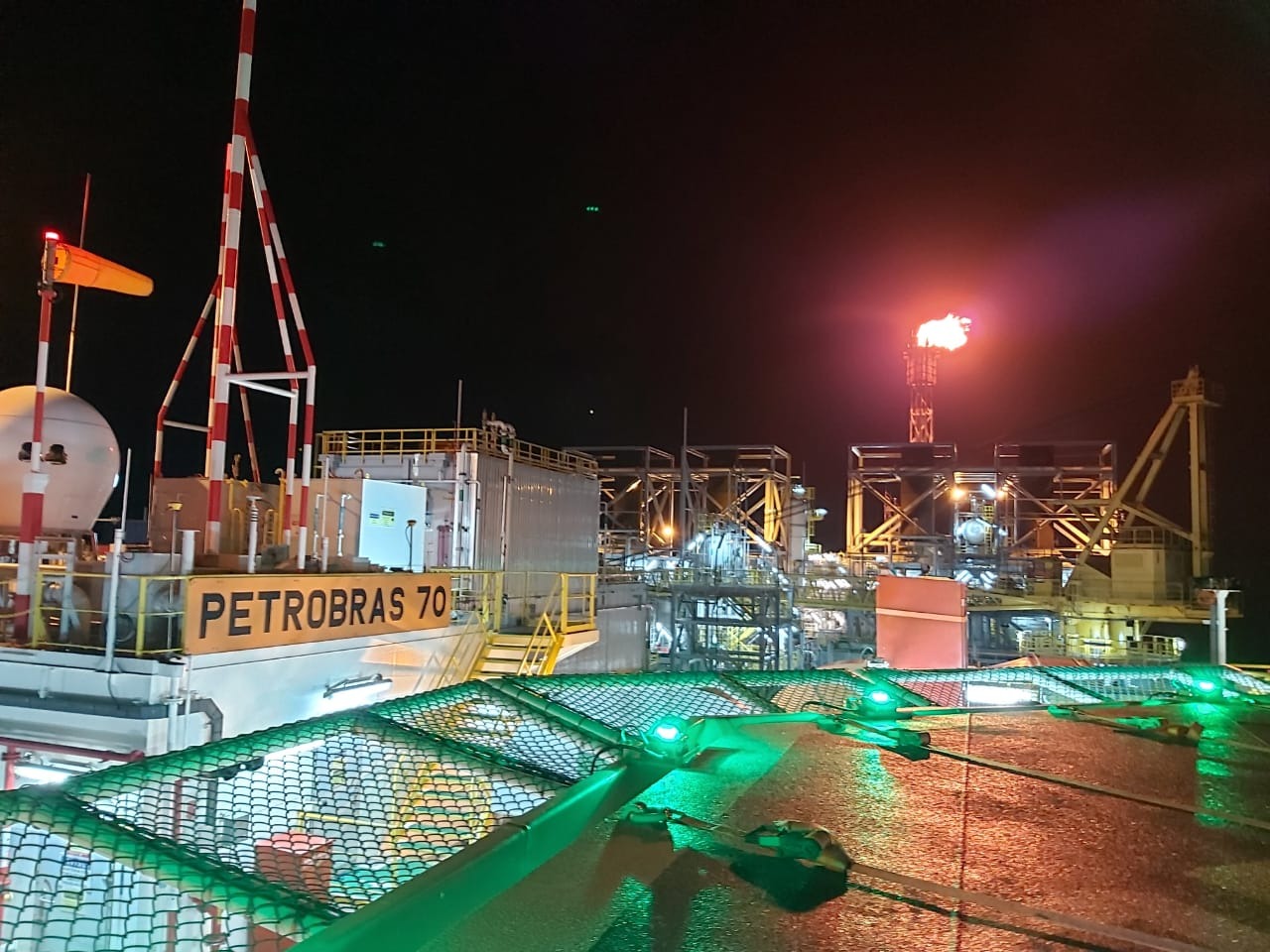


P-70 Operates in the Atapu Field at a Water Depth of 2,300 Meters with State-of-the-Art Technology and Impressive Production.
The FPSO P-70 is one of the largest and most modern floating oil and gas production units on the planet. Operated by Petrobras, it is installed in the Atapu field in the Santos Basin, about 200 kilometers off the coast of Rio de Janeiro and at a water depth of 2,300 meters — one of the most challenging offshore environments in the world.
Key Dimensions and Capacities
The P-70 is part of the “replicating” platform series developed by Petrobras to standardize designs and accelerate the development of the pre-salt. This allows for economies of scale and savings in time and costs in engineering, construction, and operation.
- Length: 316 meters
- Width: 74 meters
- Estimated Total Weight: 80 to 90 thousand tons
- Production Capacity: 150,000 barrels of oil per day
- Gas Processing Capacity: 6 million m³ per day
- Storage Capacity: approximately 1.6 million barrels of oil
The unit operates with a forecast of up to eight production wells and eight injectors, although it has reached its full capacity using only four wells — a direct indicator of the high productivity of the Atapu reservoirs.
-
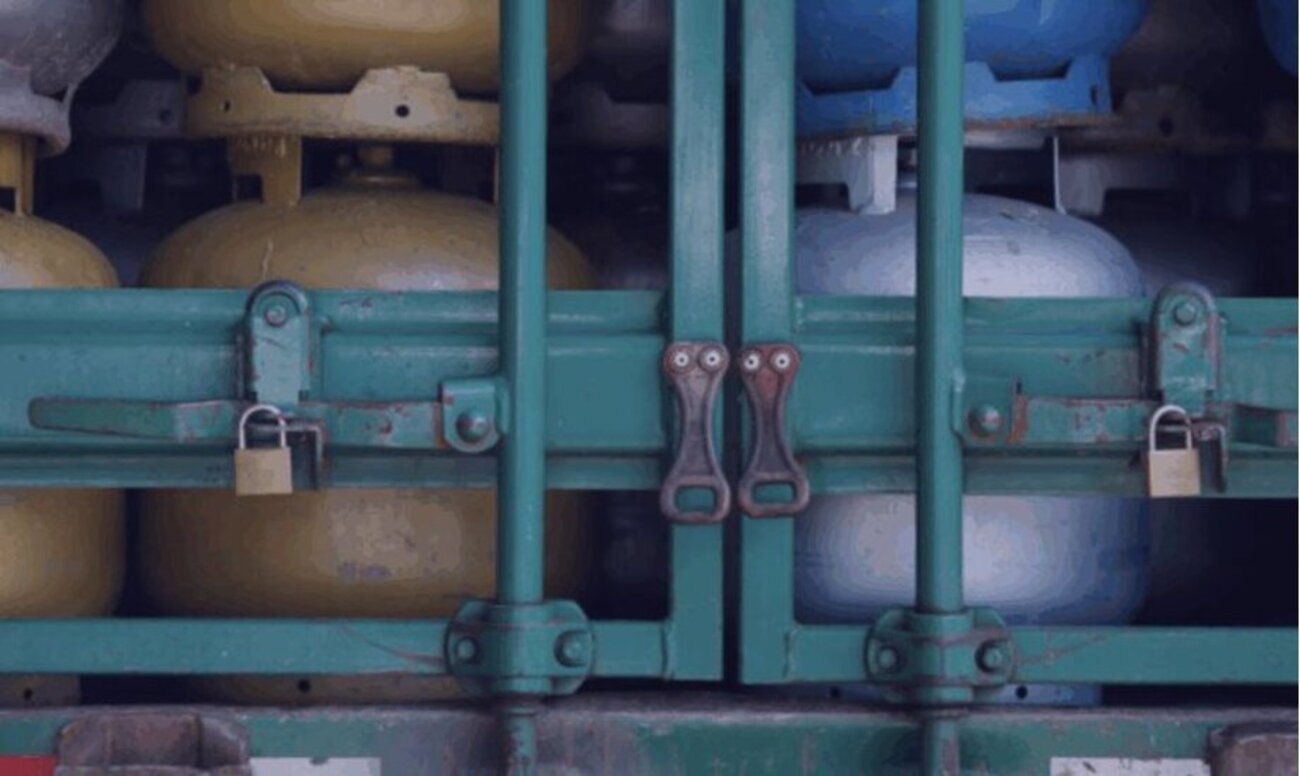
Petrobras evaluates suspension of sales to distributors and considers canceling the cooking gas auction following guidelines from the Federal Government.
-
Lula reveals a masterstroke by Petrobras to undo a deal made by Bolsonaro, which involves the return of an important refinery that currently produces less than half of what was expected and makes Brazil dependent on international diesel.
-
A study confirms that the natural gas sector will reduce greenhouse gas emissions in Brazil by 0.5% and accelerate the energy transition by 2026.

-
Petrobras implements a severe adjustment and confirms a 55% increase in the price of aviation kerosene with a proposal for installment payments for the companies.


Main Engineering Systems Onboard
Topside Processing Modules
The upper deck houses several integrated process modules responsible for:
- Separation of oil, gas, and produced water;
- Treatment of oil to meet export specifications;
- Compression and treatment of natural gas;
- Gas flaring system in emergency conditions.
The modules were manufactured and integrated in China (Cosco and COOEC shipyards) before being transported to Brazil, in a dry tow operation on a semi-submersible vessel.
⚓ Anchoring and Positioning System
The P-70 uses a steel and polyester line anchoring system, arranged in a spread mooring configuration.
This type of anchoring is fixed and allows the unit to maintain a stable position even under strong currents, winds, and waves, which is essential for operations in ultra-deep waters.
Reinjection and Reservoir Control System
To maintain reservoir pressure and improve oil recovery, the P-70 has:
- High-pressure pumps for water injection into the reservoir;
- Compressors for reinjection of excess gas ;
- A network of submarine umbilicals that provide power, chemicals, and control to the seabed wells.
⚙️ Automation and Operational Safety
The FPSO operates with a distributed control system (DCS/SCADA) that monitors over 10,000 process points in real-time.
There are also redundant systems for gas and fire detection, isolation of critical areas, emergency valves, evacuation, and firefighting, in accordance with the requirements of the Brazilian Navy and IBAMA.
Comparison with Other Pre-Salt FPSOs
The P-70 is part of the same “family” of replicating units as the P-66, P-67, P-68, P-74, P-75, and P-76, but it stands out for its initial productivity and the highly promising field in which it operates:
| Unit | Field | Capacity (barrels/day) | Start of Operation |
|---|---|---|---|
| P-66 | Lula Sul | 150,000 | 2017 |
| P-67 | Lula Norte | 150,000 | 2019 |
| P-68 | Berbigão/Sururu | 150,000 | 2019 |
| P-74 | Búzios | 150,000 | 2018 |
| P-75 | Búzios | 150,000 | 2018 |
| P-76 | Búzios | 150,000 | 2019 |
| P-70 | Atapu | 150,000 | 2020 |
Even with the same nominal capacity as the others, the P-70 drew attention for quickly reaching this level using only four wells, while the others typically required six or more.
Licensing and Environmental Operation
The operating license for the P-70 was issued by IBAMA in June 2020, under the number 1574/2020, after approval of the Environmental Impact Study for the Pre-Salt Polo in the Santos Basin – Stage 3.
Among the main environmental requirements, the following stand out:
- Continuous monitoring of seawater, fauna, and waste;
- Containment and treatment systems for oil and produced water;
- Environmental emergency and spill response plan.
The operation also generates significant resources for states and municipalities through royalties and special participations.
Strategic Importance and Perspectives
The P-70 solidifies Brazil’s position among the largest offshore producers in the world. The success of its project reinforces three strategic points for Petrobras:
- Technological Dominance in Ultra-Deep Waters, an area where the country is a global reference.
- Standardization and Economies of Scale, which reduce costs and risks.
- Increased Production and Exports, strengthening the Brazilian trade balance and the revenue of states and municipalities.
In the coming years, with the complete interconnection of all wells and possible expansion of submarine systems, the expectation is that the P-70 will maintain high production rates and remain one of the most profitable platforms in Petrobras’s portfolio.










Muito bom