





 Portuguese
  English
  Spanish
  5 min of reading
  11 comments


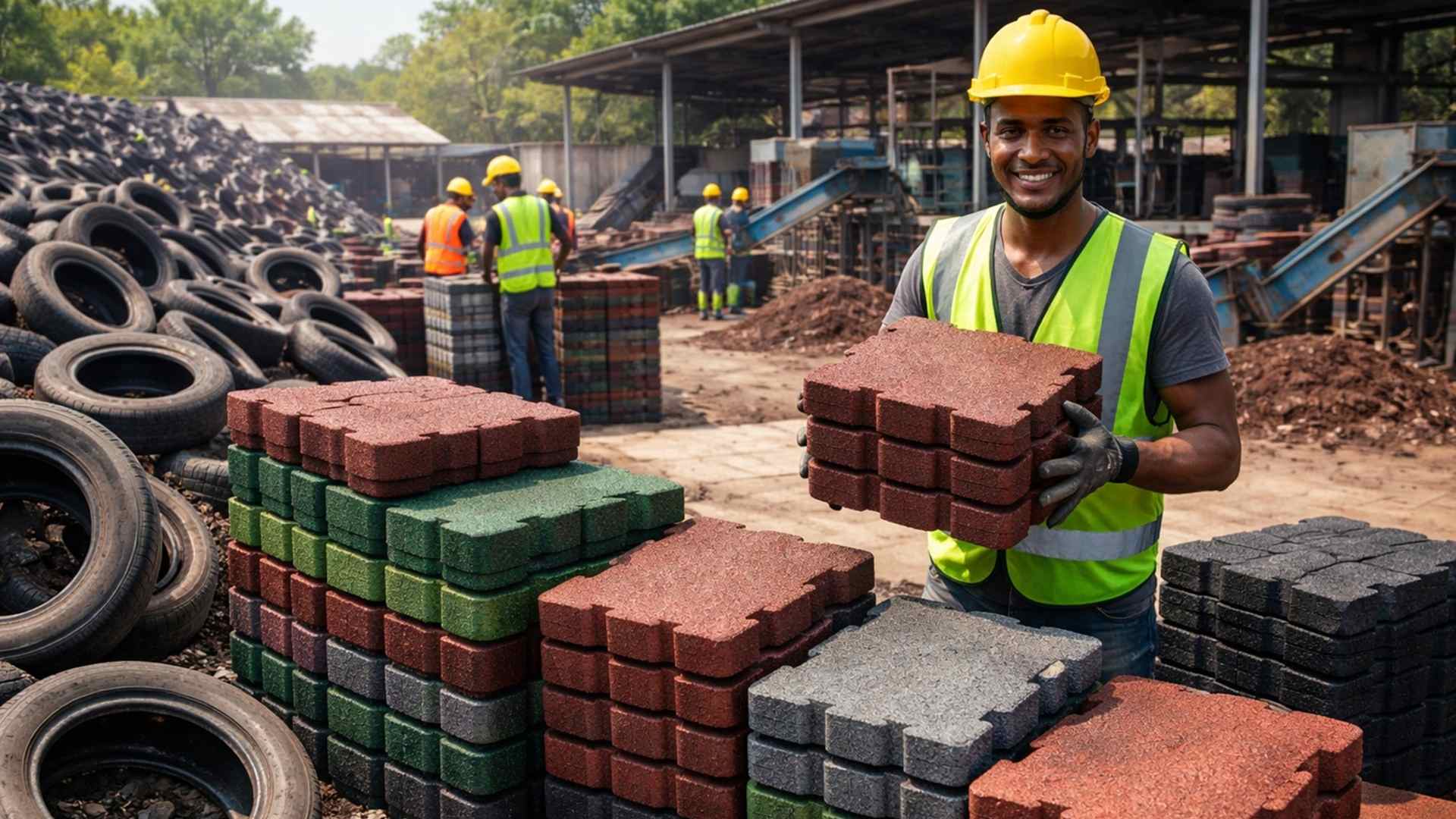


The Accumulation Of Old Tires Discarded Without Control Creates Environmental Risks, Proliferation Of Disease-Transmitting Mosquitoes, Fires, And Occupation Of Large Urban Areas, While Recycling Initiatives Start To Transform This Passive Into Industrial Activity, Local Income, And Reduction Of Landfills
One of the first companies for recycling old tires in Nigeria processes hundreds of units per day since 2018, faces a local stock of over 400,000 tires, and operates in a country where improper disposal favors diseases, fires, and landfills, in a billion-dollar global market.
Pioneering Operation And Initial Scale Of Reusing Old Tires
The initiative started in 2018, when the founder created the company Free Recycle with the aim of reusing discarded old tires. Currently, the company recycles hundreds of tires per day and keeps over 400,000 units stored on its property, which still represents only a fraction of the global problem.
Worldwide, humans discard about 1 billion tires each year. Recycling is expensive and complex, leading many countries to simply accumulate old tires in landfills. In Nigeria, this accumulation creates areas with standing water, which become breeding grounds for malaria-transmitting mosquitoes.
-
Friends have been building a small “town” for 30 years to grow old together, with compact houses, a common area, nature surrounding it, and a collective life project designed for friendship, coexistence, and simplicity.

-
This small town in Germany created its own currency 24 years ago, today it circulates millions per year, is accepted in over 300 stores, and the German government allowed all of this to happen under one condition.

-
Curitiba is shrinking and is expected to lose 97,000 residents by 2050, while inland cities in Paraná such as Sarandi, Araucária, and Toledo are experiencing accelerated growth that is changing the entire state’s map.

-
Tourists were poisoned on Everest in a million-dollar fraud scheme involving helicopters that diverted over $19 million and shocked international authorities.


More than half of the cars in the country circulate around Lagos. This increases the likelihood of old tires ending up in roadside workshops, where mechanics collect unusable units to resell them to the recycler for about 30 cents each.
Collection Chain, Local Income, And Industrial Structure
Independent workshops store tires that can no longer be repaired and sell them to the company. For many local traders, this represents a new source of income for a material previously considered worthless. The collected tires are stored on a property of about 2.5 acres behind the factory.
When the project was initially presented, there was skepticism about the financial viability of turning old tires into commercial products. Today, the company employs over 100 full-time workers and earns approximately 16 cents profit per recycled tire.
The first tire was recycled in October 2020. One of the main technical challenges is removing the steel wires embedded in the rubber. For this, a machine called a debiter was acquired, which can remove the steel in about 20 seconds per unit.
Mechanical Processes And Material Separation
After the steel removal, the tires move to a cutter that divides each unit into four or five parts. This facilitates handling and allows the factory to process about 15 car tires per hour. The durability of the material, which ensures resistance in automotive use, complicates recycling.
The resistance of the rubber is linked to vulcanization, a process discovered in the 19th century by Charles Goodyear, in which sulfur strengthens the material and makes it resistant to extreme temperatures. This characteristic drove the expansion of tire production throughout the 20th century.
In the current process, shredders reduce the tires to smaller pieces. Drums crush the material repeatedly, while vibrating screens separate fragments down to 5 millimeters. Magnets remove remaining metal residues, and separators isolate synthetic nylon or plastic fibers.
Final Transformation And Climate Adaptation
After separation, only the rubber remains. Final vibrating screens classify the material by size. The finer powder is used in areas such as playgrounds and gyms, while granules of 3 to 5 millimeters serve for paving driveways and sidewalks.
The granules are mixed in heated equipment with a polyurethane binder. The formulation needed to be adjusted to work in the tropical climate of the Nigerian savanna, as mixtures used in other regions did not perform the same.
Dyes define the appearance of the pieces. A thin colored layer goes first into the mold, followed by the rest of the colorless mixture, reducing costs. The material is manually compressed, hydraulically pressed, and taken to ovens, where it dries for up to eight hours.
Energy, Daily Production, And Global Market
Due to the instability of the local power grid, about 80% of the energy used in the factory is generated internally by diesel generators. On a typical day, the production of rubber blocks is enough to cover an entire tennis court.
Each recycled tire yields approximately 25 blocks shaped like a bone. These products are ready for shipment to local customers, mainly schools and recreational areas. In the global market, discarded tires generate about US$ 12 billion per year.
In countries like the United States, Europe, and Japan, a large part of the tires is recycled or burned to generate energy in cement and paper factories. This fuel costs less than natural gas and burns cleaner than coal, although it still produces comparable emissions.
Environmental Risks And International Comparison
At the end of the 20th century, the United States accumulated over 1 billion tires in landfills. Old tires can release toxins, retain gases like methane, and even rise to the surface. In 1987, a fire in about 30 acres of tires in Colorado took nearly a week to control.
After this episode, almost all U.S. states passed laws to fund recycling. In 2021, the number of stored tires dropped to around 50 million. Less than 20% still goes to landfills, while developing countries continue to face ongoing growth of this waste.
Nigeria is among the bottom 10% of countries in recycling and sustainability. Even so, Free Recycle seeks to reduce landfills of old tires, starting from the Lagos region. Its best-selling products are flooring for playgrounds, praised for their elasticity and ease of maintenance.
Expansion And Regional Outlook
The company plans to expand its operations to other parts of Nigeria and also to Rwanda, Ivory Coast, Ghana, and Kenya. Besides old tires, the founder intends to work in the future with other types of waste, such as paper, electronics, and PET bottles.
As the flow of waste continues to grow, the business approaches profitability. The entrepreneur simultaneously manages the company and family life, focusing on expanding recycling and transforming an environmental liability into usable products, built block by block, with considerable efficiency.
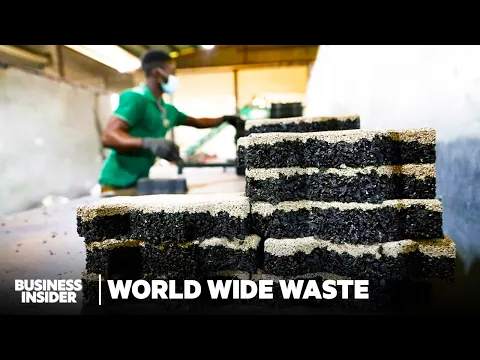
This article was prepared based on content from the Insider channel on YouTube, which presented the recycling operation for old tires in Nigeria, its industrial processes, environmental impacts, and historical context of tire disposal and reuse.










Tudo muito bom…
Cuidar do planeta, cuidar do futuro do ser humano.
Muito importante isso pena q está tão longe essa reciclagem poderia ter aq no Brasil iria gerar muitos empregos e seria muito boa montar um negócio desse se não fosse tão caro .
E atitude que vale muito para estraga o solo e serve para muitas.sneira de usar e são úteis para humanidade.