





 Portuguese
  English
  Spanish
 6 min of reading
  5 comments


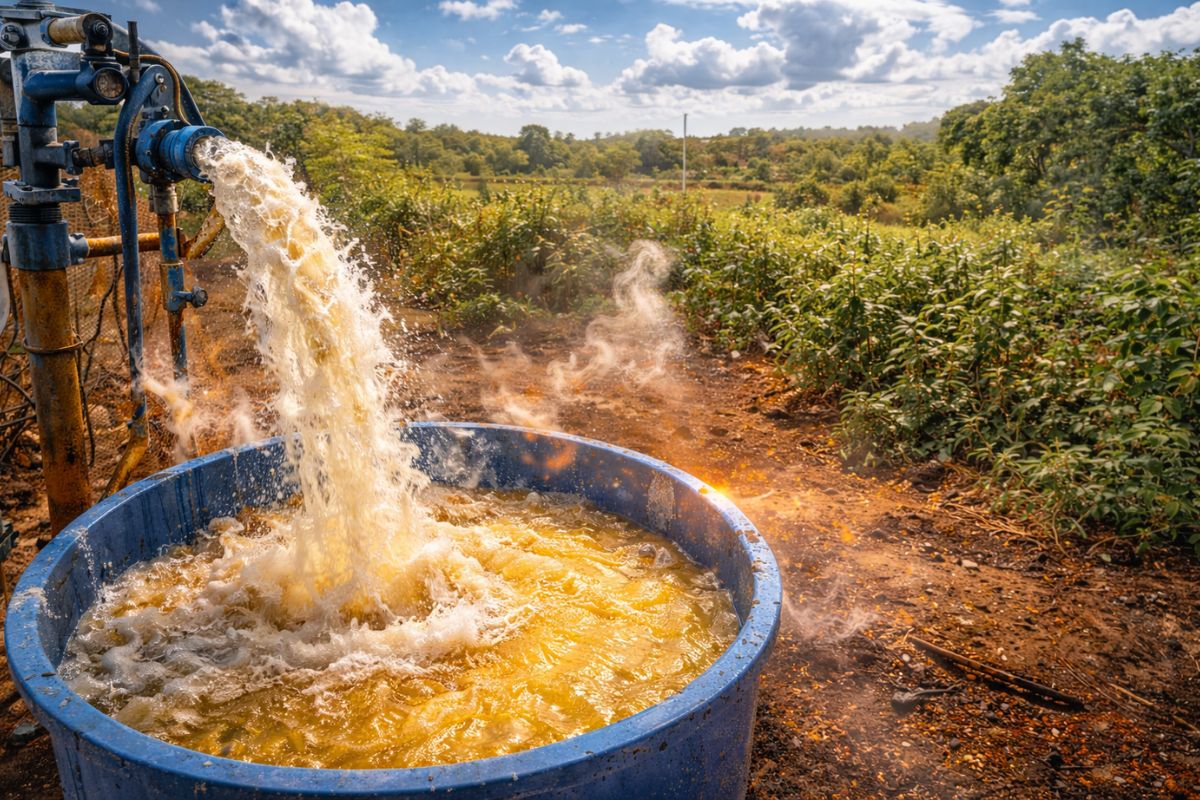


The Couple Sought Water in Northern Paraná, Celebrated the Flow of 10 Thousand Liters Per Hour, but the Artesian Well Brought Bad Smell, Worrying Report and the Routine of Relying on Water Truck
The artesian well seemed like the definitive solution for a site bought from scratch in Northern Paraná. After months of rushing for electricity and a drilling that went beyond the planned, the couple celebrated when the water finally gushed. The problem is that relief turned into frustration when the analysis showed sulfur and bacteria.
Even costing R$ 85 thousand with pump, hose and installation, the artesian well was not used as they had imagined. The water was not suitable for human consumption, and the supply routine ended up depending on water trucks and alternatives to keep the plantation and the site’s structure functioning.
The Artesian Well Was the Promise to Solve the Site Without Water and Without Energy
The couple recounts that they bought a site from scratch, without water, without electricity and without a house, in an area with eucalyptus.
-
The Argentine government celebrates the lowest poverty rate in 7 years, but experts warn that the methodology has changed, real wages have fallen, unemployment has risen, and the number of people on the streets of Buenos Aires has increased by 57% since Milei took office.

-
7.8 magnitude earthquake in Indonesia frightens the population, triggers tsunami alert, and hits an island with over 200,000 inhabitants this Thursday.

-
Google will finally let you change that embarrassing Gmail address you created in your teenage years without losing any accounts, logins, or old emails: the feature is already available in the United States.

-
Heading to Brazil in a Bonanza F33 single-engine aircraft: a couple departs from Florida on a visual flight, makes technical stops in the Caribbean to refuel and organize paperwork, and begins the staged crossing until they reach the country.

They describe the eucalyptus as a nuisance, because it hinders investment and planting, requires clearing and still “sucks” water from the soil. In this scenario, the artesian well became a priority, since the site needed water for any production plan.
Before the water, there was another wait: the electricity. They report that it took them nine months to get the connection, even having made the request in advance. The feeling was of depending on deadlines and decisions that were not in their hands, which increased the pressure for the artesian well to work.
From the Budget of 100 Meters to Despair: The Artesian Well Kept Getting Deeper and More Expensive

The contracted company, according to reports, fulfilled the agreement in execution. The initial plan was a budget for 100 meters, costing R$ 25 thousand, including installation. However, drilling advanced, reached 80 meters without water and despair began.
When a “vein” appeared around 90 meters, it was still little. At 100 meters, came the decision that changed everything: stop or continue. They chose to continue and began to increase the depth in stages, in an attempt not to run out of water.
With each advance, the value rose, and the budget of R$ 25 thousand ceased to exist. The artesian well became a real financial risk, with money from other priorities being redirected to drilling.
Water Appeared at the Limit: 250 Meters and the Celebration That Seemed a Miracle
Drilling continued to 150, 200 meters and still not enough water. The couple describes crying, frustration and the feeling of being “without a house and without water” after already having committed resources. In a last effort, they decided to go to the limit of 250 meters.
It was in this final stretch that the water appeared. They mention that the exact point was at 247 meters and describe the scene as an enormous relief, with emotion seeing the water gushing from the artesian well.
The victory was as great as the tension that came before, because only those who go through the uncertainty of drilling a well understand the weight of this moment, according to them.
Excellent Flow, but Problematic Water: Sulfur, Strong Smell and Bacteria in the Artesian Well
After drilling, mandatory steps followed: rights, environmental authorization and water analysis. The report took about a month to arrive, and that’s when the new trouble began.
The analysis pointed out hydrogen sulfide, described as a gas linked to sulfur, and also the presence of bacteria. In practice, the water from the artesian well came out with a strong smell, compared to rotten eggs.
The couple reports that when they turned on the water for the first time to take it to the shed, the stench was immediate and did not go away as they expected. The artesian well had water, but did not deliver the full use they imagined.
What the Water from the Artesian Well Passed to Meet and What Became Prohibited

With the result, the water was not considered suitable for human consumption. They say they do not use it for drinking, cooking, or bathing as planned. At the same time, the flow was excellent and they could not simply abandon everything.
In the plantation, use was also conditioned. They comment that, through drip irrigation, the water was better accepted, as it goes directly to the soil.
Watering leaves from above brought setbacks, with examples of seedlings that died and leaves that “burned”. The artesian well ended up becoming a partial solution, useful for some demands, but insufficient for domestic routine.
Filtration System Became the Next Barrier: Expensive and Inevitable for Human Consumption
After the discovery, the couple began researching filtration and claims it doesn’t seem cheap. The idea was to install a system capable of making the water safe, but the investment did not fit into the immediate budget after the R$ 85 thousand impact.
They also report an important point: the smell of the gas can diminish with a simple procedure, by “aerating” the water, because the gas escapes and the odor reduces over time. Still, the main problem remains the presence of bacteria, which would require adequate filtration to safely release consumption.
Water Truck and Supply Routine: The Provisional Solution After the Artesian Well
Without potable water in the artesian well, they began seeking treated water from Sanepar. Every month, they pay for a closed water truck of 6,000 liters to supply the water tank of the house. They describe the situation as exhausting, with recurring trips to resolve the supply and the feeling of “tormenting” the local government.
At the same time, they reinforce the warning: do not buy a site from scratch without ensuring water and electricity, because these two items depend on external factors, the soil, documentation, and decisions of third parties. A house, according to them, can be built over time, but water and electricity can halt the entire project.
Community Well and New Attempts: More Water in the Site to Not Depend on One Point


The couple reports that a community well is being developed in the neighborhood and that the analysis indicated good water. The expectation is to use this source for personal consumption, with a monthly limit of 10,000 liters and a possible fee if exceeded. They make it clear that it is not to squander but rather for the basics of the house.
Even with this alternative, they plan to seek more options in the future, such as a caipira well or a mine well, and they also talk about finding someone specialized in “mina” to find superficial water.
The logic is not to be hostage to a single solution, as if a pump breaks or management fails, the site is at risk of running out of water.
The Lessons the Artesian Well Left: Documentation, Research and the “Little Man with the Stick”
Among the recommendations, they advocate thorough research before buying a site, checking documentation, fines and promises of real estate agents. They also suggest seeking local references before drilling an artesian well, including the “little man with the stick”, associated with dowsing.
Additionally, they mention that they paid R$ 800 for satellite surveying, which indicated the area where water would appear. The method does not guarantee depth or quality, but for them, it helps reduce uncertainty about the drilling point. The central message is to have the maximum evidence before investing.
Would you have the courage to invest in such a deep artesian well without knowing if the water will be good, or would you only buy a site that already had water and electricity ready?








Também,250 metros!!! Foram buscar água na reserva do espírito!!! Só podia vir com enxofre!!!
Obs- brincadeiras a parte, a situação é muito decepcionante…☹️☹️☹️
Sítio não quero nem de graça nasci na cidade sítio foi feito pra animais selvagem e vegetação fosse por mim não desmaiada nem capim
KKKKK… O leite de **** dá em caixinha e os ovos de galinha sao fabricados em bandejas… A carne do churrasco quem fabrica é o açougueiro…. A petezada contaminou…
Vá se tratar doente,o que tem haver com política?
O silêncio vale ouro! Qta ****…