





 English
  Francês
  Alemão
  Italiano
  Japonês
  Norueguês
  Portuguese
  Spanish
  4 min of reading
  1 comment


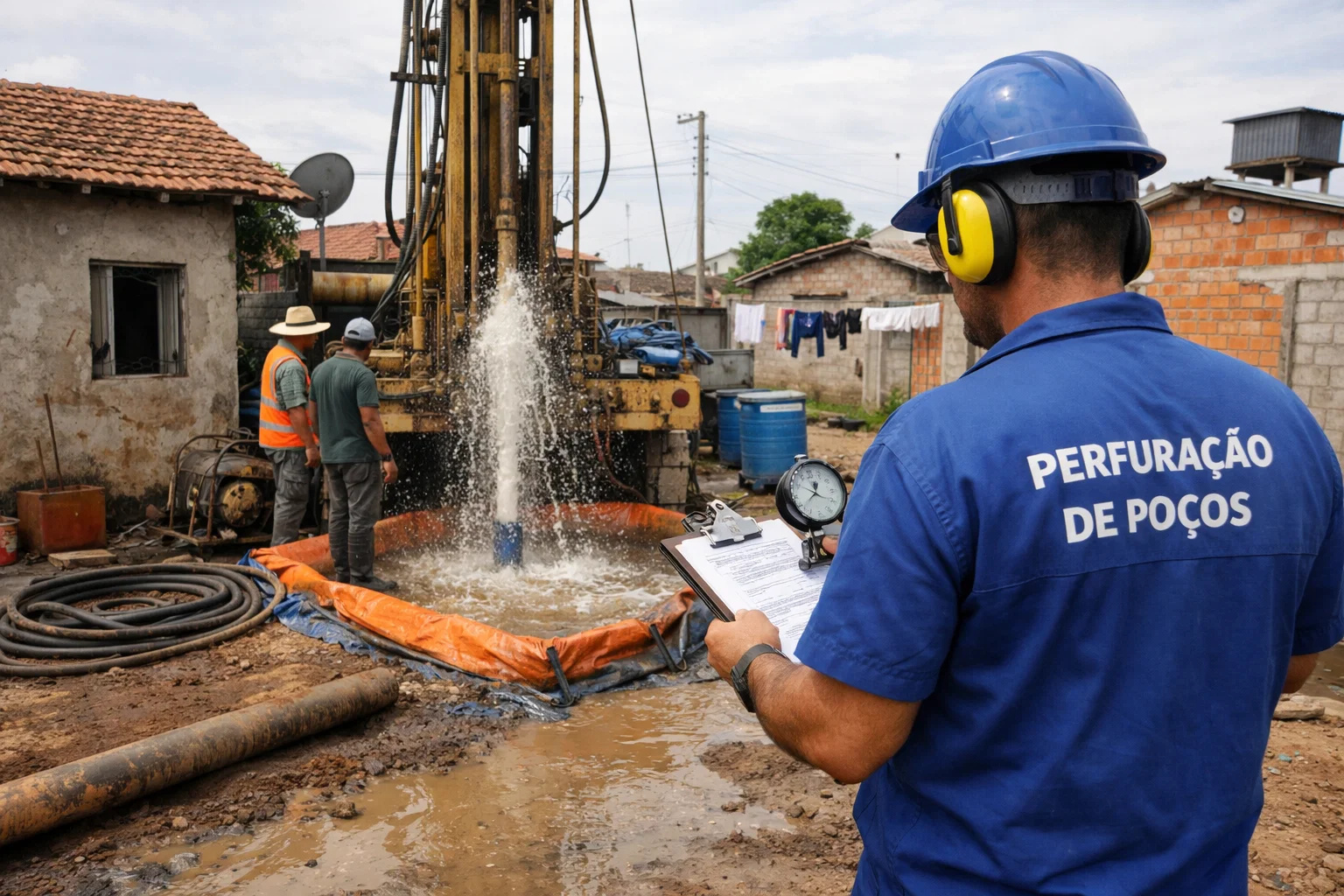


Alternative to Save on Domestic Supply Grows in Brazil, But Legislation Treats Groundwater as Public Asset and Imposes Strict Rules Before Drilling
Amid the constant increase in supply tariffs and the periods of water scarcity recorded in recent years, many Brazilians have started to consider the artesian well as a solution to reduce the water bill in 2026. After all, the promise of autonomy in supply and monthly savings seems attractive. However, before starting any drilling in the backyard, it is essential to understand what Brazilian legislation says, what authorizations are required, and what risks may arise if the procedure is done illegally.
The information was released by Portal 6, in a report signed by Gabriel Yuri Souto, detailing what the law allows, what documents are necessary, and what penalties may be applied to those who ignore environmental regulations.
Although the drilling of an artesian well is allowed on private land, the practice is not free of legal requirements. This is because, in Brazil, groundwater is considered a public asset. In other words, even if the aquifer is within a private property, the use of this resource depends on formal authorization from the public authority.
-
With earth, bamboo, straw, and lime mortar, a specialist builds a house for just over $460 and draws attention for its cost being much lower than traditional construction.

-
Rodrigo de Freitas Lagoon advances in environmental recovery with sanitation, elimination of irregular sewage, and the resumption of water sports in Rio de Janeiro.
-
Sustainable housing gains strength with a nationally awarded project in Campo Grande, highlighting innovative solutions that combine sustainability, urban integration, and efficiency in the use of natural resources.

-
City Where Residents Live Underground to Escape 52°C May Be a Picture of the Future on an Increasingly Hot Planet

What Brazilian Legislation Allows
In objective terms, the legislation authorizes the drilling of an artesian well on private land, provided that the responsible party requests an authorization for the right to use water. This document, usually granted by state environmental agencies, authorizes the extraction of groundwater for domestic consumption or other purposes.
However, when the owner does not have the authorization, the well is considered irregular. This rule applies even to those who use the resource solely for domestic supply, without any commercial purpose. Therefore, regularization is mandatory before or after drilling, as determined by the specific regulation of each state.
In addition to the authorization, in certain situations, the environmental agency may require an environmental license, depending on the scope of the project and the purpose of water use. Thus, prior planning becomes essential to avoid future financial losses.


Authorizations Required Before Drilling in the Backyard
Before starting the drilling of an artesian well in 2026, the interested party must seek the state environmental agency or the municipal environment secretary of the area where the property is located. Although each federative unit has its own procedures, some requirements are common throughout the country.
In general, the process includes a formal request for authorization, the presentation of a technical project prepared by a qualified professional, and subsequently, the registration of the well after drilling. Additionally, depending on the technical analysis, there may be an additional requirement for an environmental license.
Currently, many states provide forms, guidance, and online tracking, which facilitates the regularization process. Still, hiring a specialized company and qualified professionals is recommended, as it ensures that all technical and legal requirements are met correctly.
Technical Restrictions and Risks of Drilling Without Authorization
In addition to formal authorizations, technical norms also impose restrictions regarding the location of the drilling. The well must maintain a minimum distance from septic tanks, sewage networks, sumps, and waste deposits, precisely to avoid contamination of groundwater.
Similarly, the well cannot compromise the stability of the construction or occupy public areas, easements, or neighboring lands. Therefore, proper planning of the location is an essential step to ensure structural and sanitary safety.
When drilling occurs without authorization, the environmental agency can impose high fines and seal the structure. In some cases, the responsible party is required to close the well or immediately initiate a regularization process. In addition to legal penalties, there are also significant environmental risks, such as reducing the aquifer level and conflicts with neighbors who use nearby wells.
From an economic perspective, illegal drilling can turn an attempt to save on the water bill into a significant loss, considering fines, regularization costs, and potential structural damages.
How to Make the Artesian Well an Economic and Legal Solution
For those looking to reduce expenses on domestic supply in 2026, the safest path is to begin the process with the state environmental agency before any intervention in the backyard. With the authorization properly granted, the approved technical project, and the registration regularized, the artesian well can indeed become a sustainable and financially advantageous alternative.
Therefore, although saving on the water bill is an important attraction, it only materializes when the drilling occurs within legality. Otherwise, the risk of fines, sealing, and even closing the well may nullify any expected financial benefit.
Source: Portal 6









De diferença aos milhares de poços de antigamente apenas tem mais burocracia, mais taxas e logo mais custo de utilização mensal ……..