





 Portuguese
  English
  Spanish
  6 min of reading
  42 comments


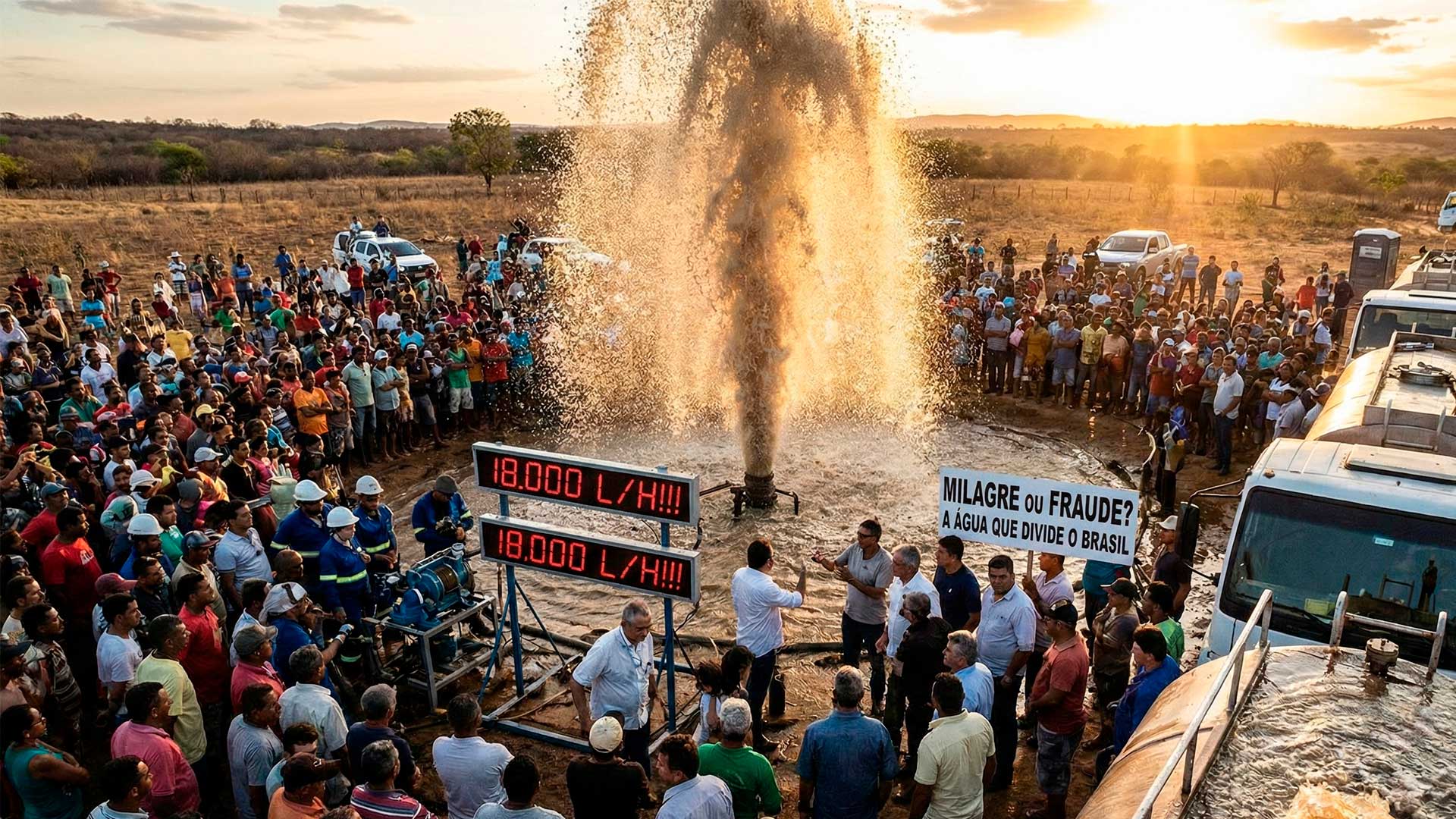


In Curaçá, A Well Claimed To Deliver More Than 18,000 L/h Became An Example Of “Fine Tuning” In Drilling, But Also Raised Questions About How Flow Rate Is Measured And What The Law Requires.
A deep tubular well drilling in the rural area of Curaçá, in northern Bahia, gained attention after a video showing water gushing powerfully and attributing a flow rate of over 18,000 liters per hour to the well was released. The recording was published on YouTube on the channel “ROGÉRIO OLIVEIRA POÇOS ARTESIANOS,” and describes the execution of the well in the community of Serrotinho.
Based on the presented number, the flow rate is equivalent to 18 m³/h, or about 5 liters per second, a level that could change the routine of a property in the semi-arid region if confirmed in testing. In contexts of scarcity, such results usually mean more security for human consumption, animal watering, and some stability for small irrigation, provided the water quality allows it.
At the same time, experts remind us that “artesian well” is a term commonly used in everyday language, but technically the capture is usually referred to as tubular well. And in hydrogeological jargon, “artesian gushing” refers to when the pressure of the aquifer pushes the water up and gushes naturally to the surface, something that does not occur in every high-flow well.
-
The Argentine government celebrates the lowest poverty rate in 7 years, but experts warn that the methodology has changed, real wages have fallen, unemployment has risen, and the number of people on the streets of Buenos Aires has increased by 57% since Milei took office.

-
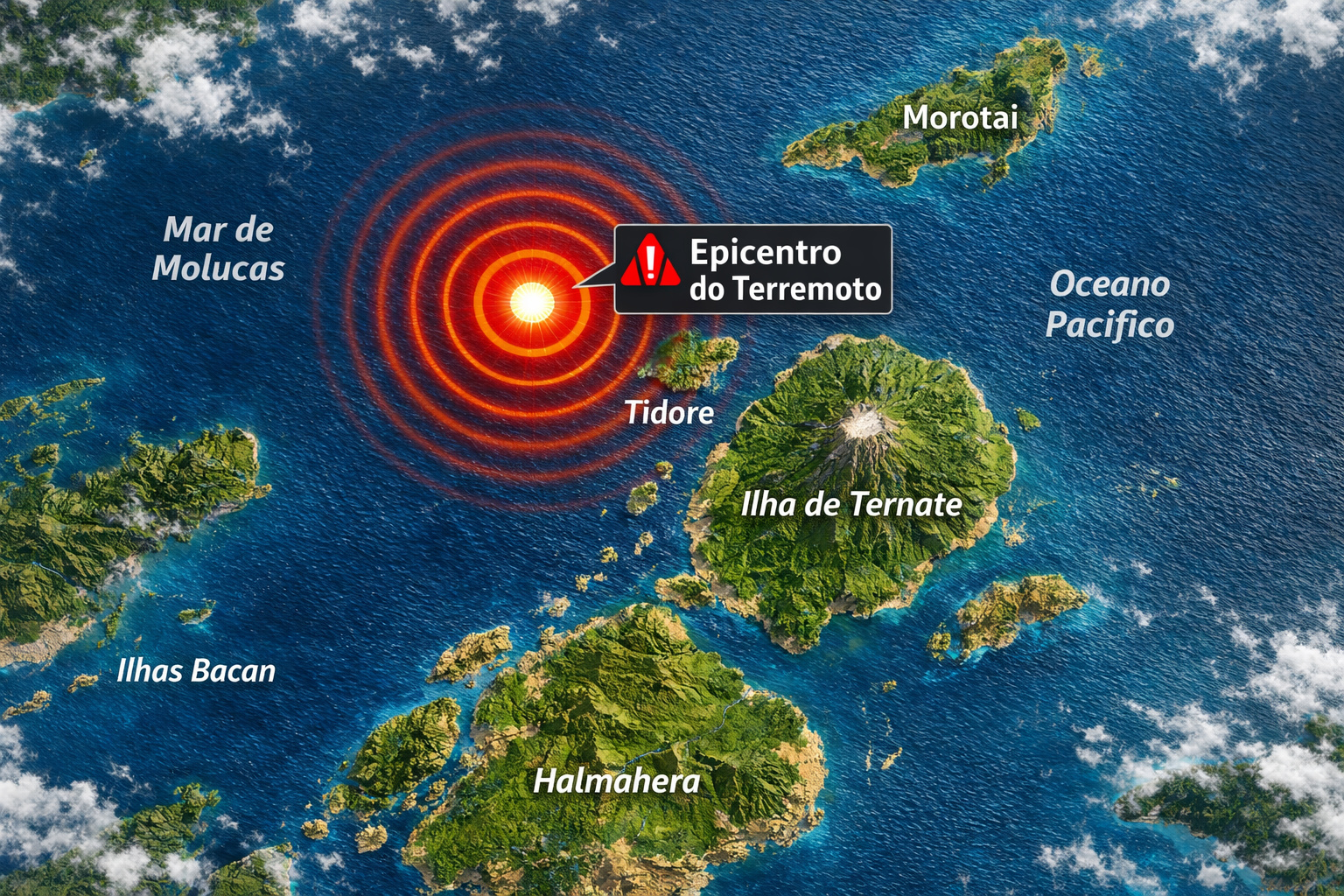
7.8 magnitude earthquake in Indonesia frightens the population, triggers tsunami alert, and hits an island with over 200,000 inhabitants this Thursday.
-
Google will finally let you change that embarrassing Gmail address you created in your teenage years without losing any accounts, logins, or old emails: the feature is already available in the United States.

-
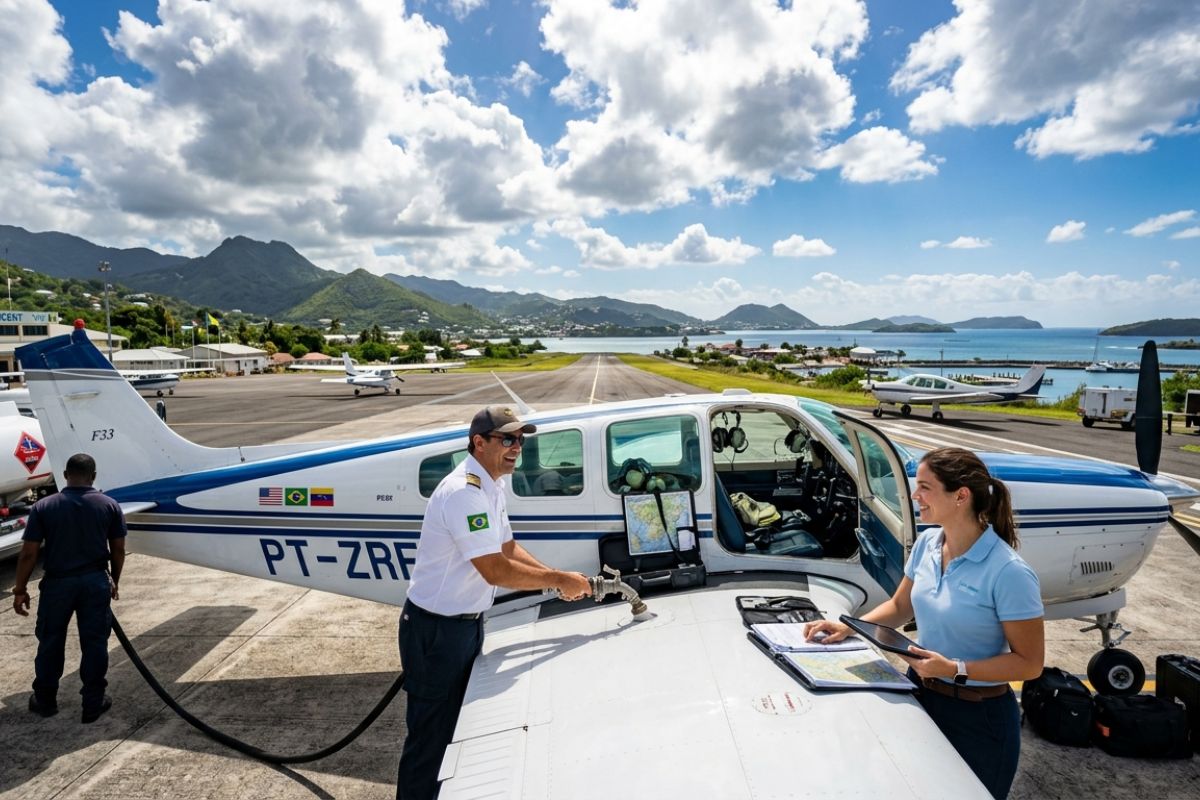
Heading to Brazil in a Bonanza F33 single-engine aircraft: a couple departs from Florida on a visual flight, makes technical stops in the Caribbean to refuel and organize paperwork, and begins the staged crossing until they reach the country.

The case of Serrotinho, therefore, draws attention for two reasons. The first is the technical aspect of the process, which the video presents as decisive for performance. The second is what rarely appears in internet content: how to reliably prove flow rate and what legal and environmental precautions must not be overlooked in the project.
How The Flow Rate Of A Tubular Well Is Measured; Watch The Video
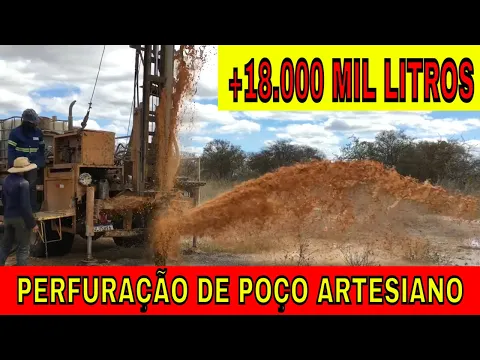

In drilling, visual impressions can easily mislead. Water “gushing beautifully” might indicate good productivity, but it doesn’t replace a measurement and recording procedure.
According to technical guidelines used in capture works, confirming the potential of the well goes through a borehole pumping test, recording the water level over time for a defined flow rate. It is this type of test that helps estimate operational flow rate, drawdown, and well recovery level.
Practical manuals on pumping tests indicate, for example, that in crystalline rocks continuous pumping is usually carried out for a minimum number of hours, and that the initial flow rate needs to be chosen carefully to avoid “masking” the results. This is important because a well may seem excellent at first and drop when it stabilizes.
Another common measure is the volumetric method, with containers suitable for the flow rate range. For flow rates up to several m³/h, the volume of the container and the reading procedure make a difference in accuracy. Simply put, without testing and without recording, the final number becomes more of an “estimate” than a technical figure.
What Can Explain A Well With “High Flow” In Few Meters
The video describes that the drilling crossed superficial layers and quickly reached bedrock, then continued advancing with rods until finding zones with higher flow. This narrative aligns with what hydrogeology describes for aquifers in consolidated rock.
Technical brochures about tubular wells explain that, in crystalline rocks, water circulates mainly through fractures and fissures, and not through intergranular pores like in sediments. In other words, hitting the right fractured zone can significantly increase productivity, while missing it by just a few meters can drastically reduce the outcome.
The development stage also weighs in. Technical literature describes development as the phase that removes fines and helps unblock fractures, allowing water to enter with less head loss. When done well, the tendency is for the well to perform better and with less sand, depending on the formation.
There is also a point rarely discussed outside the technical field: a high flow rate is not the only goal. A good well needs to deliver stability, without collapsing walls, pulling sediment, or creating contamination pathways due to sealing failures.
Centralization, Sealing, And Sanitary Protection Make A Difference In The Result
The content released about Serrotinho emphasizes “millimeter precision” and alignment of the equipment. In practice, this care connects to a simple principle: small deviations at the beginning become large deviations at depth.
Technical materials on well construction point out stages such as completion, cementing, and protection as part of the process, not as luxuries. Cementing, for example, appears as a measure to bond the casing to the well wall and prevent potentially contaminated surface waters from reaching the aquifer.
It is also common to use centralizers in the casing to keep the assembly properly within the borehole, which favors correct completion. In terms of results, this impacts both performance and durability, reducing the chance of future problems and aiding in operation.
Moreover, agencies and entities linked to professional oversight emphasize that the tubular well project involves location, drilling, casing, sealing, and pumping tests, requiring technical knowledge and responsibility to reduce the risk of contamination and imbalance of the aquifer.
Do Copper Rods For “Finding Water” Work Or Is It Just Luck
The video mentions marking the spot with copper rods and an additional validation with another instrument, a popular practice in many rural areas. This method is often associated with dowsing, which has a strong cultural presence in Brazil.
The point is that, from a scientific standpoint, there is controversy. The water science school of the United States Geological Survey (USGS) describes the practice of “water dowsing” as a historical and controversial subject, recommending a scientific approach based on mapping, geological data, existing well information, and tests.
In technical terms, a widely used alternative is location with geophysical methods. Published work in the groundwater area describes the use of electrical resistivity in well location, seeking to indicate fractures and more favorable zones. In practice, this does not guarantee absolute success, but reduces reliance on “guesswork.”
The case of Serrotinho, therefore, reopens an old discussion. Did the accuracy of the spot come from traditional technique, knowledge of the terrain, the execution of the drilling, or all of it at once? Without comparative data and methodology, the story remains open to interpretations.
Licenses And Grants In Bahia: What Almost Never Appears In The Video
Aside from the field results, there is the regulatory side. In Bahia, state law on water resources treats the grant process as an instrument for quantitative and qualitative control of water use and to ensure the right of access.
The legal text also lists activities subject to grants or prior manifestations, including interventions that alter surface or groundwater and, explicitly, the drilling of tubular wells. In practice, this means that drilling and operating a well can involve administrative requirements, deadlines, authorized flow rates, and monitoring conditions, varying by case.
This is where the debate becomes more sensitive. Many people drill out of necessity, especially in the semi-arid region. But the lack of regularization and sanitary protection can become a collective problem, either through contamination of the aquifer or through over-exploitation when several wells go into operation without management.
If the “race for wells” increases with viral videos, the result can be positive for those who do it right. It can be negative for those who replicate the result without planning and without meeting minimum safety and compliance steps.
If you could choose, would you trust copper rods more or a hydrogeological study with geophysics and pumping tests? And in your area, is the biggest “controversy” the location technique or the number of wells drilled without regularization? Leave your comment and tell us what you’ve seen in practice.









Fineza informarem a qualidade da água desses poços no cristalino. Já trabalhei nessa área, Programa Agua Doce e, praticamente, não encontramos águas doces em no semiárido de Alagoas. Um dos poços que estava abandonado tinha a vazão de 60 m³/h. Grato
Antigamente não tinha água não, ahh é esqueci, com poços artesianos acaba a máfia dos carros pipas, povo **** ainda vota no PT.
Já Já os donos do poder se apossam do poço e vão vender água para a população em troca de voto
Falou mer#@..poço oerfurado pelo governo da Bahia para atender as cidades no entorno