





 Portuguese
  English
  Spanish
  4 min of reading
  0 comments


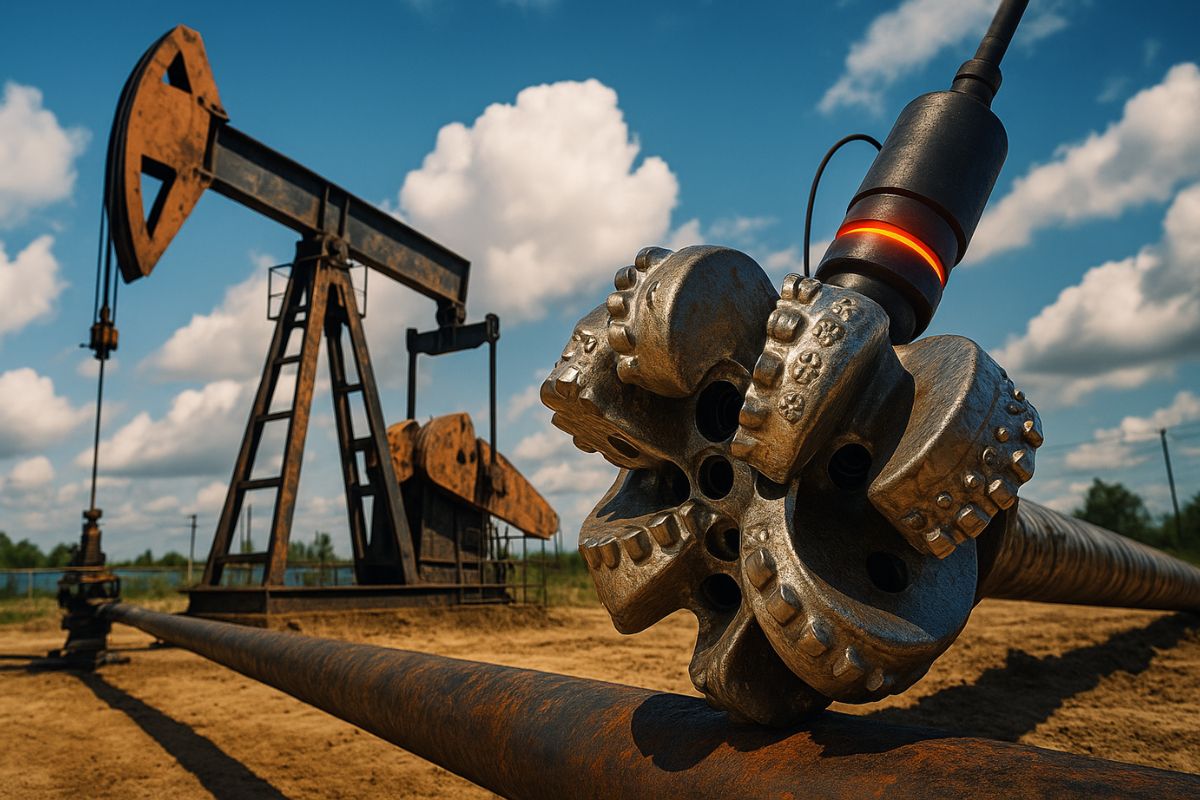
Oil Wells Reach 12 Km Vertically and Horizontally with Diamond Drills, Real-Time Sensors and Billion-Dollar Investments, Pushing Engineering to Its Limits to Cross Hot Rocks Under Extreme Pressure.
The most modern oil wells reach vertical and horizontal depths of up to 12 km, a level that requires robotics, large platforms, and a technological chain designed to operate under extreme pressures and temperatures. It is the intersection of materials science, applied geology, and automation, where every technical decision has a direct impact on safety and cost.
In practice, reaching 12 km with oil wells is only possible with a fine integration of polycrystalline diamond bits, directional drilling systems, and continuous monitoring of the underground. The operation is data-driven in real time and engineering choices that minimize risk, maintaining trajectory, well stability, and equipment integrity.
How Engineering Reaches 12 Km
A depth of 12 km, both in vertical and horizontal sections, represents the pinnacle of drilling engineering.
-
Offshore industrial demand in Macaé skyrockets with the recovery of oil and gas and could grow by up to 396% by 2026 in the Campos Basin.
-
Offshore industrial demand in Macaé surges with the recovery of oil and gas and could grow by up to 396% by 2026 in the Campos Basin.
-
Brazilian giant expands borders in the Southeast: Petrobras confirms new oil discovery in ultra-deep waters in the pre-salt of the Campos Basin.

-
Alert in the global energy market: Severe tropical cyclone hits the coast and disrupts gas production at major plants in Australia, threatening global supply.


In offshore, modern rigs operate in water depths of thousands of meters and also advance kilometers below the seabed to reach the reservoir.
In Brazil, large platforms have been used to reach targets situated up to 7,000 meters beneath the ocean floor.
Reaching these numbers depends on geological planning and precise drilling routes.
Directional and horizontal drilling allow circumventing faults, pursuing zones of higher porosity, and maximizing contact with the reservoir, enhancing well productivity along the horizontal section.
Diamond Drills and Real-Time Sensors
The bits used in ultra-deep oil wells are made of compact polycrystalline diamond (PDC), an ultra-resistant material designed to efficiently penetrate hard rocks.
Selecting the correct bit is crucial: cutting geometry, thermal resistance, and the ability to maintain penetration rates dictate the cost per drilled meter.
As the bit advances, real-time measurement systems such as MWD and LWD provide continuous data on pressure, temperature, and layer properties.
These readings enable immediate adjustments in direction, weight on the bit, and circulation parameters, preventing instabilities and fluid losses, while keeping the trajectory on target geological formations.
HPHT Challenges: Pressure and Incandescent Rocks
The deeper you go, the higher the pressure and temperature. In projects that reached around 12 km, such as the Kola Superdeep Borehole, temperatures exceeded 180°C, highlighting the physical limits of materials.
Operating in HPHT conditions requires special drilling fluids, elastomers, and alloys capable of withstanding thermal expansion and cyclical stresses.
Geology also imposes challenges: sequences of hard rocks, faults, and sealing layers can trap the column, jam the bit, or compromise well stability.
Therefore, the operational window between pore pressure and fracture pressure is managed with precision, avoiding influxes and losses that increase operational costs and elevate risk.
Billion-Dollar Investment and Offshore Logistics
Drilling of this scale requires billion-dollar capex. Platforms and drill ships cost hundreds of millions, to which are added directional drilling equipment, control systems, and data acquisition services.
The exploration cost accumulates over years, especially when multiple wells and formation tests are needed to validate economic viability.
Logistics present another challenge: mobilizing teams, critical parts, and fluids to remote areas, tight weather windows, and synchronized supply chains keep the operation on schedule.
In ultra-deep waters, each day of delay has a significant financial impact, making operational reliability a strategic differential.
Scientific Drilling and New Frontiers
While the demand for oil wells is the main driver, the knowledge produced expands into Earth science. Ultra-deep scientific projects have revealed thermal and geomechanical limits that now guide the industry.
The quest for 11 km and beyond in research drilling reinforces global interest in the deep crust and feeds back solutions for materials, sensors, and drilling methods.
At the same time, the debate on feasibility and environmental impact remains. Technological advancements increase efficiency and safety, but the decision to drill that deep is based on economic, regulatory, and socio-environmental criteria, especially regarding complex geological frontiers.
Brazil in Focus: Platforms and Geographic Direction
In the Brazilian scenario, operating in high water columns and drilling kilometers beneath the seabed has become routine in high complexity projects.
Platforms over 100 meters in length support campaigns that integrate directional drilling, well construction, and completion to safely capture deep reserves.
This technical mastery includes risk management, contingencies, and standardization of best practices, from bit selection to casing design and cementing.
The accumulated learning curve reduces non-productive time and optimizes the drilling window, a critical factor when the goal is to reach long horizontal sections in HPHT environments.
Oil wells that reach 12 km are the ultimate expression of applied engineering: diamond bits, real-time sensors, and millimeter decisions support operations under extreme conditions, with investments proportional to the risk and productive potential.
It is a race for precision, safety, and efficiency, where every drilled meter requires science and operational discipline.
In your view, does the technical and economic gain of extending wells to 12 km offset the risk and cost, or is the ideal frontier prior to that?
What technologies make the most difference in daily drilling: PDC bits, MWD/LWD, or fluids for HPHT? Share your experience in the comments and help qualify the debate with real cases.







Seja o primeiro a reagir!