





 Portuguese
  English
  Spanish
  3 min of reading
  0 comments


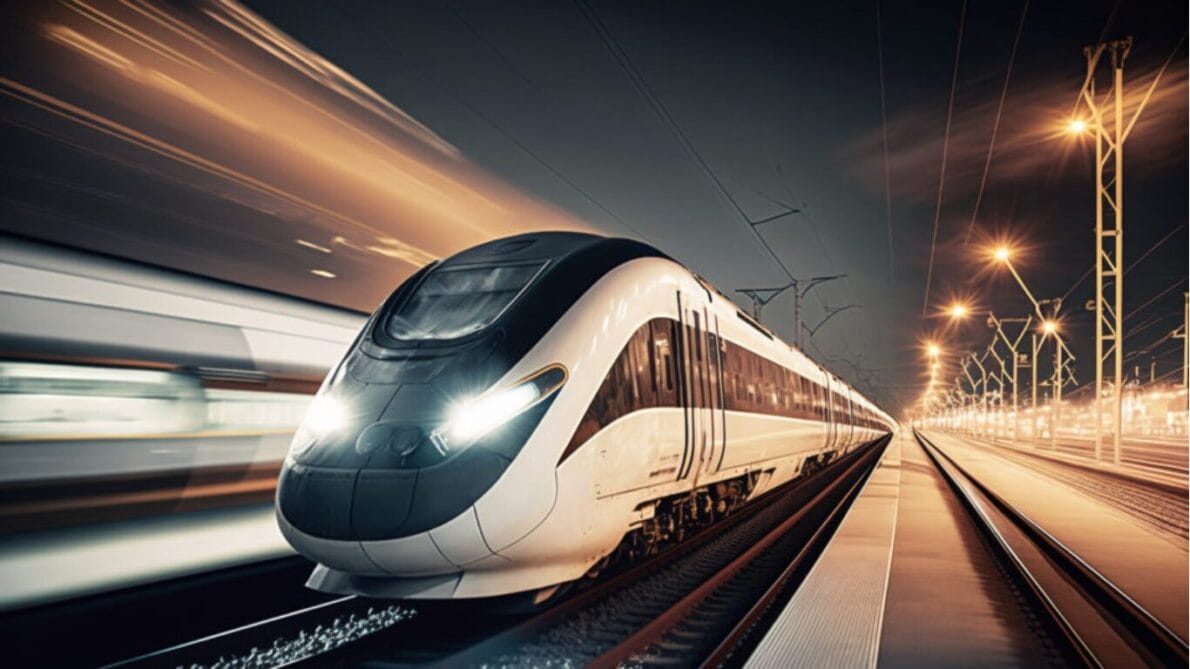
With the Construction of Its First Bullet Train, India Is Taking a Giant Step Towards Modernizing Its Railways. The Mumbai-Ahmedabad High-Speed Rail Project Promises to Revolutionize Connectivity Between Two of the Country’s Largest Economic Cities, Elevating the Efficiency and Safety of Indian Rail Transport
India is embarking on a historic endeavor by building its first bullet train, connecting Mumbai and Ahmedabad. This project not only symbolizes a significant technological advancement but also promises to transform the country’s railway infrastructure, benefiting millions of passengers daily. Let’s explore the details of this monumental work and understand its impact on the Indian economy and society, according to constructiontime.
The Grand Vision: Connectivity and Efficiency
The Mumbai-Ahmedabad high-speed rail project is a landmark for India, connecting two of the country’s largest economic cities. With an initial stretch of 508 km, the bullet train will be able to reach speeds of up to 320 km/h, drastically reducing travel time between Mumbai and Ahmedabad. This advancement promises greater efficiency and accessibility, allowing people to travel faster and more safely.
Furthermore, the project is an impressive venture aimed at eventually expanding the high-speed rail network to cover the entire country. This will not only improve regional connectivity but also promote a more balanced economic growth, helping to develop less accessible areas and connecting them to major urban centers.
-
São Paulo surprises the world with a colossal railway network project that promises over 1,000 km of tracks, R$ 194 billion in investments, and 40 projects connecting the capital to the interior with fast and sustainable trains.
-
The world’s largest escalator, measuring 905 meters in China, reduces urban travel time from 1 hour to about 20 minutes and transforms mobility in mountainous regions with an engineering solution adapted to the terrain.
-
A R$ 300 million logistics giant is taking shape in Serra with over 100,000 m² and raises a question: how can this transform e-commerce and distribution in the state?
-
Could Uber Rides Lose Minimum Fare? Understand What’s Happening!


The Construction Process: Challenges and Technologies
The construction of the bullet train involves several complex phases, from planning and land preparation to the construction of viaducts and installation of advanced railway systems. Modern construction techniques, such as deep foundations, pillars, and tunnels, are utilized to ensure the safety and efficiency of the railway.
One of the main challenges faced is deforestation and the relocation of residents living along the railway route. However, the project is adopting sustainable measures to minimize environmental and social impact, ensuring that progress does not come at the expense of the environment and local communities.
Partnerships and Investments: The Role of Japan
Japan plays a crucial role in the development of the Indian bullet train project. With substantial financial investments and technical assistance, Japan is providing the cutting-edge technology and training needed for Indian engineers. The total investment for the project is approximately 14.5 billion dollars, highlighting the scale and ambition of this initiative.
This collaboration not only strengthens ties between the two countries but also ensures that India has access to the best practices and available technologies, positioning the country as a leader in high-speed railway infrastructure.
Economic and Social Impacts
The impact of the project goes far beyond railway infrastructure. The construction of the bullet train is generating thousands of jobs and driving economic growth, attracting both national and international investments. Additionally, the reduction in travel time and improved transportation efficiency will directly benefit businesses and commerce, facilitating the movement of goods and people.
Of course, not everything is smooth sailing. The project faces challenges such as deforestation, the relocation of residents, and potential accidents during construction. However, managing these challenges with sustainable strategies and a focus on safety promises to mitigate negative impacts, ensuring that the benefits outweigh the obstacles.
A True Milestone for India
The Mumbai-Ahmedabad high-speed rail project is undoubtedly a milestone in the modernization of Indian infrastructure. It represents a significant step in transforming the country’s transportation system, promoting connectivity, efficiency, and economic growth. Thus, with the support of Japan and the use of advanced technologies, India is positioning itself as a global superpower in high-speed railway infrastructure. This bullet train is not just a means of transport, but a symbol of progress and innovation for the future of India.






Seja o primeiro a reagir!