





 Portuguese
  English
  Spanish
  4 min of reading
  1 comment


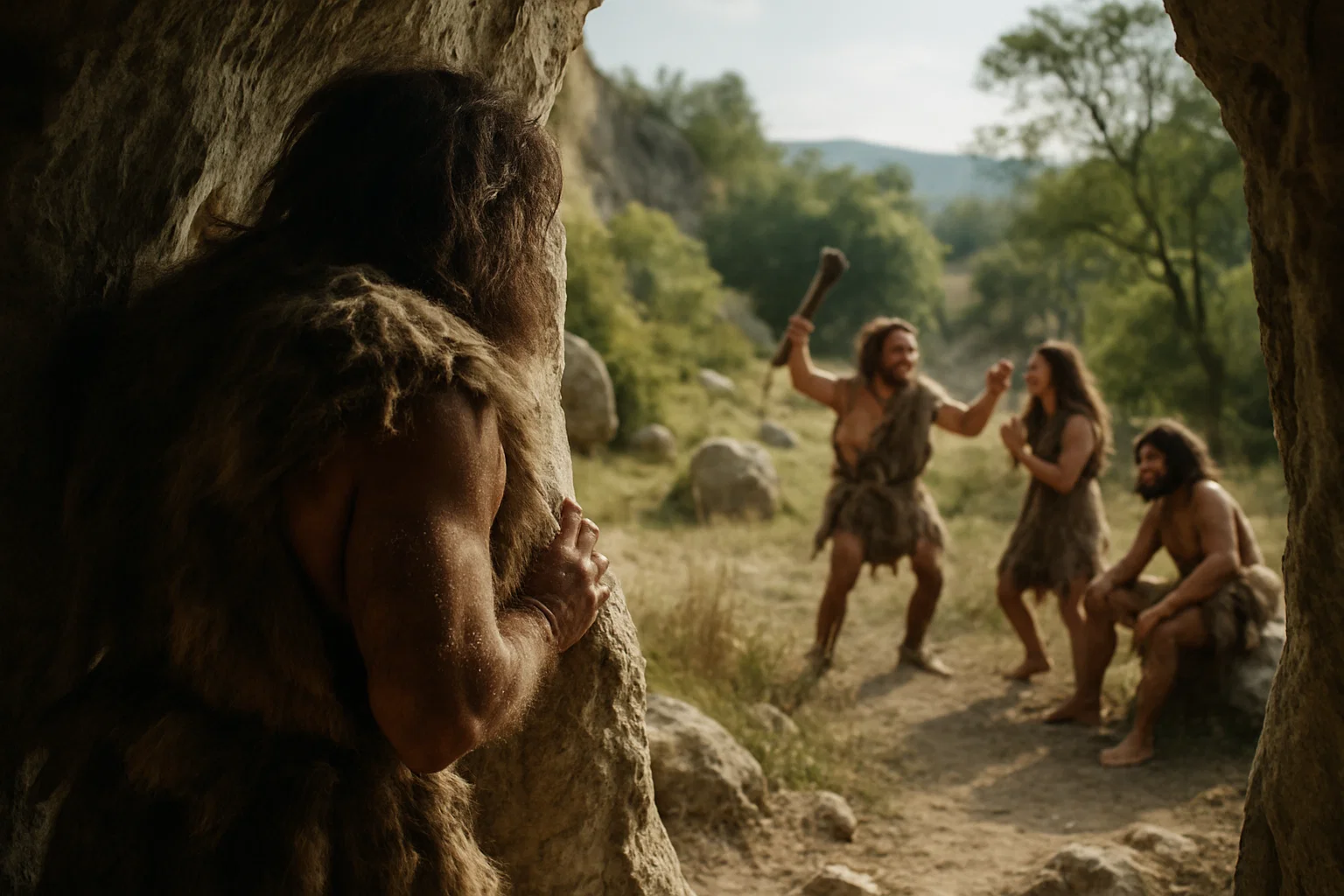


Discovery in Cave in France Reveals Neanderthals That Lived In Isolation for 50,000 Years, With Unique DNA and No Contact with Modern Humans or Other Groups.
On the banks of the Rhône River in southern France, scientists discovered a population of Neanderthals that lived completely isolated for about 50,000 years.
The find occurred at Grotte Mandrin, a limestone cave that holds layers of human and Neanderthal presence.
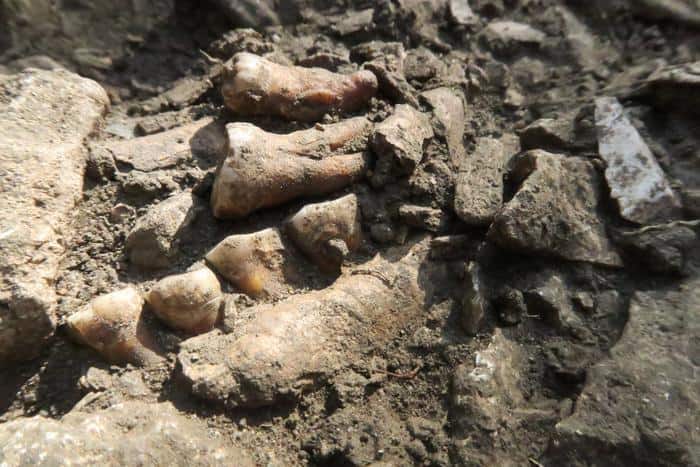
The discovery began in 2015, with an apparently ordinary jawbone. Over time, additional teeth and bones revealed something extraordinary.
-
Scientists drilled nearly 8,000 meters into the ocean floor above the fault that caused the 2011 tsunami in Japan and discovered that a layer of clay 130 million years old was responsible for making the wave much worse than any model had predicted.

-
Thousands of years after causing the largest eruption of the Holocene, one of the world’s largest supervolcanoes is rebuilding itself beneath the sea south of Japan, receiving new magma and alarming scientists with its transformation.

-
China has activated a magnet 700,000 times more powerful than the Earth’s magnetic field that operates for over 200 consecutive hours while consuming little energy, and now the world wants to know what Beijing plans to do with this technology in 2026.

-
Mercado Livre has started selling medications in Brazil with delivery in up to 3 hours, and the project that launches in São Paulo may expand to the entire country, transforming the way millions of Brazilians buy medicines.


Archaeologist Ludovic Slimak and his team named the individual found “Thorin,” inspired by a character from Tolkien.
As the excavations progressed, it became clear that Thorin represented a distinct group of Neanderthals.
The tools found near the remains had characteristics different from those found in other regions of Europe. They were part of the unique Post-Neronian II tradition in that part of southern France.
Genome Out of the Ordinary
Thorin’s DNA revealed the true magnitude of the discovery.
His genetic material diverged from other late Neanderthals about 105,000 years ago.
This indicates that he and his group were isolated for about 50,000 years, despite other populations living just a few kilometers away.
According to Slimak, this population spent five millennia without any genetic exchange with other groups of Neanderthals.
This absence of mixing indicates a form of social and biological life very distinct from that of Homo sapiens, known for establishing broad networks of coexistence and cultural exchanges.
In addition to genetic isolation, there was social isolation. While modern humans created connections, trade routes, and alliances, Thorin’s group seems to have avoided all forms of integration. They lived in isolation, in a sort of biological and cultural bubble.
Other Isolated Lineages
The research team also identified another isolated lineage in Les Cottés, also in France. This indicates that these groups of isolated Neanderthals were more common than previously thought.
The old model of a homogeneous population is being replaced by the idea of a much greater genetic and cultural diversity among Neanderthals.
Tharsika Vimala, a geneticist at the University of Copenhagen, reinforced this view. For her, Thorin’s case shows that, at the end of the era of Neanderthals, there were at least two distinct populations living simultaneously.
This discovery changes the way we understand the extinction of these human groups.
Unexpected Connections
Despite Thorin’s isolation, a surprise emerged when researchers compared his DNA with other finds.
The closest genetic relative was found in Gibraltar, at the southern tip of Europe. A Neanderthal from Forbes Quarry showed remarkable similarities to Thorin’s genome.
This connection suggests that Thorin’s ancestors may have migrated from the Iberian Peninsula to southern France, bringing with them their genes and cultural tools.
Slimak points out that this discovery reveals the existence of a previously unknown population of Neanderthals in the western Mediterranean, with a presence stretching from the far western Europe to the Rhône Valley.
Climate changes and habitat fragmentation during the Ice Age may have contributed to the emergence of these isolated communities.
The rugged terrain and environmental challenges restricted contacts and divided formerly broader populations.
Genetics and Extinction
Thorin’s case also sheds new light on the disappearance of the Neanderthals. By living in isolation for so long, the group lost genetic diversity.
This reduction affected the group’s ability to adapt to climate changes, new pathogens, and transformations in the environment.
About 7% of Thorin’s genome showed long stretches of homozygosity, indicating frequent crossings between individuals with very similar DNA.
This characteristic reveals an extremely reduced population size, with few members reproducing among themselves over generations.
Tharsika Vimala states that this genetic limitation could have been decisive. The lack of variety reduced chances for both physical and social evolution and resistance.
A Distinct Form of Humanity
Grotte Mandrin holds signs of interleaved occupations between Neanderthals and Homo sapiens. However, in Thorin’s case, there is no evidence of genetic crossing with modern humans.
The absence of mixing reinforces the idea that this Neanderthal group remained isolated, by choice or circumstance.
According to researchers, genetic exchange among humans is not limited to individual encounters. It represents social alliances consciously built between groups. This seems not to have happened with Thorin’s Neanderthals.
While Homo sapiens created social and genetic networks, Thorin’s Neanderthals lived on the margins. This trait may have sealed their fate.
A Revelatory End
The excavation of Thorin’s remains continues. With each new season, more fragments are found — teeth, bones, tools. But what has already been revealed is enough to change the understanding of Neanderthals.
Thorin represents the end of a lineage. The end of a way of being human different from our own. The discovery reveals that Neanderthals were not all the same, nor did they live as we imagined.
The story of this forgotten population shows that human diversity is more complex than we thought.
And, in the silence of a French cave, an ancient people tell us that there were other ways to exist.
Study Published in Cell Genomics.









Já pensou que esse grupo de Thorin viviam na antiguidade, como os sentineleses do norte vivem hoje em dia, proibido o contato externo e atacando quem se atrevem a importuna-los